
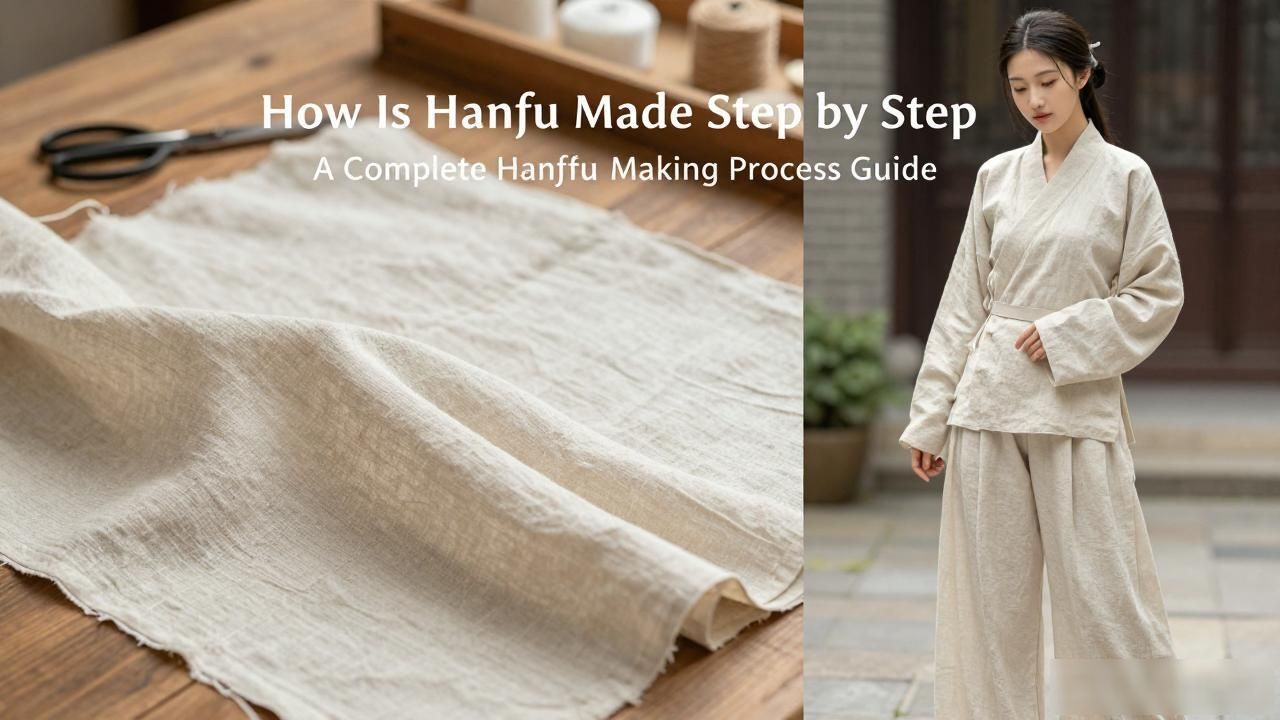
Hanfu, the traditional clothing of the Han Chinese, carries thousands of years of cultural heritage in every stitch and fold. Understanding the Hanfu making process reveals not just a craft but a living tradition that bridges ancient aesthetics with modern appreciation. For those drawn to this elegant attire, knowing how it comes together deepens the connection to the garment.
What Materials Are Used in Hanfu Making
The foundation of any Hanfu piece begins with fabric selection. Traditional Hanfu relies heavily on silk, cotton, and linen, each chosen for specific seasonal wear and occasion. Silk remains the most prized material, especially for formal and ceremonial Hanfu. It drapes beautifully and carries a natural sheen that catches light in subtle ways.

Cotton and linen serve practical purposes, particularly for everyday wear or warmer months. These breathable fabrics allow movement while maintaining the flowing silhouette that defines Hanfu. Some modern makers also experiment with blends and alternative textiles, though purists argue that only natural fibers capture the true essence of historical garments.
Accessories matter too. Thread color, lining materials, and even the type of tying cord can shift the entire appearance of a finished piece. A well-made Hanfu will have clean internal finishes, since the garment is often worn open at the front, revealing the inner layers.
How Do You Cut and Sew Hanfu Fabric
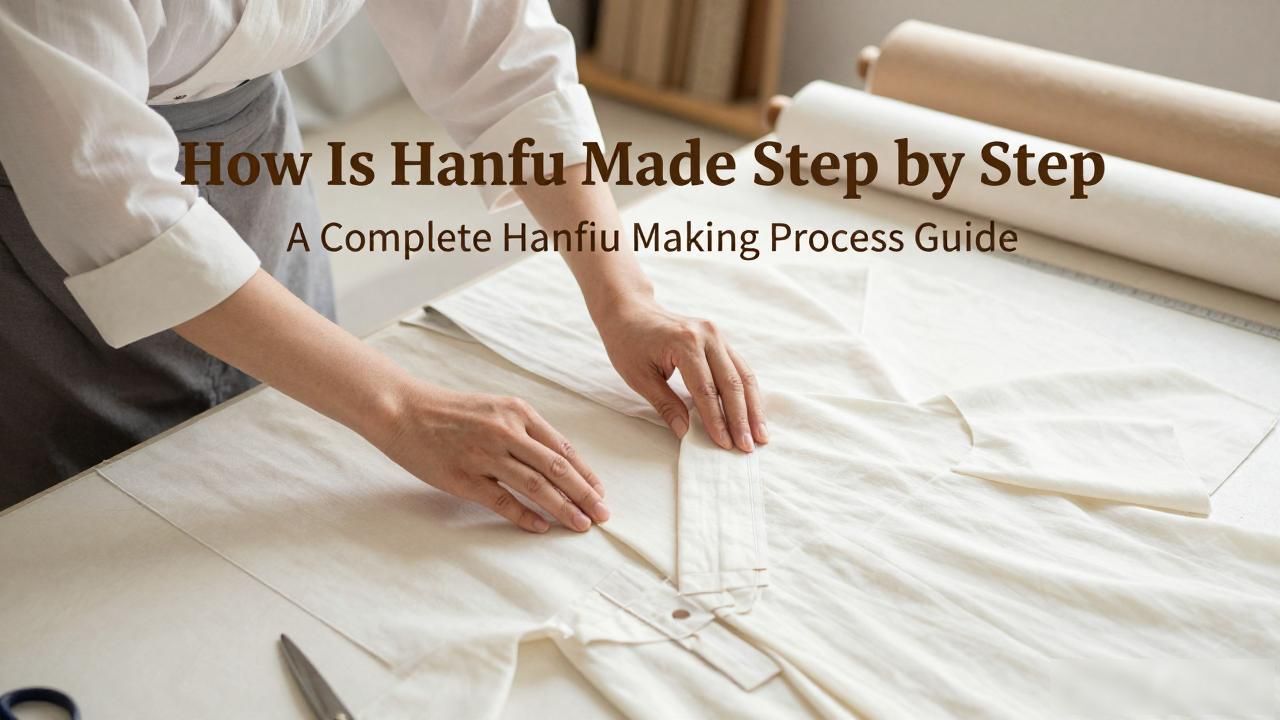
Cutting Hanfu fabric demands patience and precision. Unlike Western tailoring, which relies on darts and complex shaping, Hanfu is largely constructed from straight panels. The silhouette comes from how these panels are arranged and tied, not from fitted seams. This approach requires careful measurement and a deep understanding of how the fabric will fall on the body.
Sewing Hanfu involves both hand and machine techniques. Critical seams are often reinforced by hand stitching for durability, while larger sections may be machine-sewn for efficiency. The hemming process, particularly on wide sleeves and flowing skirts, requires extra attention to maintain evenness and balance.
Assembly follows a specific sequence. The inner garment goes first, followed by the middle layer, and finally the outer robe. Each piece is aligned carefully before joining, ensuring that patterns and grain lines match perfectly. A skilled maker will baste pieces together first, checking the fit before committing to permanent stitches.
What Makes Hanfu Embroidery Special
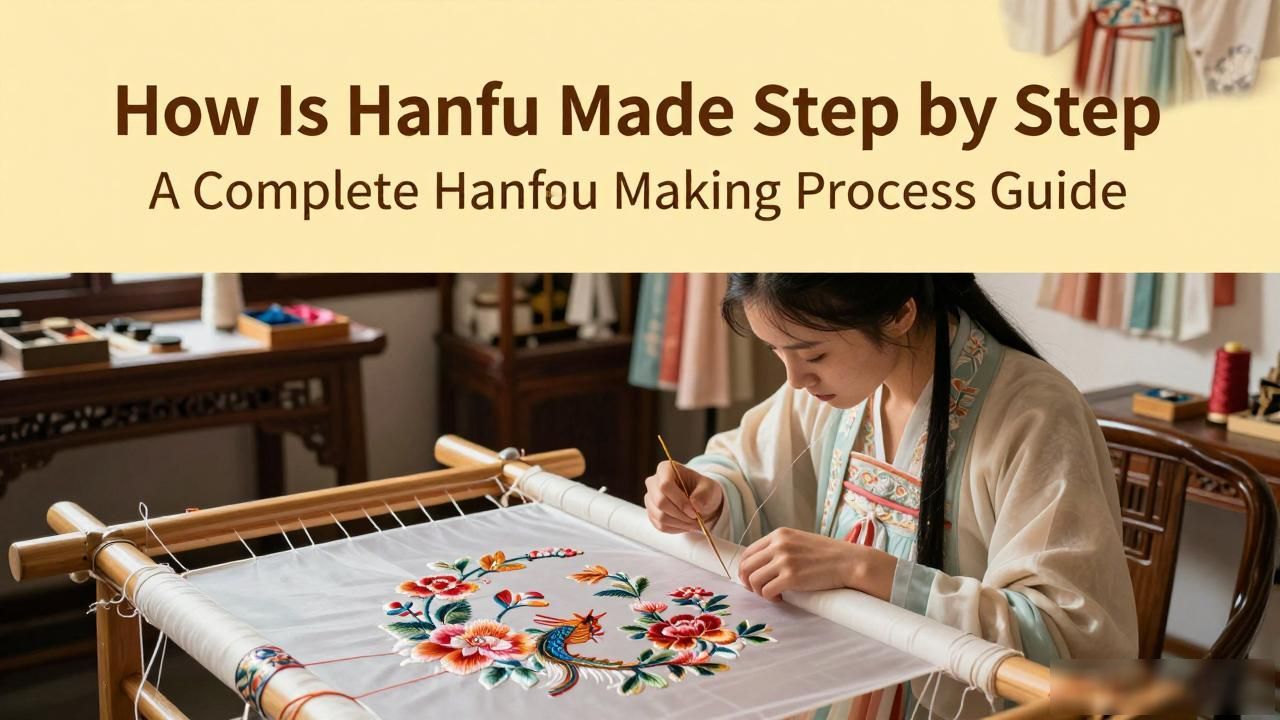
Embroidery transforms a plain Hanfu into a work of art. Traditional techniques include cross-stitch, satin stitch, and the incredibly delicate silk ribbon embroidery. These methods have been passed down through generations, with certain regions known for distinctive styles. Suzhou embroidery, for example, is famous for its fine detail and realistic depictions of flowers and birds.
The placement of embroidery follows strict conventions. Chest panels,sleeve cuffs, and hem edges are common locations, each carrying symbolic meaning. Peonies represent wealth and honor, while cranes symbolize longevity. Understanding these motifs adds layers of meaning to the garment beyond its visual beauty.
Machine embroidery has made Hanfu more accessible, but hand-embroidered pieces remain highly valued. The difference lies in texture and depth. Hand-stitched work catches light differently and shows the subtle variations that come from human touch. For collectors and enthusiasts, this distinction is everything.