
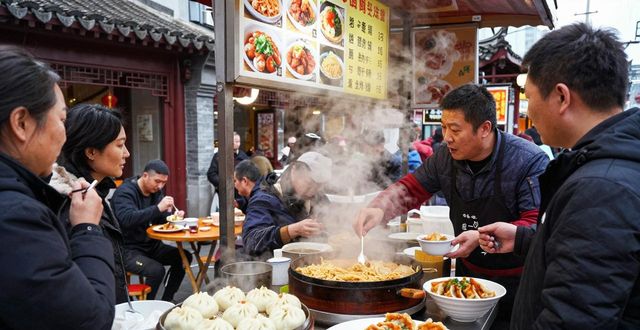
Chinese street food is one of the most exciting and accessible ways to experience the country’s culinary culture. From bustling night markets to simple morning carts, these quick, affordable dishes tell stories of regional traditions, family recipes, and everyday life. Having traveled across China sampling everything from spicy skewers to steaming buns, I can tell you that street food isn’t just about eating—it’s about understanding a place and its people. In this guide, I’ll share the most famous dishes, address common safety concerns, reveal the best cities for food adventures, and teach you how to order like a local.
Most Famous Chinese Street Food Dishes
Jianbing, a savory crepe made from mung bean batter, is the king of breakfast streets. Vendors crack an egg onto the hot griddle, sprinkle scallions and cilantro, add crispy fried dough, and brush on a sweet-spicy sauce. It’s then folded into a warm, crunchy package that costs less than a dollar. Another legend is Roujiamo, often called the “Chinese hamburger”: fluffy flatbread stuffed with slow-braised pork, beef, or lamb. The meat is chopped with cumin and chili, creating a rich, aromatic filling that melts in your mouth.
No list is complete without Chuan’r—tiny lamb, beef, or chicken skewers grilled over charcoal and dusted with cumin, chili powder, and sesame seeds. Vendors fan the flames as smoke fills the night air, and you eat them standing up, often with a cold beer. For the adventurous, Stinky Tofu delivers a pungent fermented aroma that turns into a nutty, creamy taste. Deep-fried and served with pickled vegetables or chili sauce, it’s a beloved snack from Hunan to Taiwan. Xiaolongbao, soup-filled pork dumplings, are another star. Bite carefully—the hot broth inside bursts with ginger and meat flavors.
Is Chinese Street Food Safe for Foreigners
Many travelers worry about hygiene, and it’s a fair concern. The good news is that bustling stalls with long queues of locals are almost always safe. High turnover means ingredients are fresh, and popular vendors have a reputation to maintain. Avoid stalls where food sits out uncovered or where the cook handles money and food without washing hands. Also, watch for clean oil: if it looks dark and smoky, the fried food may taste bitter and stale. Stick to dishes cooked to order at high heat, like skewers, stir-fried noodles, or freshly made jianbing.
Your own stomach also needs adjusting. Start with cooked items and skip raw vegetables or unpeeled fruits. Drink bottled water, and be cautious with cold desserts that might have been made with tap water. I’ve eaten street food in China for years and rarely gotten sick, but I always carry wet wipes and hand sanitizer. If you have a sensitive stomach, try one new stall per day and see how you feel. Most importantly, trust your nose and eyes—if something looks or smells off, walk away. There are always other options nearby.
Best Cities for Authentic Chinese Street Food
Beijing’s Wangfujing Night Market is famous for daring eats like scorpion skewers and starfish, but you’ll also find classic lamb skewers, fried milk, and tanghulu (candied hawthorn). Go for the spectacle, but don’t miss the quieter hutongs where grandmas sell homemade noodles and stuffed buns. Shanghai’s City God Temple area offers xiaolongbao, shengjian (pan-fried pork buns), and scallion pancakes. The energy is electric, with neon signs and endless choices. For a more local vibe, head to the streets near Yunnan Road.
Xi’an’s Muslim Quarter is a paradise for noodle and bread lovers. Hand-pulled biangbiang noodles, yangrou paomo (lamb soup with crumbled flatbread), and spicy liangpi (cold noodles) dominate the menus. The air smells of cumin and roasted meat. Chengdu and Chongqing bring the heat—try chuan’r coated in chili powder, spicy rabbit heads, and dan dan noodles. The numbing Sichuan peppercorn is an experience itself. Finally, Guangzhou’s night markets specialize in Cantonese bites like cheung fun (rice noodle rolls), roast goose, and egg waffles. Each city has its own flavor DNA.
How to Order Chinese Street Food Like a Local

Don’t be intimidated by the language barrier. Most street vendors use simple menus with pictures, so pointing works perfectly. Learn a few key phrases: “zhe ge” (this one) while pointing,“duo shao qian” (how much), and “yi ge” (one). Numbers are also helpful—say “liang ge” for two, “san ge” for three. If you’re nervous, watch what the person before you orders and mimic them. Many stalls also display price boards, so you can just hand over the exact change. Carrying small bills and coins is essential because vendors rarely break large notes.
Another local trick: arrive early for breakfast items and late for dinner skewers. Breakfast stalls close by 10 AM, while night markets don’t wake up until 7 PM. Don’t be afraid to ask for less spice by saying “bu la” (not spicy). Vendors are usually friendly and appreciate any attempt at Chinese. For a truly authentic experience, eat standing at the stall or walk a few steps to a nearby curb—benches are rare. And always grab extra napkins. Once you get the hang of it, ordering becomes a fun game rather than a challenge.
Have you tried any of these famous Chinese street foods, or is there a hidden gem you’d recommend? Drop your stories and questions in the comments below, and don’t forget to share this guide with fellow food lovers planning their trip!