

Designing a China travel itinerary can feel overwhelming given the country’s vast size, rich history, and modern wonders. But with a clear plan, you can turn this challenge into an unforgettable journey. This guide walks you through the essential steps to create a balanced and practical trip, from deciding how many days you need to picking the right cities and routes.
How many days for a China travel itinerary
Most first-time visitors find that 10 to 14 days work best for a meaningful China trip. Less than a week leaves you rushing between must-see sights like the Great Wall and the Forbidden City, often missing the local rhythm. With 10 days, you can comfortably cover two or three major regions, such as Beijing, Xi’an, and Shanghai. If you have two full weeks, add a scenic spot like Guilin’s karst mountains or Chengdu’s panda bases. Remember, China’s high-speed trains are fast but cities are far apart – a Beijing to Shanghai ride takes about 4.5 hours, so account for travel time between destinations.

For travelers with only 7 days, focus on one or two close cities. Beijing and Xi’an are a classic pair, connected by a 4-hour bullet train. Avoid trying to do “all of China” in a short time; you’ll end up exhausted and only seeing airports and train stations. Longer itineraries of 3 weeks or more let you add remote gems like Zhangjiajie’s Avatar mountains or Tibet (special permits required). Always build in at least one rest day – jet lag and heavy walking will catch up with you.
Best cities to include in your China trip plan
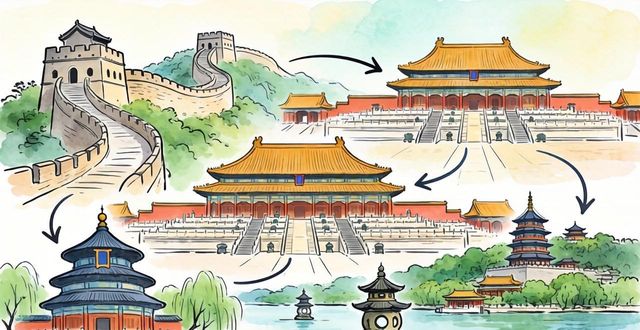
Beijing is non‑negotiable for its ancient landmarks: the Great Wall (Mutianyu is less crowded),the Forbidden City, and the Summer Palace. Spend 3 nights here. Then head to Xi’an for the Terracotta Warriors – a two‑hour flight or 4‑hour train from Beijing. One full day at the warriors plus a night walk on the ancient city wall is plenty. Shanghai offers a futuristic contrast: the Bund, Huangpu River cruise, and French Concession. It’s also the best hub for quick trips to nearby water towns like Zhujiajiao.
If nature and culture call you, add Chengdu (giant pandas and spicy hotpot) and Guilin (Li River cruise). For a shorter 10‑day trip, skip Chengdu or Guilin and do Beijing – Xi’an – Shanghai. For 14 days, the classic loop is Beijing (3), Xi’an (2), Chengdu (2), Yangshuo (2), Shanghai (3). Don’t try to add more than five cities unless you have 3+ weeks. Also consider the season: summer is hot and crowded in Beijing, while winter can be freezing in Xi’an but mild in Hong Kong (which is an easy add‑on from Shenzhen).
Must know tips for designing a smooth China route
Always book high‑speed trains (G or D series) in advance – at least two weeks ahead during peak seasons (May, October, summer). Use the official “12306” app or a reliable travel agent, because English support is limited. For flights, domestic carriers like China Southern and Eastern are fine, but trains often put you right in city centers, saving time. Another pro tip: avoid overnight trains unless you’re on a tight budget; modern sleepers are decent but you’ll lose a night’s sleep and arrive tired.
Payments and internet need planning. Alipay and WeChat Pay are essential – set them up before you go and link an international credit card. Cash is still accepted but many small shops prefer digital. For maps and translation, download a VPN (like LetsVPN) before departure because Google services are blocked. Amap (Gaode) works offline for navigation, and Baidu Translate with downloaded Chinese language packs helps in remote areas. Also, learn a few Mandarin phrases: “ni hao” (hello), “xie xie” (thank you), and “duo shao qian” (how much) go a long way.
How to balance culture nature and cities in China

A well‑designed itinerary mixes one cultural heavyweight, one natural wonder, and one modern metropolis. For example, Beijing (culture), Guilin (nature), and Shanghai (modern) give you three distinct flavors. Avoid spending all your time in museums or all days hiking – your legs and brain need variety. Also, schedule outdoor activities in the morning and indoor visits in the afternoon, especially in summer heat. If you love history, replace one nature stop with Luoyang’s Longmen Grottoes or Pingyao’s ancient walled town.
Don’t forget local life: a morning at a wet market in Chengdu, a tea ceremony in Hangzhou, or a night stroll in Xi’an’s Muslim Quarter. These moments often become your best memories. Use “slow travel” days – for instance, after three busy cities, take a river cruise in Yangshuo where you do nothing but watch limestone peaks. And always leave one or two days unplanned; you might hear about a hidden temple or a food street from a fellow traveler. Flexibility makes your China travel itinerary truly yours.
What is the one place or experience in China you absolutely wouldn’t want to miss – and why? Share your thoughts in the comments, and don’t forget to save this guide for your future adventure.