
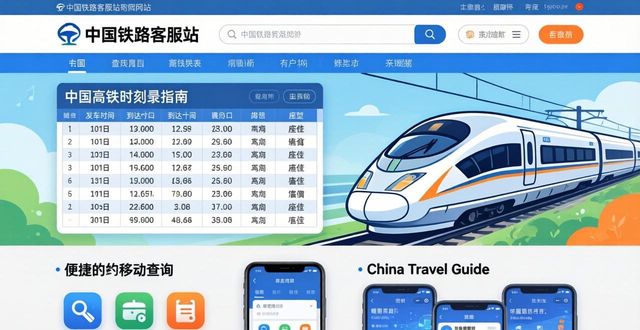
China’s high-speed rail network is one of the largest and busiest in the world, but for foreign travelers, understanding the schedule system can feel overwhelming at first. Schedules are precise, trains run frequently, and the terminology is different from what you might be used to. This guide breaks down everything you need to know: where to find reliable schedules, how to read train numbers and classes, and how to plan your journey without stress. Whether you are heading from Beijing to Shanghai or exploring smaller cities, mastering the schedule is your first step to a smooth trip.
Where to find official high-speed train schedule

The official source for train schedules is the China Railway customer service website, ,which also has an English version and a mobile app. Many foreign travelers also prefer using third-party platforms like or China Travel Guide because they offer user-friendly interfaces and English support. These sites show real-time availability, departure and arrival times, duration, and ticket prices. Keep in mind that schedules can change seasonally or due to track maintenance, so always double-check a few days before your trip. Avoid relying on outdated blog posts or forum threads—stick to official or trusted booking apps for accurate information.
How to understand train numbers and classes
Every high-speed train in China has a letter and number code, such as G1234 or D5678. The letter tells you the speed and type: G trains are the fastest (over 300 km/h), D trains are slightly slower but still high-speed, and C trains operate short intercity routes. The numbers after the letter indicate the specific route and departure time. When looking at a schedule, you will also see seat classes: second class (budget option, 2+3 layout), first class (wider seats, 2+2 layout), and business class (luxury, 1+2 or 1+1 layout). Understanding these codes helps you quickly find the right train without reading every single line on a timetable.
How to match schedule with ticket booking
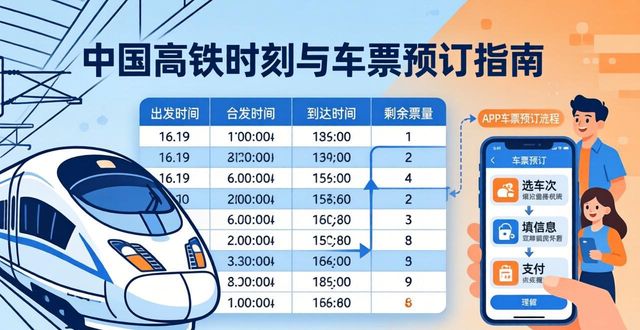
Schedules and ticket availability go hand in hand. Even if a train appears on the schedule, tickets may sell out minutes after release, especially during Chinese holidays like Spring Festival or National Day. Tickets for high-speed trains usually become available 15 days in advance at 8:00 AM local time, but different stations have different release windows. To secure your seat, check the schedule early and set a reminder. You can book tickets up to 60 days ahead for some routes, though 15 days is the standard. Using the schedule to plan your itinerary—knowing exact departure and arrival stations—prevents confusion, because many cities have multiple train stations (e.g., Beijing South vs. Beijing West).
What to do when trains are delayed or rescheduled
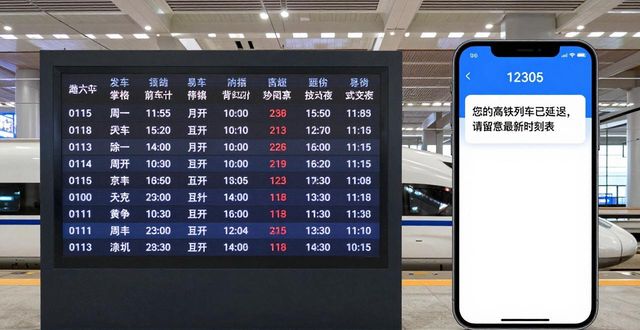
Delays on China’s high-speed network are rare but can happen due to weather, technical issues, or track adjustments. If your train is delayed, the schedule on the departure board will update with a new estimated time. The 12306 app automatically sends push notifications if you have booked through it. For rescheduled trains, you are entitled to a full refund or free rebooking on another train with the same destination. Always monitor the schedule on the day of travel, and arrive at the station at least 45 minutes early to account for security checks. If you miss your train because of a short-notice schedule change, go directly to the manual ticket counter—staff can usually put you on the next available service without penalty.
Have you ever struggled with train schedules in a foreign country, and what tips would you add for first-time travelers on China’s high-speed rail? Share your experience in the comments, and don’t forget to like and pass this guide along to fellow adventurers.