
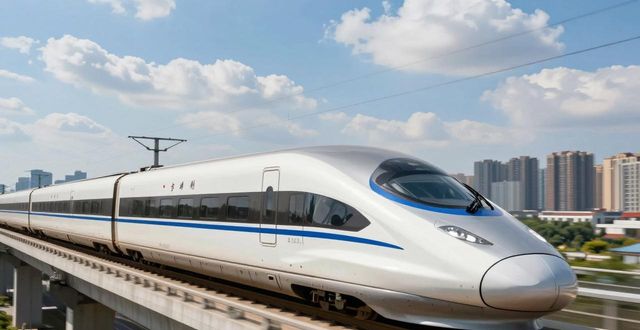
When people ask me about traveling in China, my first recommendation is always the high-speed rail. It has completely transformed how millions move between cities, making distances that once took a full day feel like a short morning trip. I have ridden it from Beijing to Shanghai,from Xi’an to Chengdu, and from Guangzhou to Hong Kong. The experience is reliable, comfortable, and surprisingly affordable compared to flights. In this article, I will break down the key facts about China’s high-speed rail system, answer common questions, and help you plan your own journey.
How fast is China’s high-speed rail?

The short answer is very fast. Most trains cruise at 300 to 350 kilometers per hour, which is about 186 to 217 miles per hour. On the Beijing-Shanghai route, the train covers 1,318 kilometers in just 4 hours and 18 minutes. I remember checking my watch when I first took that trip – a flight would take about two hours, but after adding airport security, boarding time, and transfers, the train is actually quicker. The ride is smooth, and you barely feel the speed. You can stand up, walk to the dining car, and watch the countryside fly by through large windows. For visitors used to slower trains or crowded budget airlines, this speed is a game changer.
Is the high-speed rail expensive for tourists?
Not at all, especially when you compare it to train tickets in Japan or Europe. A second-class seat from Beijing to Shanghai costs around 550 to 600 RMB, which is about 75 to 85 US dollars. That same distance by plane can cost 100 to 150 dollars, plus extra for baggage. First-class seats are more comfortable but still reasonable at around 900 RMB. I always tell friends that you get excellent value: free WiFi, power outlets at every seat, spacious legroom, and a quiet environment. For budget travelers, overnight hard sleeper trains are cheaper, but the speed and comfort of high-speed rail are worth the small premium. Plus, tickets are easy to book online through apps like or the official 12306 website, though you may need a Chinese phone number.
How extensive is China’s high-speed network?
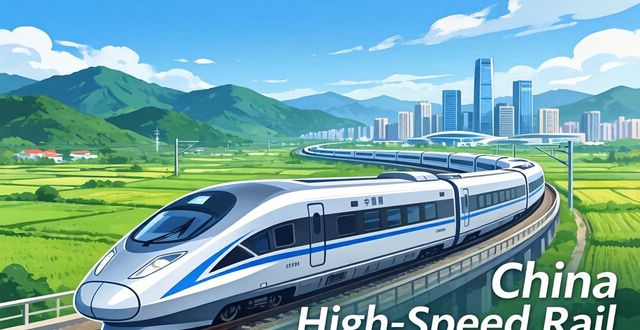
It is the largest in the world, by a huge margin. As of 2026, China has over 45,000 kilometers of high-speed tracks, connecting almost every provincial capital and most major cities. To put that in perspective, the total length is more than all other countries combined. You can travel from Harbin in the freezing northeast to Guangzhou in the subtropical south – a distance comparable to New York to Los Angeles – entirely on high-speed rail. I once took a route from Urumqi in the far west to Lianyungang on the east coast, and the scenery changed from deserts to grasslands to mountains. The government keeps expanding, with new lines reaching into Tibet and even connecting to Laos. For foreign tourists, this means you can easily design a multi-city itinerary without flying.
What is the onboard experience like?
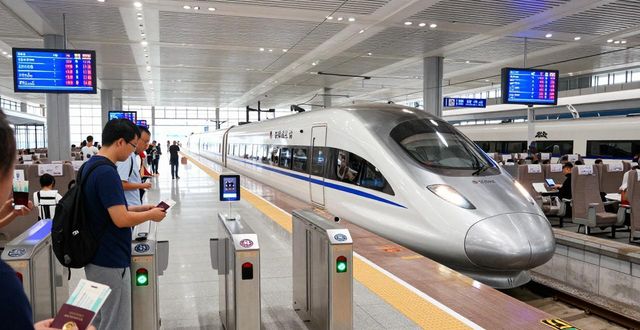
Let me describe a typical trip. You arrive at a modern station, scan your passport and ticket QR code at the gate, and walk onto a spotless platform. The train leaves exactly on time – I have never seen a delay. Inside, seats are arranged 2+3 in second class, with enough recline and a small tray table. The air conditioning works well, and the toilets are clean, though squat toilets are common on older trains. You will see vendors pushing carts selling snacks, boxed meals, and drinks. A basic noodle bowl costs about 15 RMB, while a hot meal like braised chicken with rice is around 40 RMB. Many passengers bring their own food. The atmosphere is quiet and respectful; people work on laptops, watch movies on tablets, or nap. Announcements are in both Chinese and English, so you never feel lost.
Have you taken a high-speed train in China, or are you planning to? Which route excites you the most? Share your thoughts and questions in the comments below – and if you found this helpful, please give it a like and share it with fellow travelers.