
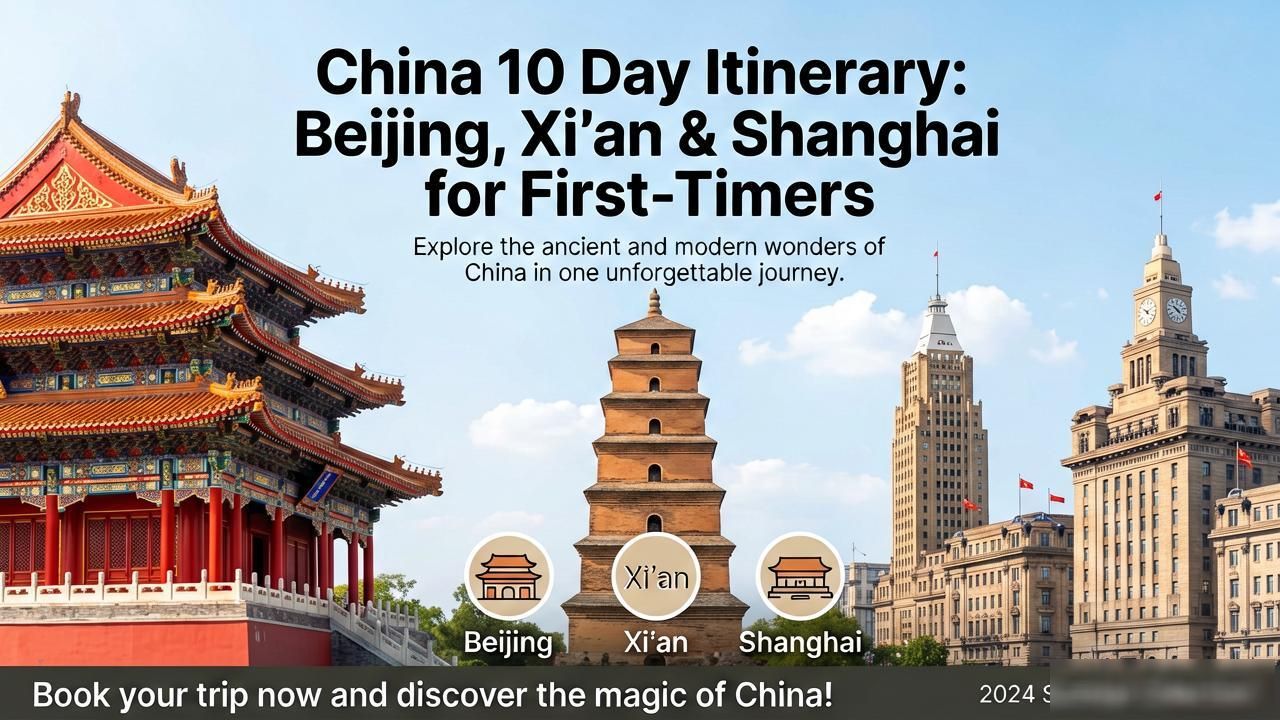
China is one of those destinations that stays with you long after you leave. Its sheer scale, thousands of years of history, and the sheer energy of modern cities make a short trip feel both rushed and deeply rewarding. A 10-day China itinerary is long enough to hit the iconic landmarks without dragging, but short enough that you need to be smart about where you go. If you’re planning your first visit, this guide will walk you through exactly how to spend those ten days — in three unforgettable cities.
Best Cities To Visit On A 10 Day China Trip
You can’t do everything in ten days, so the trick is picking cities that give you the most impact for your time. Beijing, Xi’an, and Shanghai form the golden triangle of Chinese travel. Beijing offers imperial grandeur, Xi’an opens a window into ancient civilization, and Shanghai shows you China’s hyper-modern face. Together, they tell the story of a country that spans 5,000 years of continuous history.

Many travelers consider adding Chengdu, Guilin, or Zhangjiajie to the mix. Those are wonderful choices — but they require more time and domestic flights. For a first trip,sticking to these three cities by train keeps your journey smooth, affordable, and incredibly scenic. The high-speed rail between them takes just a few hours each way.
How To Spend 10 Days In China Step By Step
Day one through day three belong to Beijing. Land in the capital and dive straight in. Visit the Forbidden City early before the crowds arrive, wander through the hutong alleys where locals still live traditional lives, and catch a Peking duck dinner that you’ll be thinking about for weeks. On day two, head to the Mutianyu section of the Great Wall. It’s less crowded than Badaling and gives you a real sense of what those ancient fortifications look like stretching over the hills.
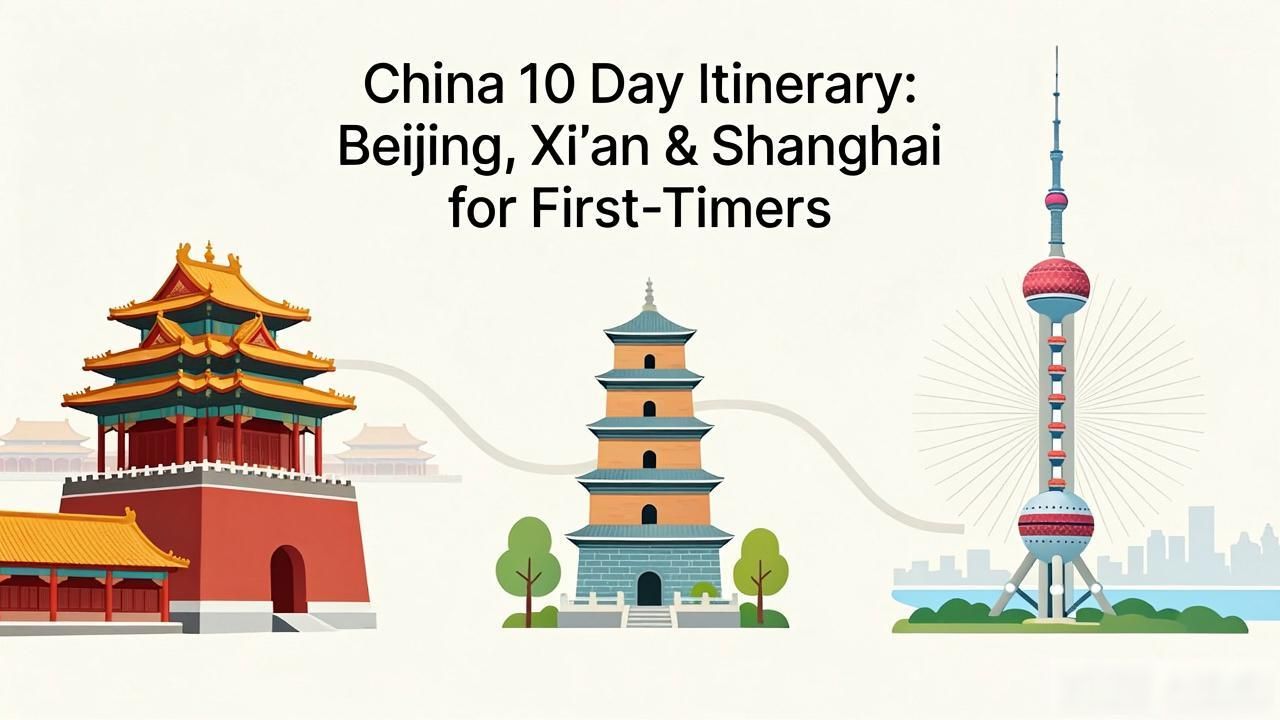
Day three in Beijing works best for the Temple of Heaven and the 798 Art District. You’ll see why this city balances reverence for the past with creative energy that pulses through its streets. Take the evening high-speed train to Xi’an — the six-hour ride is comfortable and gives you a chance to stretch your legs and watch the landscape shift from urban sprawl to rolling farmland.
Days four and five unfold in Xi’an, the city that changed everything in Chinese history. The Terracotta Army is not something you simply “see” — it hits you differently standing there, looking at thousands of clay soldiers arranged in silent formation. Spend at least half a day here. Afterward, walk the full perimeter of the ancient city wall at sunset. The view from the top is breathtaking and completely unforgettable.
Day five wraps up with the Muslim Quarter, where skewers sizzle and noodles steam in narrow lanes that have smelled the same way for centuries. Grab a roujiamo and a glass of sour plum juice, then explore the Giant Wild Goose Pagoda nearby. It’s a city that feels alive in a way that most tourist places don’t.
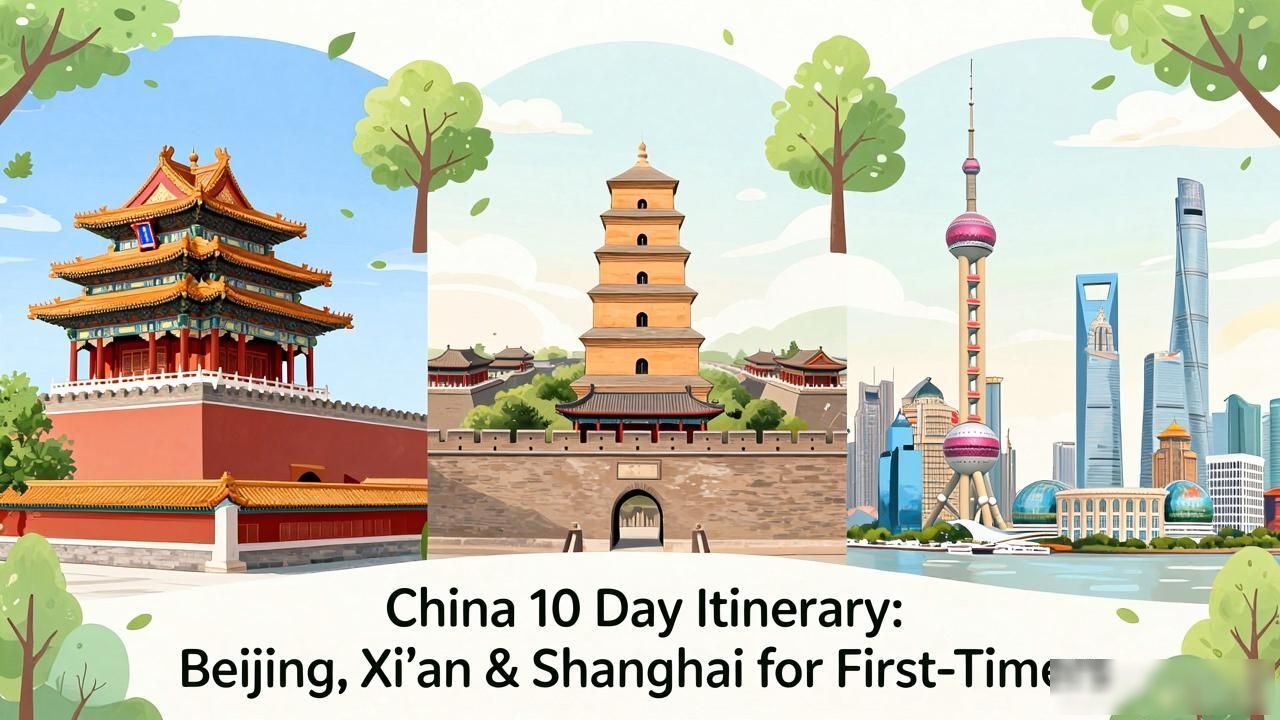
The final four days belong to Shanghai. This city moves at a pace that matches its skyline. Start with the Bund at dawn, when the colonial buildings line up against the Pudong skyscrapers like a living photograph. Spend your next day in the French Concession, drifting through tree-shaded streets lined with cafés, boutiques, and old European-style mansions. Head to Suzhou for a half-day trip to see classical Chinese gardens that make you understand why UNESCO considers them among the finest in the world.
Your last evening should go to the rooftop bar of a downtown hotel. Watch the Huangpu River glow with lights and realize you’ve been to places most people only read about. Packing light and using the high-speed rail network is the single best decision you’ll make on this trip. China’s trains are clean, fast, and connect every city on this itinerary seamlessly. Book accommodations centrally in each city so you spend less time commuting and more time exploring.