
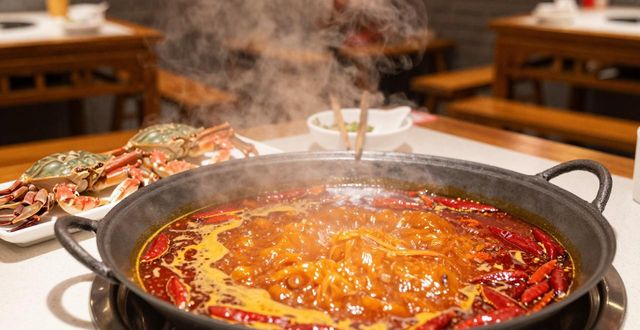
Chengdu, the capital of Sichuan province, is famous worldwide for its fiery, numbing hot pot. If you’re a foreign traveler craving an authentic experience, you’ve come to the right place. This guide cuts through the noise to bring you honest Chengdu hot pot recommendations, from bustling flagship restaurants to hidden back-alley gems. You’ll learn how to handle the spice, what to order, and where locals actually eat. Forget tourist traps—let’s dive into the bubbling, aromatic world of Chengdu’s signature dish.
Best Chengdu hot pot restaurants for tourists
For first-timers, three names stand out: Little Swan (originally from Chongqing but perfected in Chengdu), Shu Jiu Xiang (蜀九香), and Hai Di Lao (Haidilao). Little Swan offers clear English menus and a milder yuan yang (half-spice, half-mushroom broth) option, making it a safe starting point. Shu Jiu Xiang is more authentic – its broth is rich with beef tallow and dozens of spices. Expect long queues, especially at their Kuanzhai Alley branch. Haidilao, though a chain, provides impeccable service (nail treatments, aprons, phone bags) and even non-spicy tomato soup for nervous eaters.

Another fantastic choice is Da Long Yi (大龙燚), whose slogan is “numb, spicy, fresh, fragrant.” Their hong you broth (red oil) is intensely flavored without being punishing. Foreigners love their maoxie (hairy crab) and huanghou (beef aorta). To avoid peak hours (6–8 PM), arrive before 5 PM or after 9 PM. Most of these restaurants are in Jinjiang or Qingyang districts. Download Dianping (like Yelp) to check real-time wait times, though you might need a Chinese friend to help.
How to handle the spicy hot pot level
The biggest fear for outsiders is the heat. Good news: Chengdu hot pot lets you control the burn. Always order yuan yang guo (mandarin duck pot) – spicy on one side, clear or mushroom broth on the other. For the spicy side, ask for wei la (mild spicy) or zhong la (medium). Avoid te la (extra spicy) unless you’re a chili veteran. Some places like Huo Yan (火炎) offer bu la (no spice) broth infused with goji berries and dates, which is sweet and nourishing.
To cool your mouth, don’t drink water or beer immediately – the fat in the broth will spread the capsaicin. Instead, use you pan (oil dipping sauce): sesame oil, minced garlic, and chopped cilantro. The oil coats your tongue and neutralizes the heat. Yogurt, soy milk, or a bowl of bingfen (sweet ice jelly) also work wonders. Remember: the numbness from Sichuan peppercorns (hua jiao) is not the same as spice – it’s a tingly, lemony sensation that many end up loving. Take small bites and sip the clear broth between spicy mouthfuls.
Must-try dishes in Chengdu hot pot
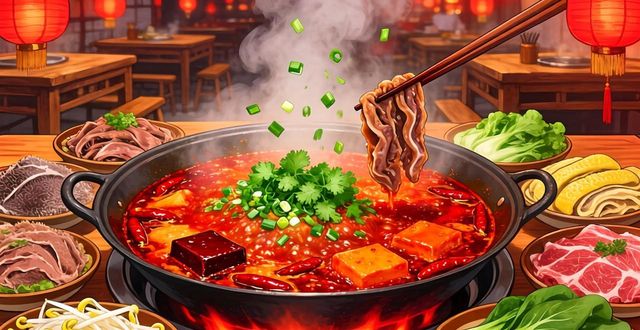
Beyond sliced beef and lamb, Chengdu hot pot shines with unique ingredients. Start with maodu (beef tripe) – dip it in the boiling oil for exactly 15 seconds (the “seven up, eight down” method). Next, huanghou (beef aorta) needs about 30 seconds until it curls. shewei (duck tongue) is a local delicacy; cook for 2–3 minutes until tender. For vegetables, er kuai (square-shaped potato jelly) and lian ou (lotus root slices) absorb the broth beautifully.
Don’t miss xia hua (pork kidney slices) – just 20 seconds, or they become rubbery. niushe (beef tongue) is another crowd-pleaser. Vegetarians can enjoy dong beifen (winter vermicelli), fen si (bean thread noodles), and tofu skin. Many restaurants now offer yangrou juan (frozen lamb rolls). For dipping sauces, mix sesame oil, garlic, cilantro, a dash of soy sauce, and – if you dare – a spoonful of broth from the spicy pot. Avoid heavy sauces like peanut or barbecue; they clash with the delicate balance of Sichuan flavors.
Hidden gem hot pot spots locals love
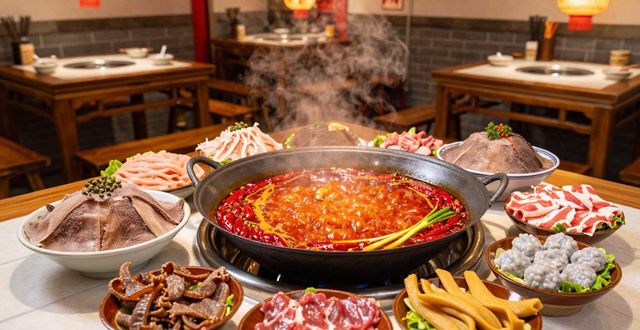
For an authentic, non-touristy experience, leave the city center. Ba Shu Da Zhai Men (巴蜀大宅门) in the Yulin neighborhood is a legendary hole-in-the-wall. No English menus, so use your phone’s camera translation function. Their du jiao (seafood dumplings) and hua zhi wan (squid balls) are handmade daily. Another favorite is Jiang Jun Ge (将军阁), known for its nighttime-only service and outdoor seating under fairy lights. Locals swear by their shui jing niu rou (crystal beef slices) and xin xian huang hou (fresh aorta).
Don’t overlook Lao Ma Tou (老码头) near the South Railway Station – it’s open until 3 AM and packed with young people. The broth here is deliberately extra numbing. For a unique twist, try lao mu jiao (old mother’s hot pot) where the spice level is fixed but the dipping bar offers over 30 ingredients. Finally, Yu Lin Shi Fou (玉林市府) has no sign; you find it by following the spicy aroma. Ask any local taxi driver for “the best hot pot in Yulin” – they’ll point you there. Expect to pay 70–120 RMB per person, half of what tourist chains charge.
What’s your must-order hot pot ingredient, or do you have a funny story about surviving Sichuan spice? Drop a comment,like, and share this guide with fellow travelers planning their Chengdu food adventure!
I love that you didn’t just stick to the famous chains like Haidilao, but actually pointed readers toward real neighborhood spots like Ba Shu Da Zhai Men in Yulin! Finding places where you have to rely on camera translation and the smell of boiling red oil in the air is where the best travel memories are made. Paying half the price for twice the authentic flavor is the ultimate insider tip!