
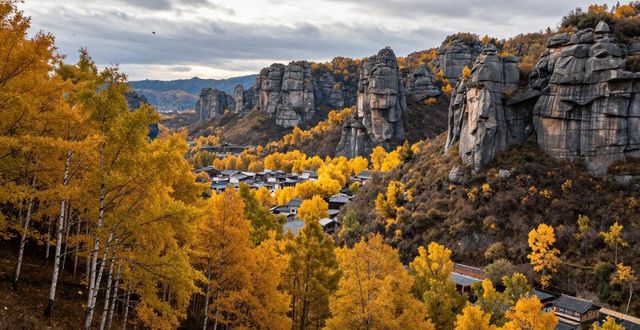
Every autumn, travelers flock to Japan and Korea for colorful leaves, but few realize that China hides some of the world’s most spectacular fall scenery. Away from the crowded famous sites like Beijing’s Fragrant Hills,remote villages and untouched valleys in China burst into fiery reds, oranges, and golds each October and November. These hidden spots offer not only breathtaking foliage but also authentic cultural experiences, fewer tourists, and much lower costs. If you’re willing to venture off the beaten path, China’s autumn secrets will leave you speechless.
What makes autumn foliage in China unique

Unlike the neatly arranged maple trees in Japanese gardens, China’s fall colors appear in wild, dramatic landscapes. Vast valleys of birch and larch turn golden yellow, while ancient gingko trees carpet entire villages in bright gold. The contrast between colorful leaves and China’s iconic limestone peaks, Tibetan prayer flags, or terraced rice fields creates photos you simply cannot get anywhere else. Many of these areas also combine hot springs, ancient towns, and local harvest festivals, making your autumn trip a full sensory experience.
Which hidden spots should you visit first
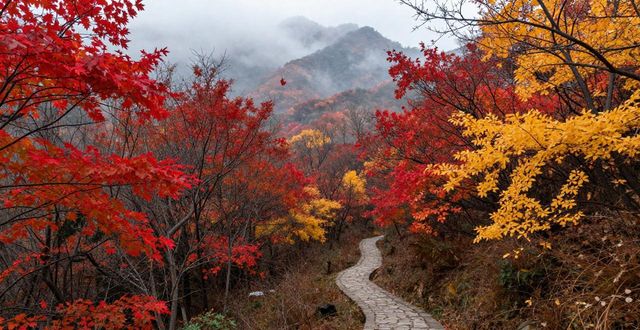
Start with Guangxi’s海洋乡 (Haiyang Village), where over 10,000 ancient gingko trees, some more than 1,000 years old, create a golden fairyland in late November. Unlike crowded tourist towns, here you walk through quiet cobblestone alleys under a canopy of gold. Another gem is Sichuan’s 光雾山 (Guangwu Mountain), known among local photographers but almost unknown to Westerners. Its 500 square kilometers of maple forests explode in crimson every October, with misty waterfalls and clear streams adding to the magic. For a high-altitude experience, Yunnan’s 彝良 (Yiliang County) offers rolling hills covered in a patchwork of red, yellow, and green — best seen from small village guesthouses where you wake up to sunrise over misty valleys.
When to go and how to get around
Timing is everything for autumn foliage in China. Generally, northern areas like Inner Mongolia peak in late September to early October, while central Sichuan and Hubei hit their best from mid-October to early November. Southern spots like Guangxi and Yunnan show colors from late November to early December. Because these are hidden spots, public transport is limited. Renting a car with a driver costs roughly $80–120 per day and is the most practical option. Alternatively, take high-speed trains to the nearest city, then hire a local taxi. Always book accommodations at least two weeks ahead — while these places are not crowded by Chinese standards, the few guesthouses available fill up fast.
What to pack and expect on the ground

Pack layers, as mountain areas can be warm during the day (15–20°C) but drop near freezing at night. Sturdy hiking shoes are essential because most hidden spots have unpaved paths. Bring cash — remote villages rarely accept credit cards or mobile payments from foreign accounts. Learn a few Chinese phrases like “how much” (多少钱) and “thank you” (谢谢), as English is almost nonexistent. Be prepared for basic but clean accommodations: family-run inns with shared bathrooms, simple but delicious home-cooked meals, and roosters waking you at dawn. The reward? You’ll often have entire valleys of golden leaves all to yourself, plus the chance to share tea with local farmers who have never seen a foreign traveler.
After reading this, which hidden autumn foliage spot in China are you most eager to explore — and would you prefer a mountain forest, a gingko village, or a highland valley? Let me know in the comments, and don’t forget to share this with your travel buddies!