
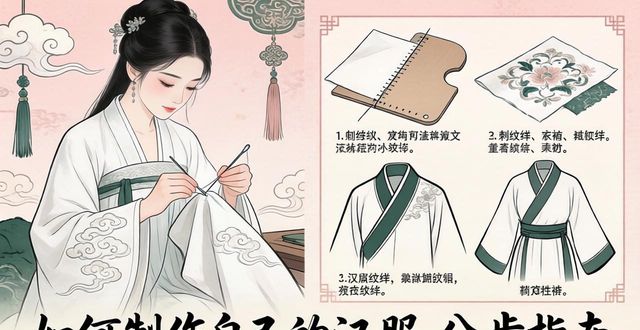
Hanfu, the traditional clothing of the Han Chinese, has captured global attention for its elegant draping and timeless beauty. Many people admire it but assume the making process is too complex for beginners. In fact, mastering the basic techniques is more accessible than you think. This guide will walk you through the entire Hanfu making process, from choosing fabrics to finishing seams, so you can create an authentic piece with your own hands.
What fabrics are best for Hanfu

Natural fibers are the first choice for any Hanfu project. Silk is the most historic option, giving a luxurious sheen and breathability, but it requires careful handling. For beginners,cotton or linen blends are far easier to work with—they hold their shape well and drape softly without being slippery. Avoid synthetic fabrics like polyester, as they trap heat and don’t create the classic flowing silhouette. Look for medium-weight materials with a bit of stiffness, such as cotton twill or ramie, which allow the collar and sleeves to stand properly.
How to take accurate body measurements
Precision is everything when you draft a Hanfu pattern. Start by measuring your chest circumference at the fullest part, then add 10–15 cm for ease of movement. For the skirt (qun), measure your natural waist and decide the desired length from waist to ankle. The most critical measurement is the collar width—from the center of your throat to the shoulder tip—because the crossed-collar (jiaoling) is a signature feature of Hanfu. Always measure twice while standing naturally, and record each number on paper before cutting any fabric.
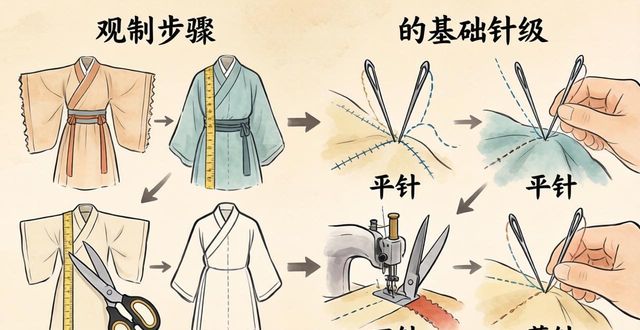
What are the basic cutting and sewing steps
Begin by washing and ironing your fabric to prevent shrinkage later. Lay it flat on a large table, pin your paper patterns (front, back, collar, and sleeves) along the grainline, and cut carefully. For a typical ruqun (top plus skirt), sew the shoulder seams first, then attach the collar pieces so they cross over each other. Next, sew the side seams from armpit to hem, leaving openings for the sleeves. The sleeves should be wide and rectangular—Hanfu rarely uses curved armholes. Use running stitch or backstitch by hand, or a sewing machine with a straight stitch. Press every seam flat with an iron for a professional finish.
How to add the finishing touches and ties
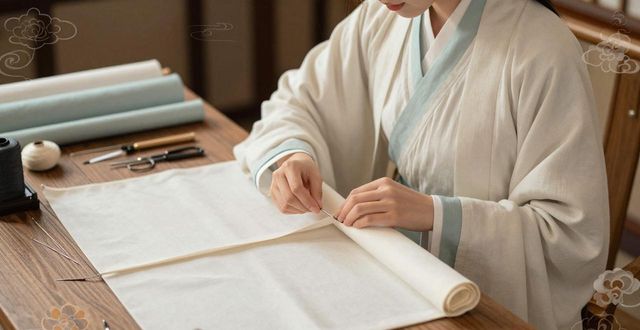
The final step brings your Hanfu to life. Hem the bottom edges and sleeve openings with a narrow double fold to prevent fraying. Attach fabric ties (quju) at the waist level—these are long strips sewn into the side seam or directly onto the body. For the skirt, gather the top edge onto a waistband and add a single tie at each end. Then try on your garment to adjust the crossing angle of the collar; it should sit naturally without pulling. Hand-stitch the inner collar down for extra neatness. A well-made Hanfu fit should feel both secure and loose, allowing you to move freely while keeping the classic shape.
Have you ever tried making your own traditional clothing, and which part of the process do you find most challenging or exciting? Share your thoughts in the comments below, and don’t forget to like and pass this guide to fellow Hanfu enthusiasts