
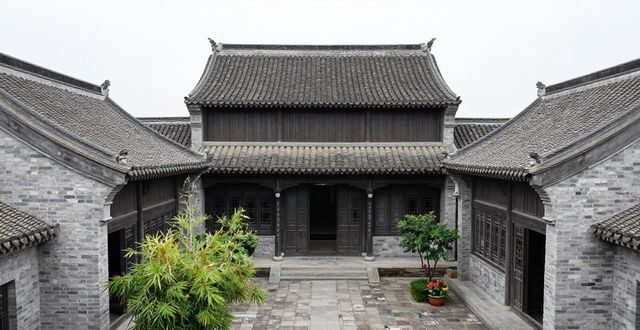
Hutong architecture, the traditional alleyway courtyard system of Beijing, is far more than just old buildings – it is a living textbook of Chinese philosophy, social structure, and climate adaptation. For over seven centuries, these gray-brick neighborhoods have sheltered generations, and their design features reveal a deep respect for nature, family hierarchy, and community living. Understanding these features helps foreigners appreciate why hutongs are not merely tourist attractions but a unique architectural heritage worth preserving.
The Central Courtyard as a Microcosm

At the heart of every hutong home lies the siheyuan, a square courtyard enclosed by four single-story buildings. This layout is not accidental – it follows Confucian values where the north-facing main house belongs to the eldest, while side wings house younger generations. The open yard acts as a private garden, a natural air conditioner in summer, and a safe playground for children. In winter, the courtyard traps sunlight while walls block bitter winds. Foreign visitors often notice that every room opens inward, turning backs to the noisy alley – a clever design that balances privacy with family togetherness.
Gray Brick and Wooden Frame Construction
Walk through any hutong, and you will see the same earthy gray bricks and dark wooden beams. These materials were chosen for practical reasons: local clay fired into bricks is durable, fire-resistant, and cheap. The wooden frames, often painted with protective red or black lacquer, support heavy tiled roofs without needing internal columns. This “timber post and lintel” system allows walls to be non-structural, so homeowners can add windows or doors freely. More importantly, the wood absorbs seismic energy – a critical feature in earthquake-prone Beijing. You will also notice brick carvings of lucky symbols like bats (fortune) or peonies (wealth) above doors, blending utility with art.
Gateways and Spirit Screens
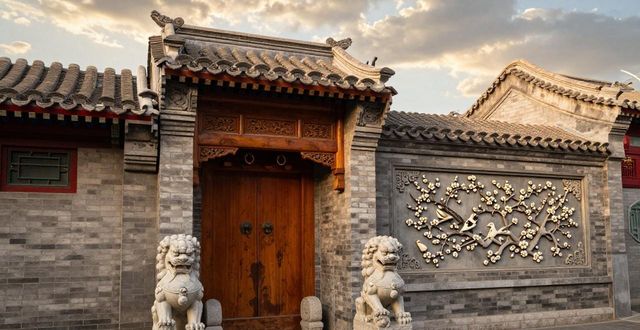
The entrance of a hutong house tells you the owner’s social status instantly. High-ranking officials had ornate gated walls with stone drums and wooden brackets, while commoners used simple gray arches. But almost all hutong homes share one mysterious feature: a spirit screen (zhaobi) just inside the gate. This freestanding wall, often decorated with a diamond-shaped brick carving, blocks direct views into the courtyard. According to traditional beliefs, evil spirits can only move in straight lines, so the screen forces them to turn away. For modern visitors, it creates a delightful surprise – a sudden transition from dusty alley to peaceful inner world, much like a Japanese genkan but with deeper spiritual roots.
Curved Roofs and Ridge Beasts
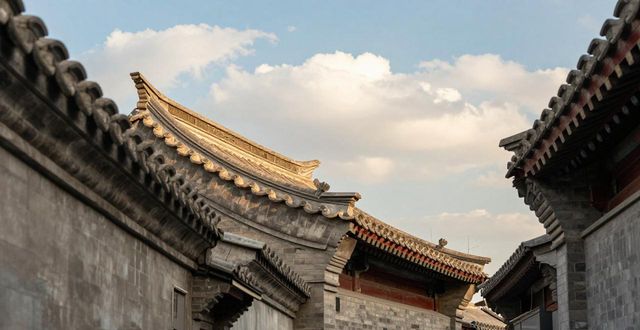
Look up from any hutong lane, and you will see gently sloping roofs with curved eaves that seem to fly. This shape is not decorative – it channels rainwater far from the foundation and allows winter sunlight to reach deep into rooms while shading high summer sun. The roof ridges are lined with small glazed figures: a immortal riding a phoenix followed by beasts like dragons, lions,and horses. These “ridge beasts” served as lightning rods in old times, but more importantly, only imperial buildings could have nine; common hutong houses had three or five. Counting these creatures tells you the original owner’s rank. This system turned every roofline into a status symbol and a protective charm against fire and evil.
Have you ever noticed similar courtyard designs in your own country’s traditional homes, and how do they compare to Beijing’s hutongs? Share your thoughts in the comments below – and don’t forget to like and share this article with fellow architecture lovers