
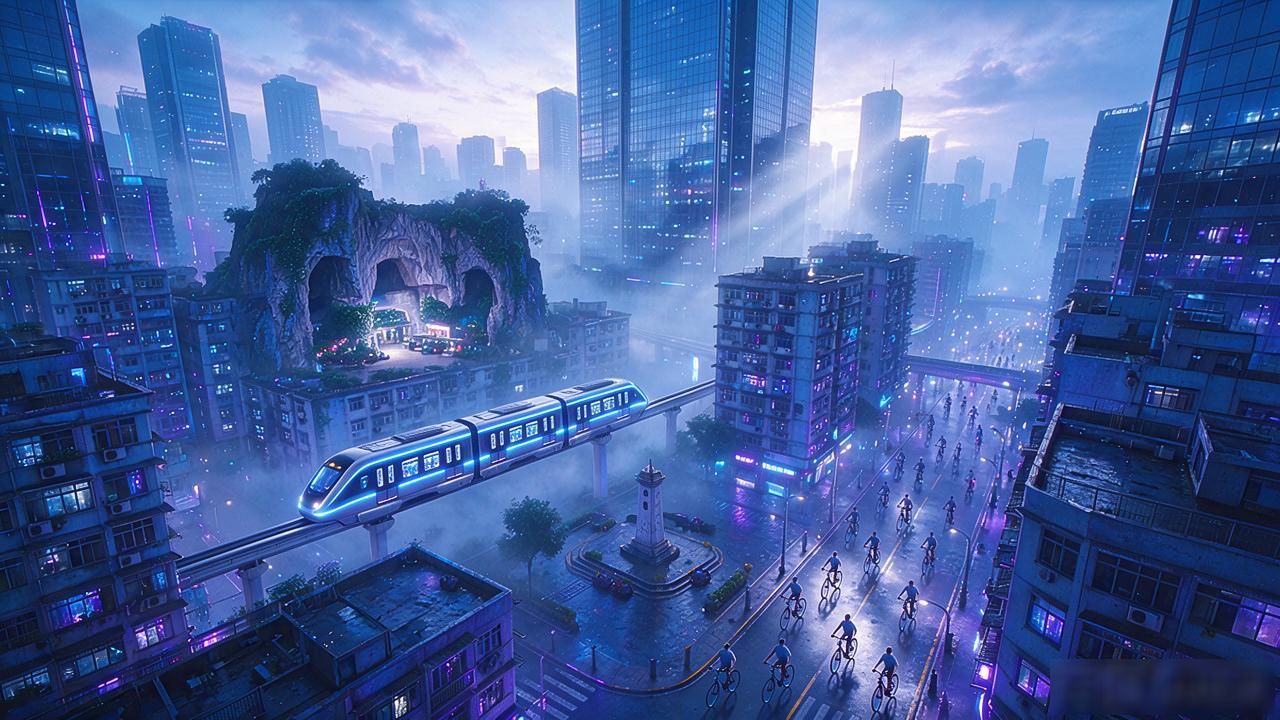
I’ve spent the past year walking through Shenzhen, Shanghai, and Chongqing at night, and honestly, the “Cyberpunk city China” label sticks. The neon-drenched overpasses, the 24-hour wet markets glowing under LED strips, the cranes punching through smog — it all reads like a Blade Runner scene that no studio bothered to finish. Here’s what actually surprised me on the ground.
Is Cyberpunk city China a real place

No, it’s not a single destination. The phrase usually points to Chongqing’s stacked, fog-wrapped hills where monorails slice through apartment blocks, or Shenzhen’s Futian district where glass towers lean over bike lanes. I took the 6:40 AM bus from Jiefangbei to Hongya Cave and watched the light shift from sodium-orange to a cold blue-white over thirty minutes. The city doesn’t perform cyberpunk for you. It just happens to look that way when the mist rolls off the Jialing River and the old lanes below stay dark while the new districts hum overhead.
The gap between floors — I mean the actual vertical gap where you can see power lines strung between buildings six stories apart — is what hits visitors hardest. In Chongqing’s Eling area, that gap is a whole street level of food stalls and hanging laundry. No scriptwriter planned it. It’s infrastructure catching up at different speeds, floor by floor,and the mess in between is where the look lives.

What makes Cyberpunk city China popular
Social media does half the work. A single timelapse video of Shanghai’s Bund at midnight, rain hitting the Huangpu, the Lujiazui skyline reflecting in wet asphalt, pulls eleven million views before the algorithm buries it. Foreign viewers search “cyberpunk city China” mostly because they want to know if it’s film-set territory or just… Tuesday. It’s Tuesday. The neon signs aren’t set dressing. They’re noodle shops, phone repair stalls, and laundromats that glow magenta because the LEDs are cheap and nobody filed a color-approval form.
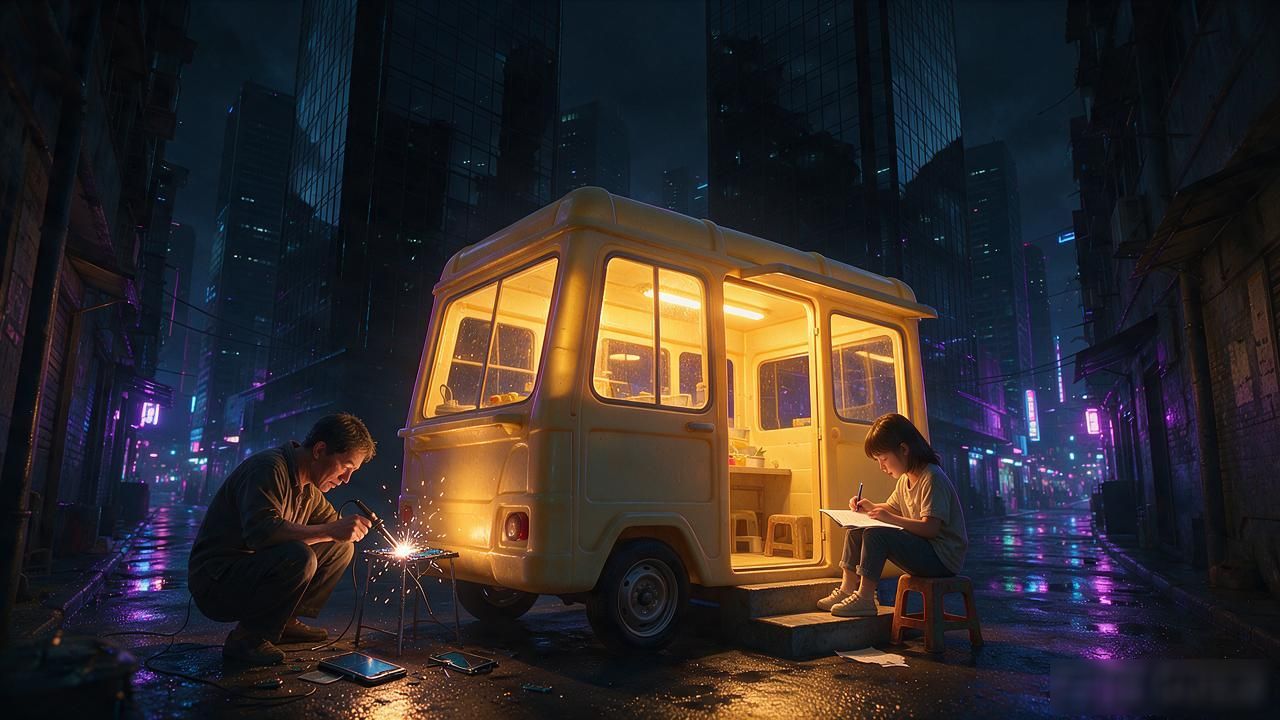
What I didn’t expect was how quiet the futuristic zones get after 11 PM. The glass mega-structures in Shenzhen go dark. The real pulse shifts to a row of plastic-tablet diners on a side street where the owner is soldering a broken phone while his daughter does homework in the doorway. The cyberpunk aesthetic lives in the contrast, not the gloss.
You don’t need a drone or a filter. Walk the wrong turn in a foggy Chongqing alley and the whole “Cyberpunk city China” thing just shows up on your phone’s camera roll, unannounced, on a random Thursday.