
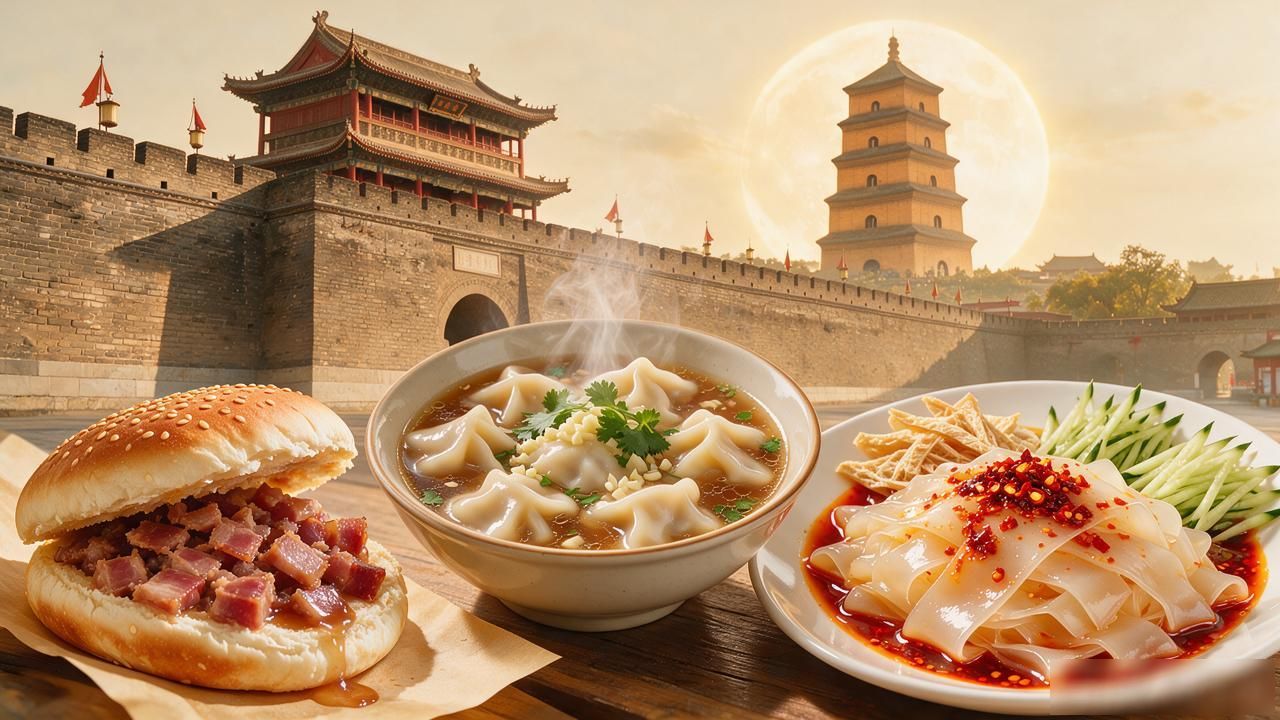
Xi’an food is more than sustenance. It is a three-thousand-year narrative layered into every plate of roujiamo, every cup of strong tea, and every slow-cooked bowl of mutton noodles. Walking the old city walls at dusk, you taste dynasties crumbling into broth. The cultural journey of Xi’an food threads through Tang-era banquets and Silk Road spice routes in ways that most visitors never catch during a short trip.
Why does Xi’an food matter
Ancient Chang’an was the crossroads where merchants from Persia, India, and the Roman East dumped saffron,black pepper, and dried apricots. Local cooks absorbed these flavors and melted them into what we now call Xi’an street food. A plate of biangbiang noodles with chili oil and a dab of sesame paste is not just hunger relief. It is a Tang-dynasty conversation between a wheat-based culture and a spice-hungry trade route, still happening in a plastic takeout container outside the Drum Tower.
The Ming walls trapped commerce inside the city, and food stalls became the only open-air marketplace. That confinement turned Xi’an cuisine into something insular yet endlessly inventive. Mutton is braised for eight hours because the Silk Road herders had nowhere to go with their livestock. Lamb, rice, and cumin became inseparable, and the recipe never left this walled garden.

What Xi’an food tells you
Stand in the Muslim Quarter at noon and you will hear the dialects shift every twenty feet. Hui butchers argue over knife angles while a Han grandmother argues over the correct number of chili peppers in her roujiamo. The food culture of Xi’an is not monolithic. It is a negotiation, sometimes heated, that has been running for a thousand years without a formal peace treaty. The plates just keep showing up.
Then there is the quiet stuff. The grandmother in a courtyard off South Fifth Road who wraps zongzi in mugwort leaves, a practice no one can point to a clean source for. The tea houses where old men sit for four hours playing chess and sipping the same pot of strong Pu-erh. These unscripted chapters do not make it into tourist brochures but hold the whole tradition together like the sinew in a piece of braised beef.
You do not need a degree in Sinology to understand what Xi’an food is doing. You need a full stomach, a willingness to get sauce on your shirt, and the patience to sit through one more bowl of noodles. The culture is not behind glass. It is under your spoon, and it has been for a very long time.