
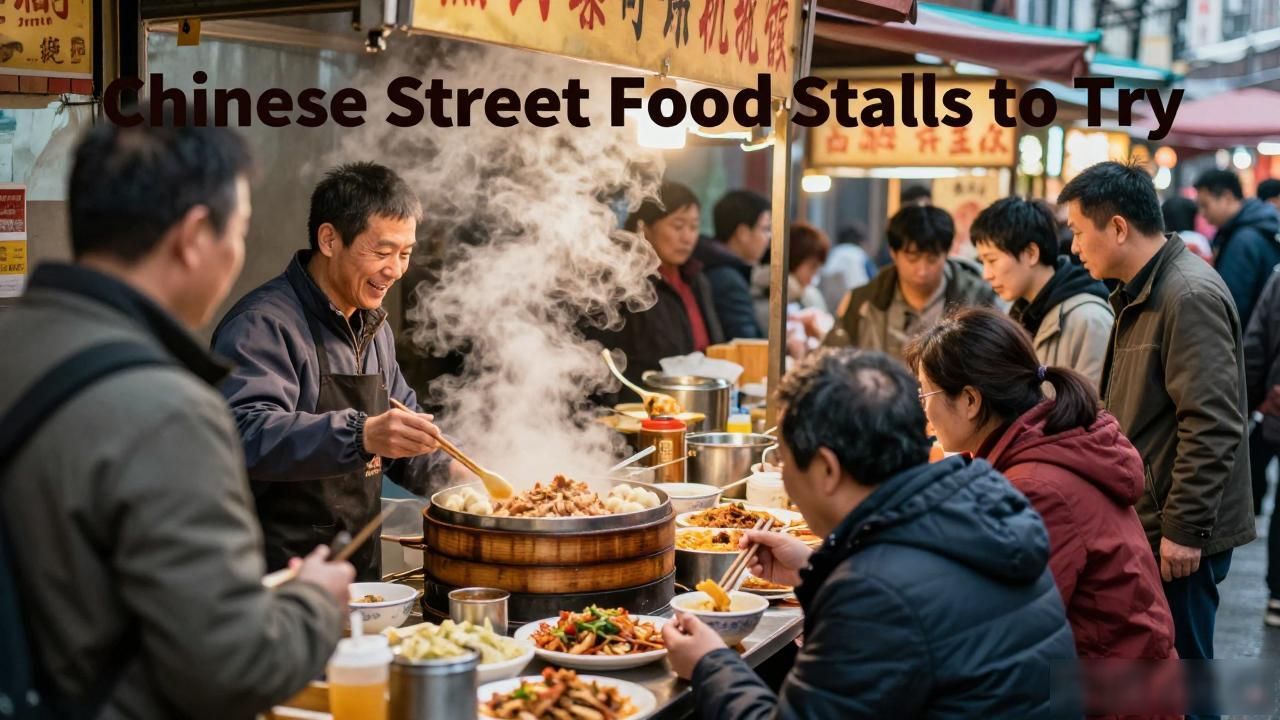
I spent three months in China last year, and I ate at more than two hundred street food stalls. The thing that hit me hardest wasn’t the cooking — it was how small, how loud, and how completely unpretentious everything was. Chinese street food stalls aren’t restaurants with laminated menus. They’re a full sensory experience wrapped around a folding table, a gas burner, and a woman in a flour-dusted apron who will look at you like you’ve lost a limb if you take too long to point.
What’s worth eating at Chinese street food stalls
The first night in Chengdu I grabbed skewers off a wire rack — lamb, chicken, a weird thing that was definitely some kind of tendon. The aunt behind the cart didn’t speak a word of English. I pointed, she nodded, slapped the meat in oil, and I paid forty cents. Forty cents for food that would cost you nine dollars at any restaurant in London. That gap between price and flavour is what makes these stalls genuinely thrilling to a Western palate that’s been trained to overpay for “artisanal” everything.
Beyond skewers,look for the stalls doing one single thing really well. A hand-pulled noodle cart in Beijing will make you cry happy tears into your broth. The clementine-drenched bingo in Guangzhou, the charcoal jianbing in Tianjin — each region has its own stall-born legend you simply will not find behind a sit-down menu and a service charge.

## How to actually navigate Chinese street food stalls
You don’t need a guidebook or an app recommendation. Stand where the crowd has already formed. Follow the steam, the sizzle, the queue of locals in work uniforms who just clocked out of a factory shift. The stall with the longest line at six p.m. is your safest bet. If you’re in Chengdu or Xi’an, the night markets open around seven and you’ll be eating within the hour, elbows out, on a plastic stool.
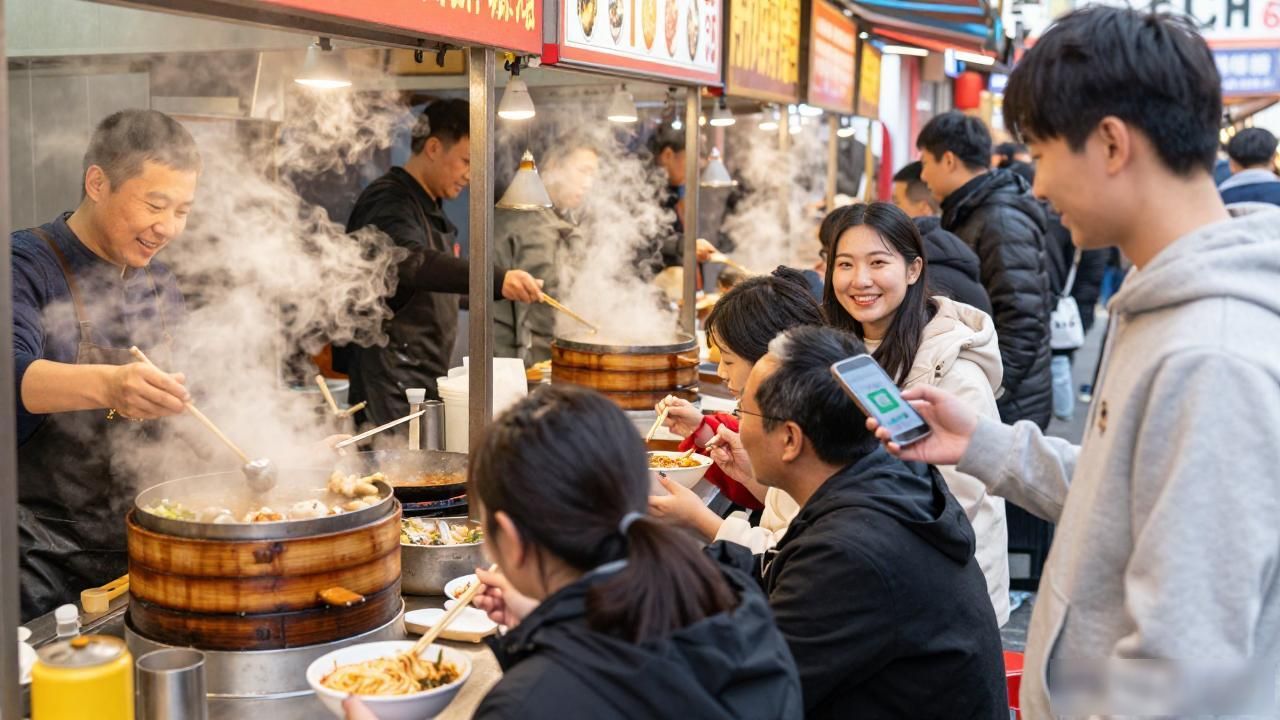
Payment is easy — every stall takes WeChat or Alipay, and you can link a foreign card to either app in about five minutes. The only real skill you need is pointing and smiling. Learn two or three phrases: nì yào duō shǎo (how much?), zhè gè shì shén me (what’s this?). Point, pay, walk to the next stall. Within a week you’ll stop translating and just eat with your hands, which is exactly how it was meant to work.
I left Chengdu with a two-kilo belly and a camera roll full of oil-slicked photos. The best meal of my entire trip cost less than a cup of coffee back home. These stalls don’t need five stars or a reservation system. They need you, standing in the street, genuinely hungry, and willing to point at something you can’t even pronounce.