
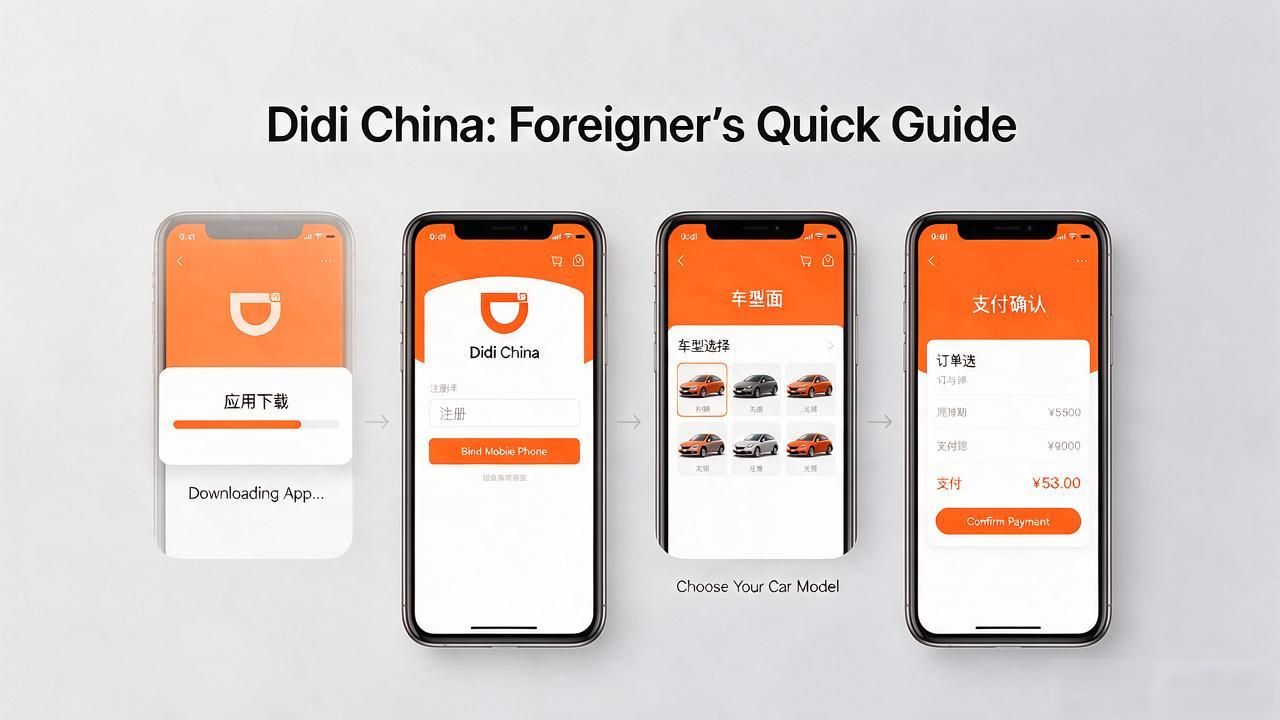
Didi is what most people in China call the Chinese Uber, but that label undersells the platform. For a foreigner landing in Beijing, Shanghai, or Chengdu, Didi China is less a novelty app and more the closest thing to hailing a cab without speaking a single word of Mandarin. This guide breaks down what you actually need before tapping that ride button on day one of a trip.
How does Didi China work for tourists

You download the app, link a local or international phone number, and the flow mirrors Uber: pick a pickup, choose a car class, confirm, pay digitally. The catch is that the entire interface defaults to Chinese unless you flip the language toggle buried in Settings. Tourists who skip that step routinely freeze mid-booking, unsure which oval button means “confirm” and which means “cancel.”
Payment defaults to Alipay or WeChat Pay,both of which now accept foreign-issued Visa and Mastercard through their international card linking. On a ten-day trip, slapping a card into that wallet saves you from juggling a separate ride-hailing payment method. Cash used to be an option; in tier-one cities it has essentially vanished from the ecosystem.

Is Didi China safe for foreign visitors
Didi operates under strict government oversight in China, so driver background checks, real-time GPS tracking, and mandatory in-cabin audio recording are baked into every single ride. The 2021 regulatory crackdown tightened those protocols further, and the platform has since layered in one-tap emergency alerts. Serious incidents involving foreign passengers remain genuinely rare, far rarer than the tabloid headlines would suggest.

One practical tip that saves a lot of tourists: always verify the license plate shown in the app matches the car pulling up to your curb. At eleven PM outside a hotel in Shenzhen, that ten-second check matters more than any five-star review score. If the plate is off, cancel and rebook without hesitation.
Five years ago, getting a taxi in Guangzhou meant pointing at a laminated map, waving, and praying the driver understood your destination. Today Didi China has made that almost obsolete. For a two-day layover, a hotel’s house car is perfectly fine, but beyond that the app strips out the single biggest friction of traveling in China: the language gap. You book, you ride, you pay, you move on.