
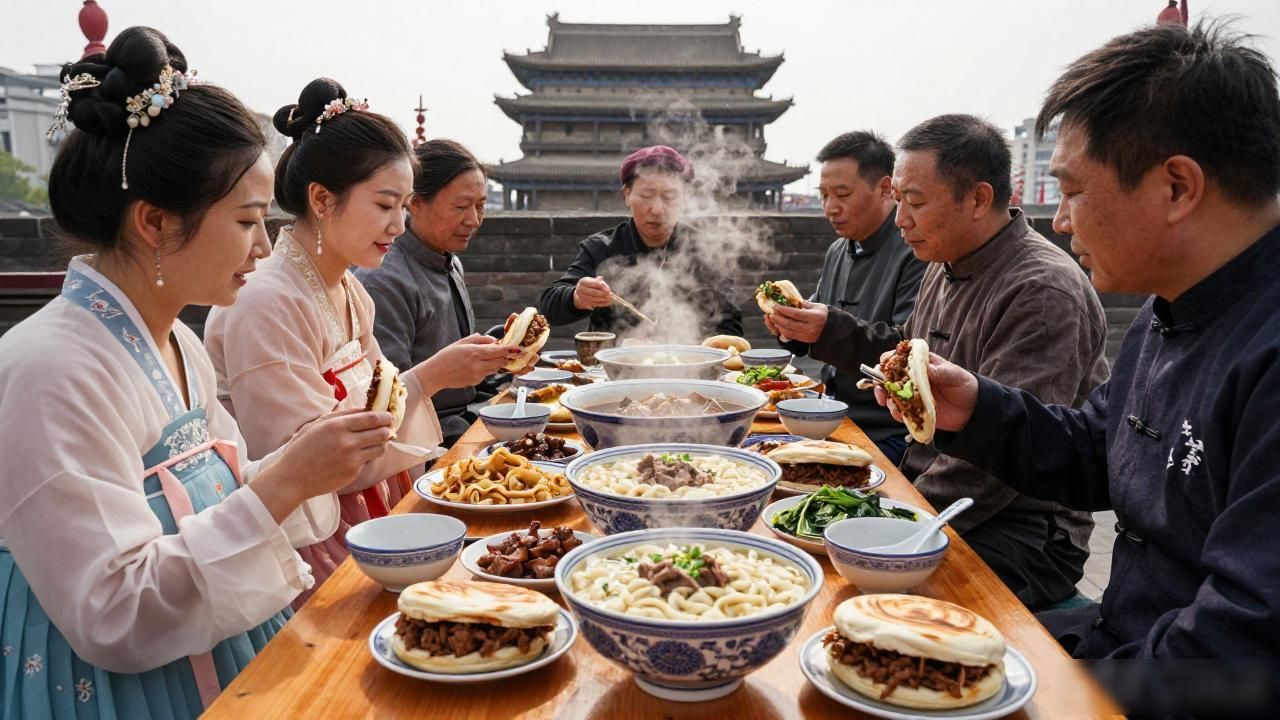
Xi’an food is not just about feeding yourself. It is about touching 3,000 years of Chinese history through a single bowl of hand-pulled noodles or a street-corner roujiamo. The culture here does not sit in a museum. It sits on your plate, steaming, loud, and unapologetic. Every meal in this city is a conversation with the past, and the city will introduce itself to you, one bite at a time.
Why Xi’an food culture feels different
Walk into any restaurant in the Muslim Quarter and the smell of cumin, lamb fat, and charred scallions hits you before a single dish arrives. That is no accident. Centuries of Silk Road caravans buried themselves into Xi’an cooking. A bowl of hui mian carries the genetic memory of Persian spices, Tibetan dairy, and Central Asian wheat. You are not just having lunch. You are reading a two-thousand-year-old recipe book with your tongue, and the text is written in smoke and oil.
Dining etiquette here surprises most Western travelers. Sharing plates, passing dumplings bare-handed, the sharp clink of small tea cups. Locals do not treat a meal as a solo act. It is a social performance. Where you sit, who you serve first, how loudly you praise the cook. The table is a stage, and you are the audience before you are the diner.

How Xi’an food culture shapes a meal
Rougamo looks like a messy sandwich to an outsider. But it is a Shang Dynasty military ration reborn. A soldier needed protein he could grab one-handed while riding a horse. That practical idea survived three millennia. Now you bite into spiced beef and flatbread at a cramped street stall, and you are holding a 3,000-year-old military logistics plan between your fingers. The culture is not abstract. It is in the crumb of the bread.
Even the desserts carry narrative weight. Sesame cakes appear at Lunar New Year. Osmanthus honey marks autumn. A plate of sweet buns at a family reunion is not a random garnish. It is a calendar you can chew. Skip the dessert, and you skip a season. The food does not end the meal. It seals a chapter.
Next time you sit in a cramped Xi’an restaurant and the tea goes cold and the noise swells, just lean forward into the chaos. The culture is already sitting in your mouth. You simply forgot to taste it.