
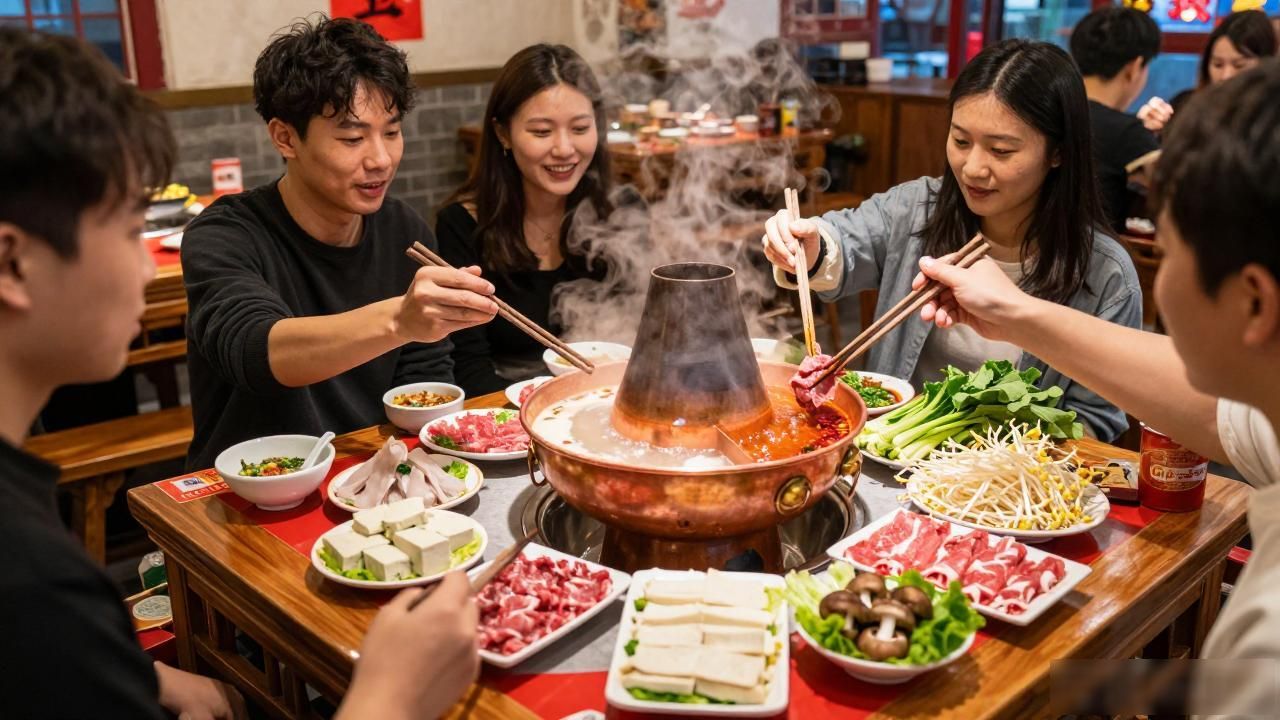
Hot pot in China is not just a meal; it’s a social ritual that has been simmering for over 1,800 years. Whether you’re dipping lamb slices in Sichuan’s fiery broth or sharing a gentle mushroom soup in Canton, the experience shifts dramatically from region to region. After years of pulling chopsticks into bubbling pots across the country, here’s what I’ve picked up.
What is hot pot China like

The first time I sat down at a Chongqing joint, the table was a wall of raw cuts — thin-sliced beef, silken tofu, bean sprouts, a mountain of chili oil. The broth split into two halves: one milky and mild, the other a deep, almost alarming red. You cook everything yourself. Ten seconds for the beef, a full minute for the lotus root. The dipping sauces alone can number twenty: soy with cilantro,sesame paste with crushed garlic, a fiery Sichuan peppercorn chili that numbs your tongue flat. The food is the easy part. The real event is the company you keep.
No one checks their phone at the table. People argue, laugh, pour baijiu, and argue again. The pot keeps the conversation going because your attention is split between the talk and not burning the noodles in your bowl.
Where to eat hot pot China
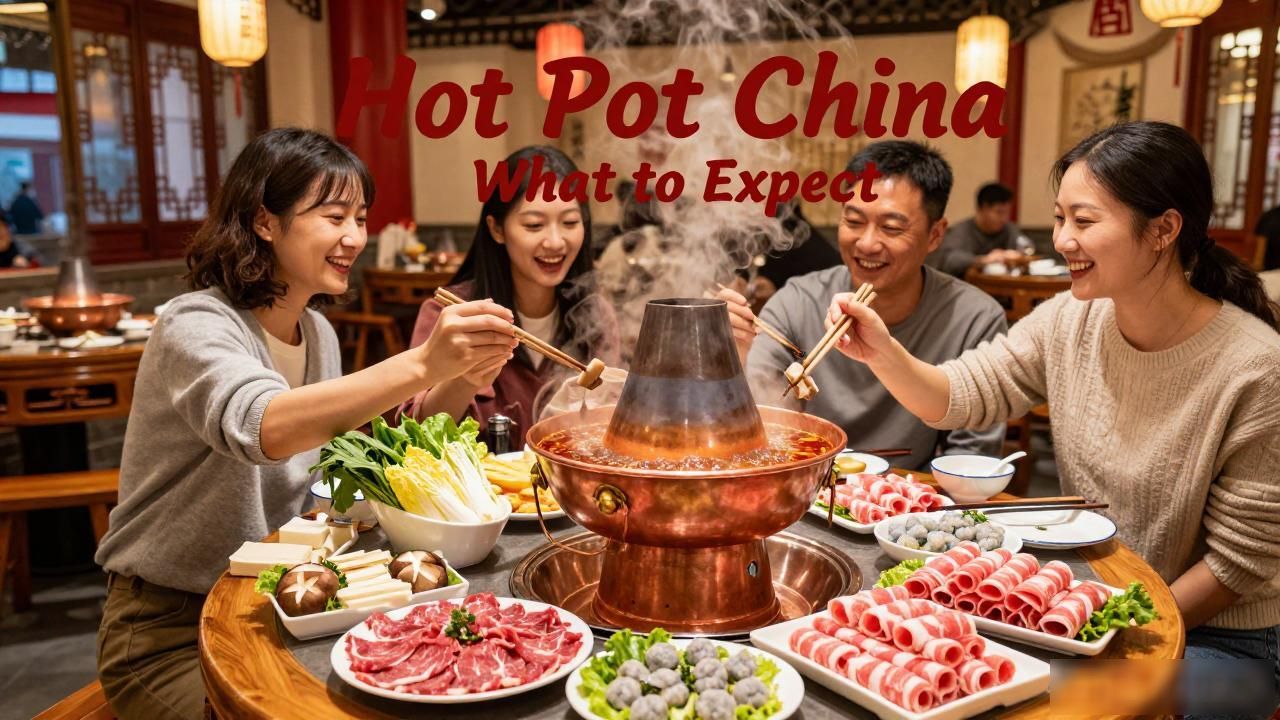
Chengdu and Chongqing are the spiritual home of mala hot pot — think Haidilao or the no-name street stalls where the broth is so hot the owners warn you not to mix it with milk. In Beijing, you’ll find the copper-pot lamb version, often with a small charcoal brazier in the middle of the table, smoky and old-fashioned. Guangzhou keeps things lighter, favoring clear bone broth and fresh seafood.
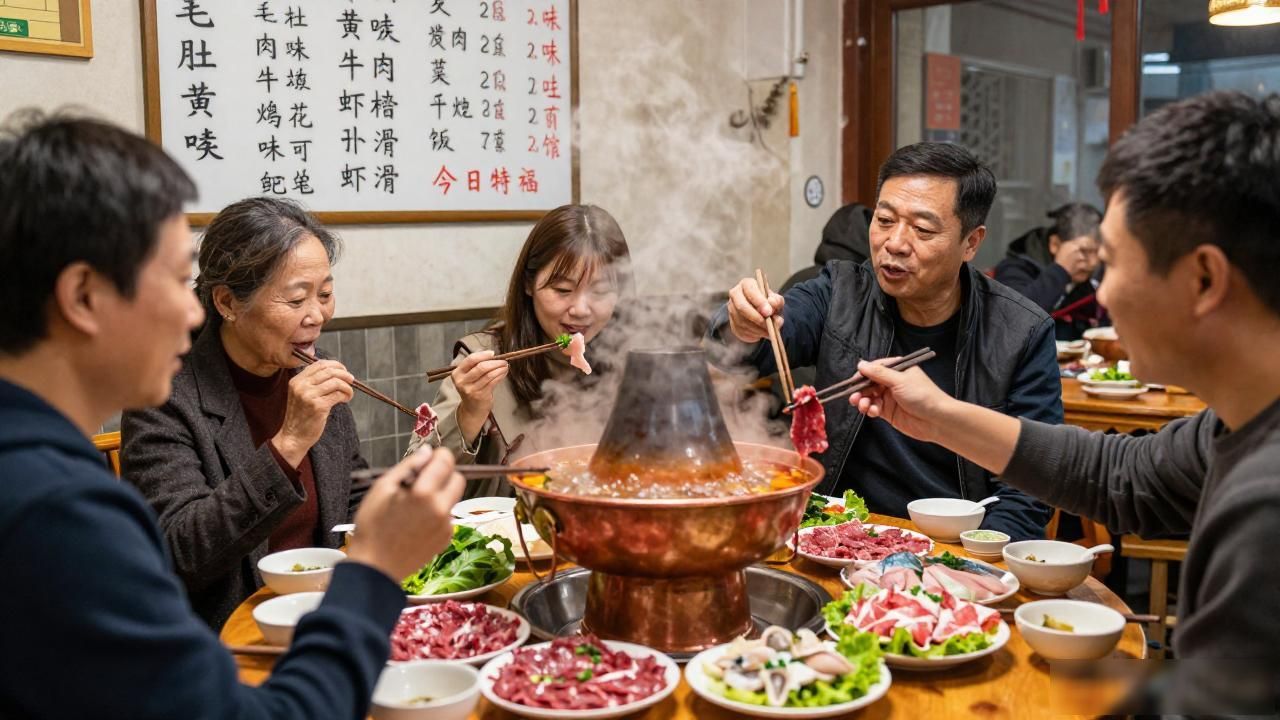
For a first visit, skip the touristy chains and hunt for the neighborhood spot where the menu is handwritten on a whiteboard. Ask locals, point at the steaming table next to yours, and order “the usual.” You’ll get more flavor that way.
Bring a hungry friend and a slow evening. The pot will still be bubbling when you’re done, and that’s the whole point.