
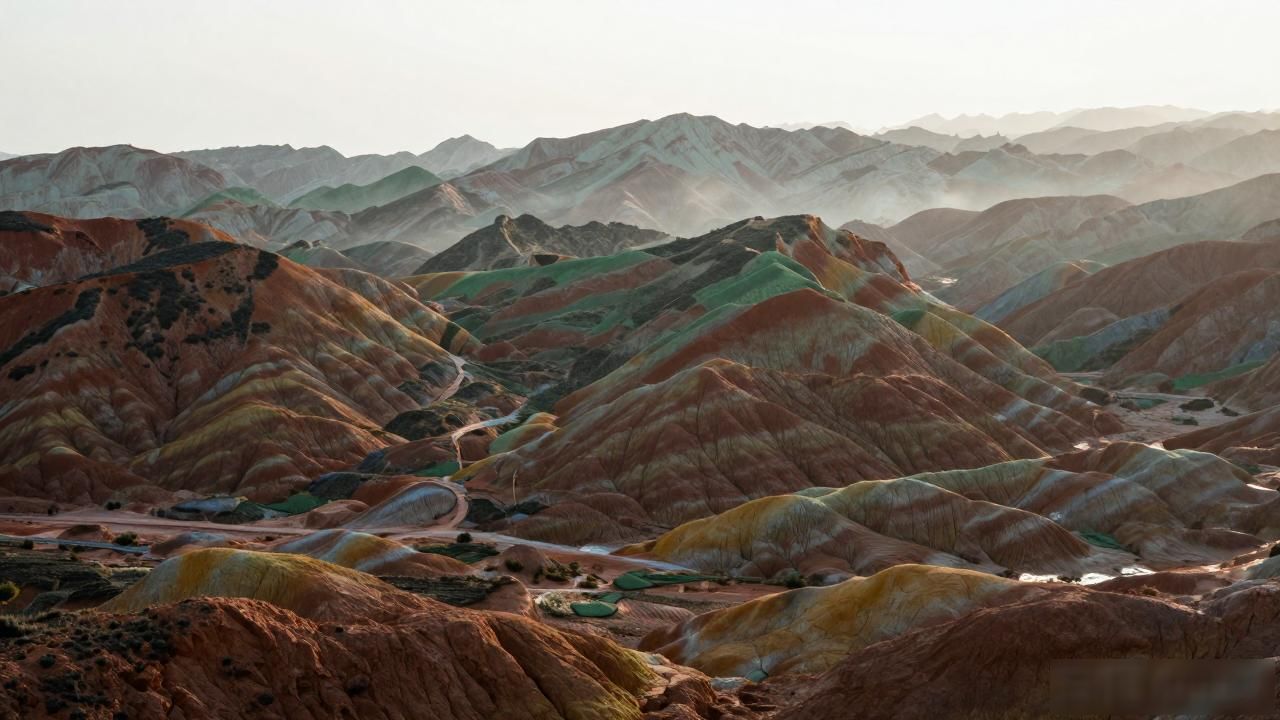
I spent three days hiking the ridgelines of Zhongnan Mountain last September, and I’m still seeing those reds and ochres in my dreams. The colorful mountains in Gansu aren’t just a photoshoot backdrop—they’re a geological anomaly that stopped millions of tourists mid-stride. The strata you see formed over 240 million years in a shallow sea, and the wind and rain simply carved the layers back. Here’s what actually matters before you book that flight.
colorful mountains Gansu when to visit

The colors shift dramatically with the season. June through August brings lush green layers that contrast with the rust-colored sandstone, but the famous rainbow strata only truly ignite in October when frost pulls the mineral pigments to the surface. I watched a morning fog peel away to reveal bands of vermillion, gold, and deep purple that no filter can replicate.
Winter is not dead. The bare ridges in December look almost monochromatic, yet after a fresh snowfall the contrast is so sharp that local photographers call it “bone season.” Fewer crowds, thinner air, and that eerie stillness make it surprisingly rewarding for hikers who don’t mind sub-zero nights. Book a homestay early, because the handful of heated rooms in Zhujihe fill up by Thanksgiving weekend.
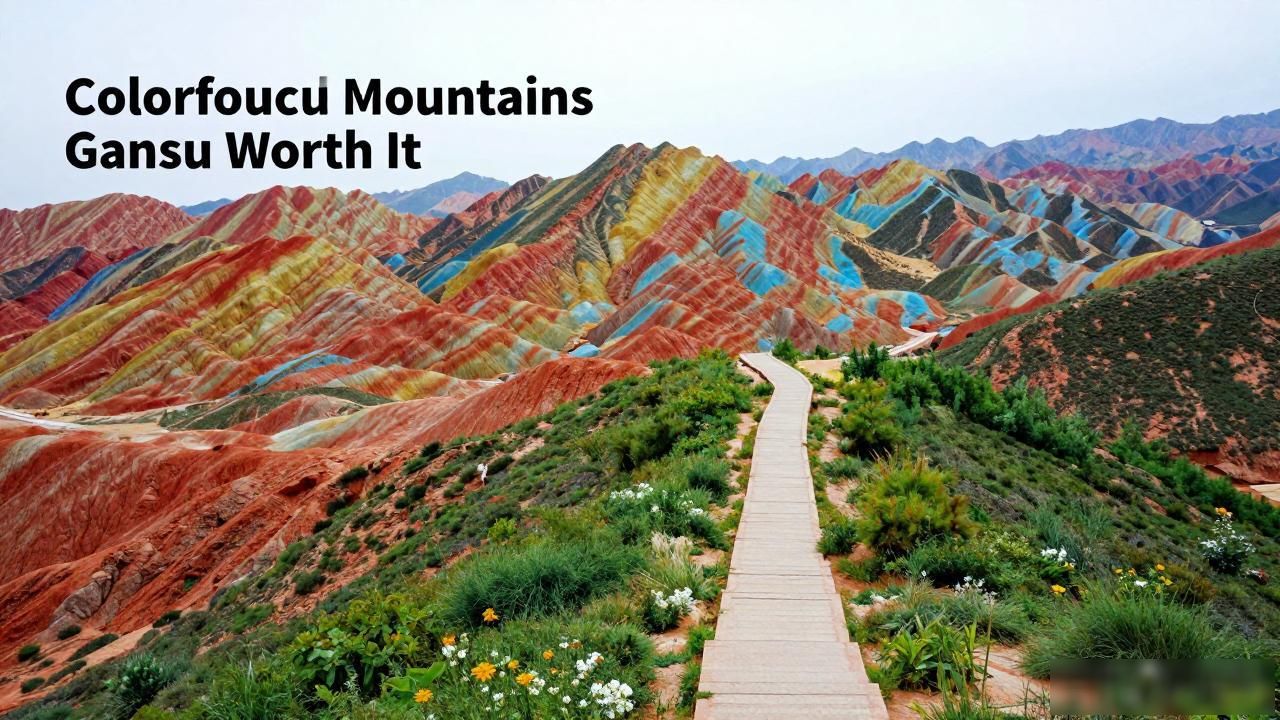
colorful mountains Gansu how to get
The closest hub is Lanzhou, about two and a half hours by shuttle bus to the town of Zhujihe. From there, a fifteen-minute trek or a short jeep ride drops you at the trailhead. Don’t skip the elevation warm-up on the first day; the switchbacks climb from roughly 2,000 to 3,300 meters and your legs will beg for mercy around the second hour.
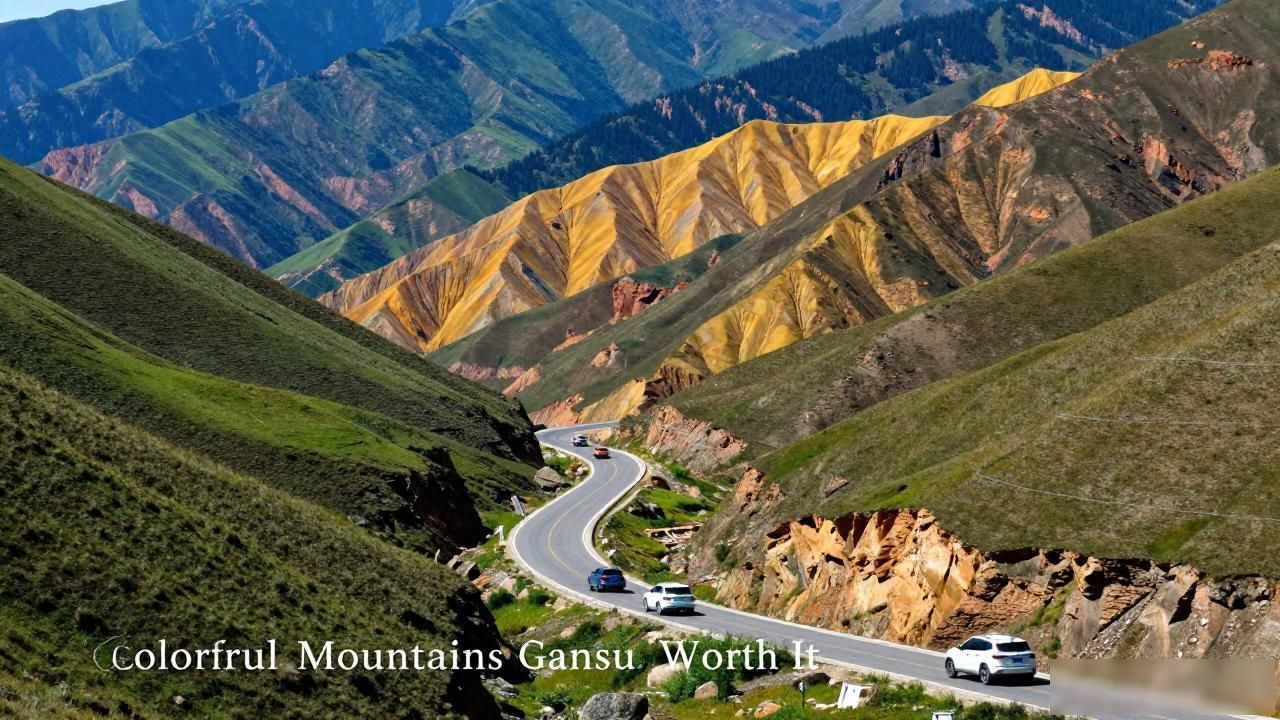
You can also fly into Tianshui and drive south, which saves you the Lanzhou layover if you’re coming from eastern China. The mountain road is paved but narrow—book a private car rather than relying on the scarce minivans. Permits are not required for the main Zha Dan section, though the more remote east side occasionally asks for a quick ID check at the gate.
Pack more water than you think you need,wrap your boots in duct tape against the abrasive shale, and arrive at the trailhead before 7 a.m. The light hits the east-facing cliffs at exactly the right angle for about twenty minutes, and that window is when the mountains actually earn their name. You won’t need a fourth day to recover, but you will need a good jacket for the wind that sneaks through the saddle at midday.