
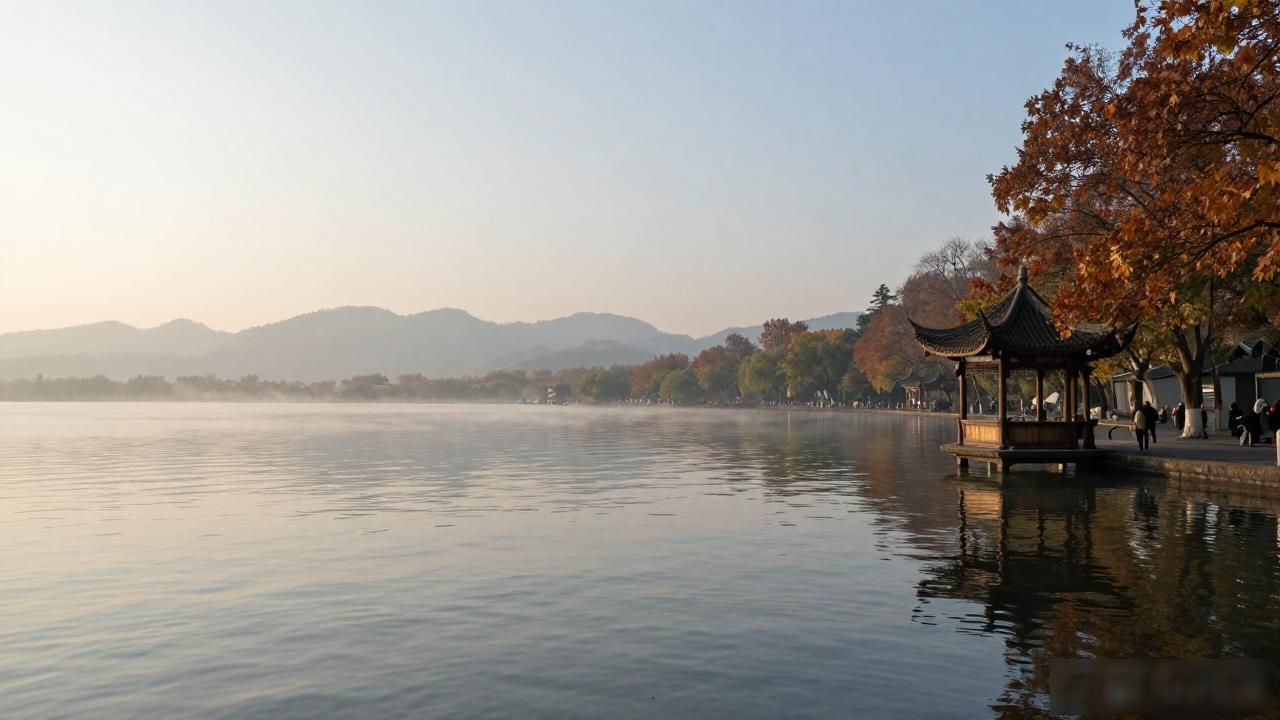
West Lake in Hangzhou has been romanticized for a thousand years, and honestly, the reality can be both better and more chaotic than the postcards suggest. The water, the willows, the mist rolling off the Southern Hills—it’s gorgeous. But there’s also a lot of tour groups, boat fees, and crowded paths if you don’t know where to stand. This guide cuts through the noise and tells you what the scenery actually looks like when you’re standing there.
When to See West Lake Scenery

The honest answer is early morning or late autumn. Around 6:30 AM the lake is nearly empty, the viewing platform on the west shore catches the first light on the Southern Hills,and you get the whole stretch to yourself for twenty minutes before the first tour bus pulls up. Late November through early December is when the ginkgo trees along the causeways turn gold and the air cools just enough to make the walk bearable.
Mid-summer is brutal. The sun bakes the granite paths, the water smells a bit off around the reed beds, and the lotus leaves have mostly browned by August. You’ll see it in photos, but the temperature difference between looking at a photo and standing in 38°C heat is… significant.
Is West Lake Scenery Overrated
Not overrated, but misrepresented. Most marketing pushes the Three Pools Mirroring the Moon and the Broken Bridge, and they’re fine, they’re beautiful. But the real magic lives in the less-famous stretches—the east shore near the Zhejiang University campus, where the lake narrows and the mountain reflections get razor-sharp, or the quiet canal section near Longjing village where you can actually hear the water move. The famous spots are good; the quiet ones are extraordinary.

What’s genuinely disappointing is the boat experience. The painted pleasure boats cost an arm and a leg and mostly just circle the same loop. A cheap paddle boat from the northern dock gives you more freedom and better views of the Leifeng Pagoda rising out of the water.
The scenery is real. It’s just that the best version of it lives in the early morning, the shoulder seasons, and the corners that group tours never find. Show up at 6 AM in October, walk the west causeway toward the south, and you’ll understand why poets kept writing about this place for a millennium.