
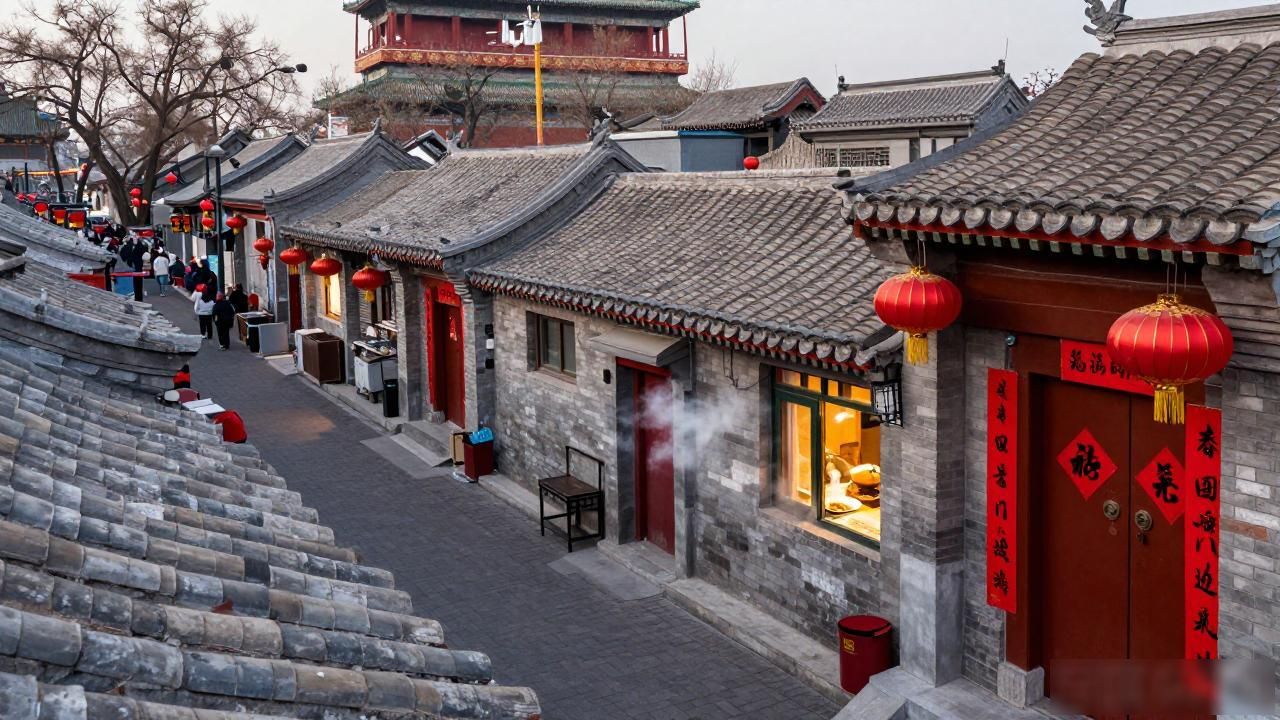
Beijing transforms into a sea of red and gold during the Chinese New Year in Beijing. The capital’s ancient city walls, bustling temple fairs, and multigenerational family gatherings make it one of the most authentic places on earth to experience this 1,500-year-old celebration. What follows is a practical map of where to stand and what to look for.
Where to celebrate Chinese New Year in Beijing
Wangfujing Street becomes a carnival of lanterns from New Year’s Eve through the twelfth day. Shoppers elbow through dense crowds to grab zongzi, candied hawthorn skewers, and red envelopes from street vendors. The atmosphere here feels like stepping into a lantern-lit time machine where old Beijing and neon-soaked modern commerce collide in the same narrow lane.

Nanluoguxiang, the old hutong maze south of the Drum Tower, offers a quieter counterpoint. Neighbors hang hand-painted couplets on doorframes, and the starchy smell of glutinous rice cake drifting from tiny courtyard kitchens replaces the honking of traffic for a few precious hours.
What makes Chinese New Year in Beijing special
What sets this city apart is the layered architectural backdrop behind the celebrations. While southern towns set off fireworks over river-lit alleyways, Beijing arcs pyrotechnics above the massive silhouette of the Forbidden City. On New Year’s Eve, families huddle in four-courtyard siheyuan houses,pour a glass of moutai, and watch the first explosions paint the vermilion palace walls gold—a sight that exists nowhere else in the country.
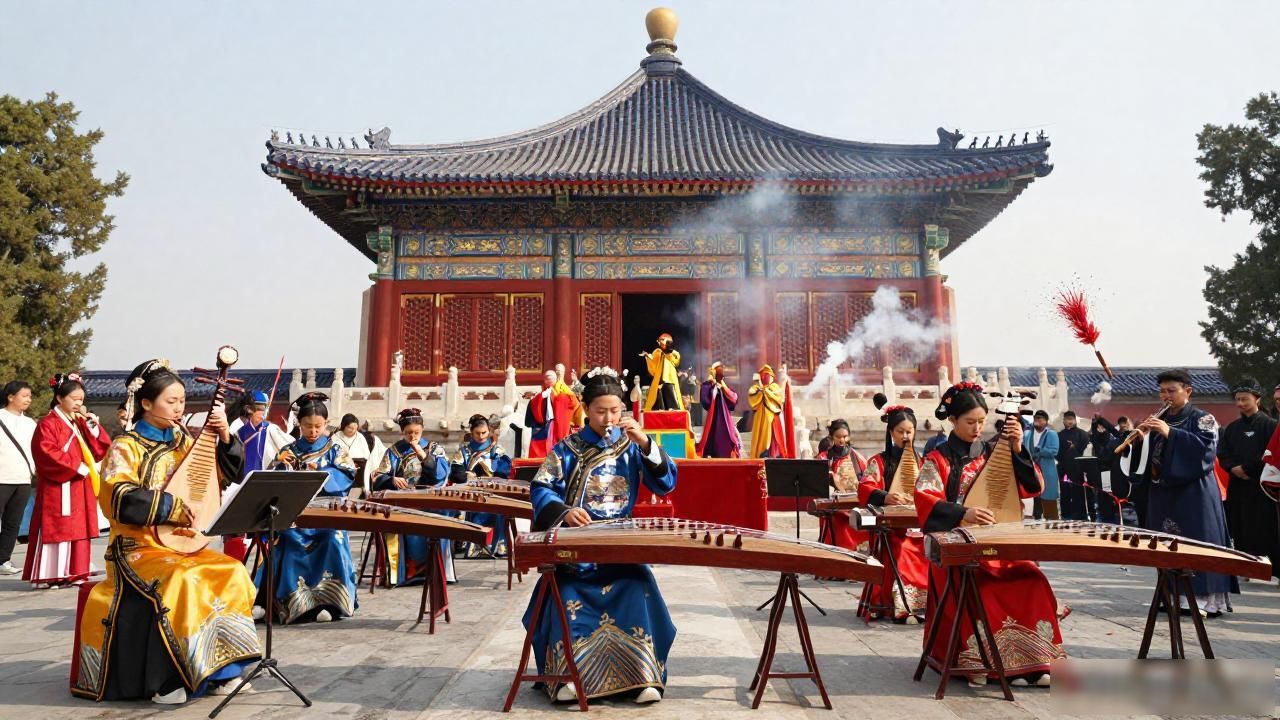
The Temple of Heaven, open even on the holiday, stages qinxi, a prayer-for-harvest musical ritual that has been performed by court musicians for over four hundred years. The echo of plucked strings tangled with distant firecrackers makes for a strange, moving soundtrack.
How to enjoy Chinese New Year in Beijing
Plan around the full 15-day window. The first seven days are the official public holiday, but the real sensory peak arrives from day eight to the fifteenth, when the great lantern festival takes over the Temple of Heaven and the Olympic Park. Book your accommodation at least three weeks ahead; room prices triple and availability essentially vanishes by the tenth.
Wander Shichahai’s lakeside at dusk when thousands of hand-painted paper lanterns drift above the black water and daffodils push through early willow shoots along the frozen shore. It remains the single most photogenic scene of the entire season, and the best vantage point is the small teahouse on the east bank.
Pack layers, budget patience for long queues, and keep a serious appetite for dumplings. Beijing’s Chinese New Year quietly rewards anyone willing to walk a few extra steps and listen a little longer than the surrounding crowd.