
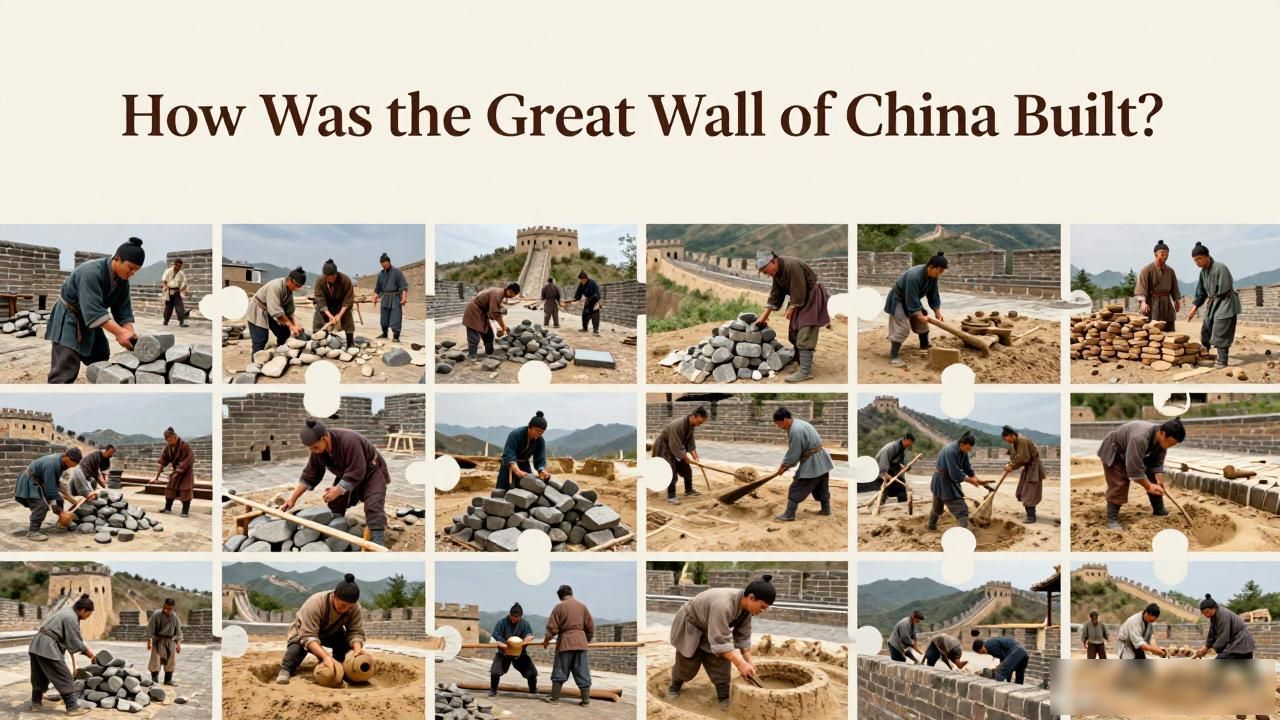
The Great Wall of China stands as one of humanity’s most extraordinary engineering achievements, stretching over 13,000 miles across northern China. Its construction spanned nearly two millennia, involving countless dynasties, millions of workers, and an extraordinary range of building techniques. Understanding how it was built reveals not just a military feat but a story of human determination, resourcefulness, and the relentless drive to protect territory. The wall was never built all at once. Different rulers, different materials, and different purposes shaped each section in distinct ways.
Who Built the Great Wall and When
The earliest sections of the wall date back to the 7th century BC, when various warring states constructed defensive barriers along their borders. However, the most famous construction began under Qin Shi Huang,the first emperor of China, around 220 BC. He ordered the connecting and extending of existing walls to protect his newly unified empire from northern invaders, particularly the Xiongnu nomads.

After the Qin dynasty fell, subsequent dynasties continued building and rebuilding. The Han Dynasty extended the wall further west into the Gobi Desert, while the Ming Dynasty, between the 14th and 17th centuries, undertook the most ambitious construction project. Most of the Great Wall that tourists visit today was built during the Ming period, featuring the iconic stone and brick structures with watchtowers and fortresses.
The labor force behind the wall is staggering to comprehend. Soldiers, peasants, and prisoners were conscripted to work on construction projects. Historical records suggest that millions of people participated over the centuries. Conditions were brutal. Workers faced harsh weather, dangerous terrain, and inadequate food and shelter. Many died during construction, and the wall has sometimes been called the longest cemetery on Earth.
What Materials Were Used in Construction
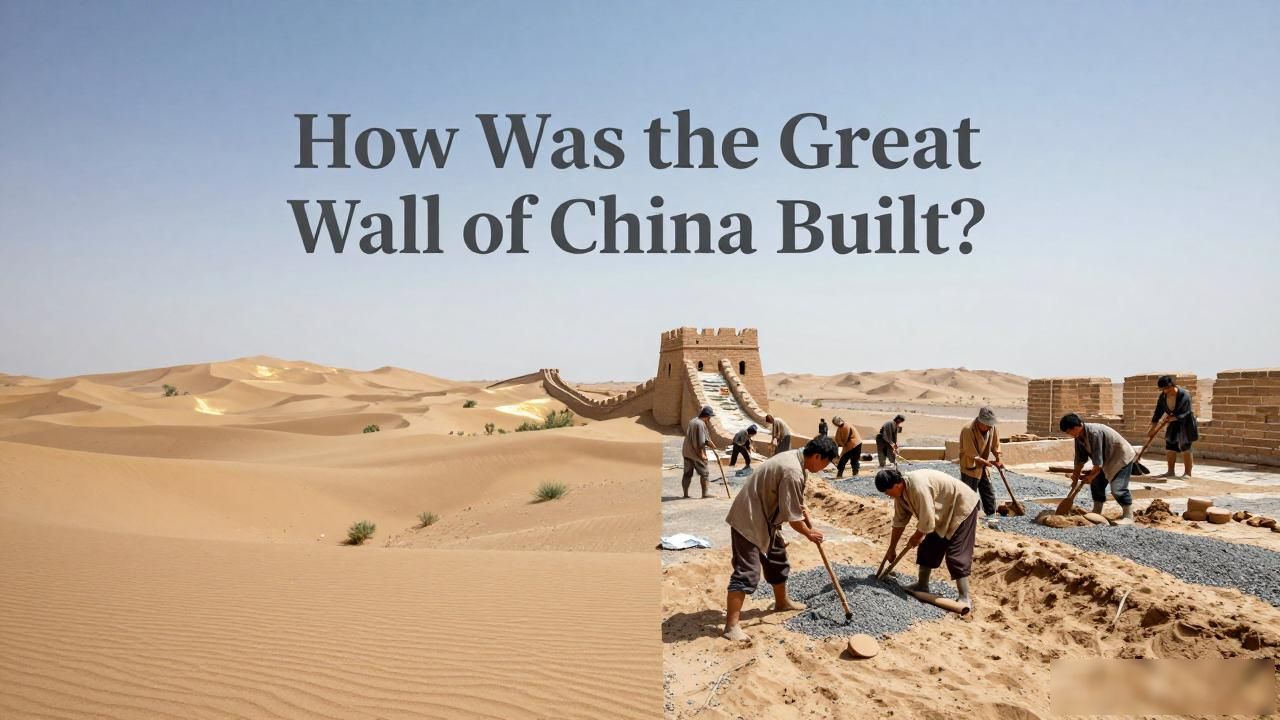
The materials used to build the Great Wall varied dramatically depending on the region and the dynasty. In the western desert regions, where stone and timber were scarce, builders used sand, gravel, and tamped earth to construct the wall. Layers of gravel and clay were compacted between wooden frames to create sturdy barriers that could withstand the harsh desert environment.
In the central and eastern sections, where stone and brick were more available, construction techniques became far more sophisticated. The Ming Dynasty introduced fired bricks and lime mortar, creating walls that were far more durable than earlier versions. These bricks were produced in large kilns built near construction sites, and the lime mortar acted as a powerful binding agent that held the structure together for centuries.
The famous “sticky rice mortar” used during the Ming period represents one of the most remarkable material innovations in ancient construction. Builders mixed slaked lime with sticky rice soup, creating a composite material that was stronger and more water-resistant than pure lime mortar alone. This innovative recipe, discovered through modern scientific analysis, gave the wall exceptional durability and contributed to its survival to the present day.
How Was the Wall Constructed Step by Step
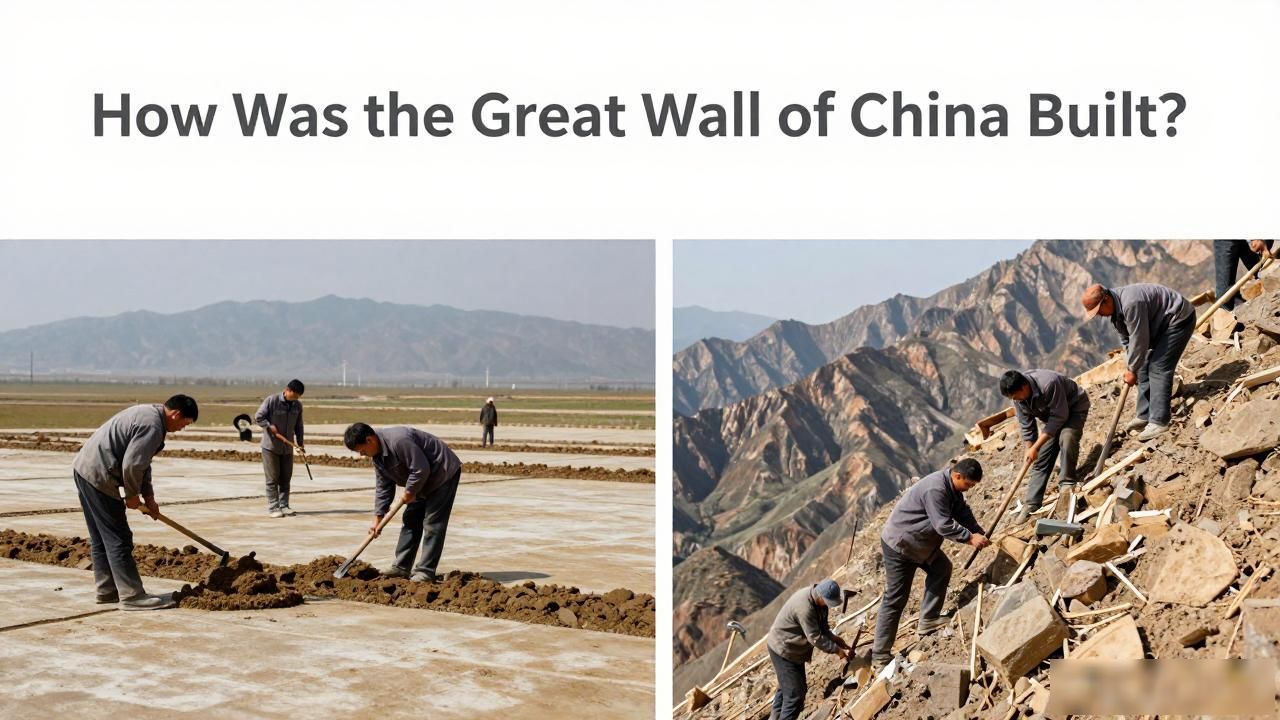
Building the Great Wall required extraordinary logistical planning and organization. Workers first prepared the foundation by leveling the ground or carving into mountain ridges. On steep slopes, they cut terraces into the rock face to create a stable base. In mountainous regions, the wall often followed the natural contours of the terrain, riding along mountain ridgelines for maximum defensive advantage.
The construction process itself was methodical and labor-intensive. For earthen walls, workers packed layers of soil and gravel between wooden frames using heavy tampers. For brick walls, masons laid bricks in alternating patterns, applying mortar between each layer. Watchtowers, beacon towers, and fortresses were built at strategic intervals along the wall, serving as observation posts, barracks, and signal stations.
Transporting materials to construction sites was one of the greatest challenges. In mountainous areas, workers carried bricks and stones on their backs using shoulder poles. Some sections required carrying materials up steep inclines with no roads or wheeled transport available. The sheer physical effort involved in moving millions of tons of building materials remains difficult to imagine. Beidou satellites, modern surveying tools, and historical records all help us understand the scale of this achievement, but the human cost behind every stone is what truly defines the story of the Great Wall’s construction.