
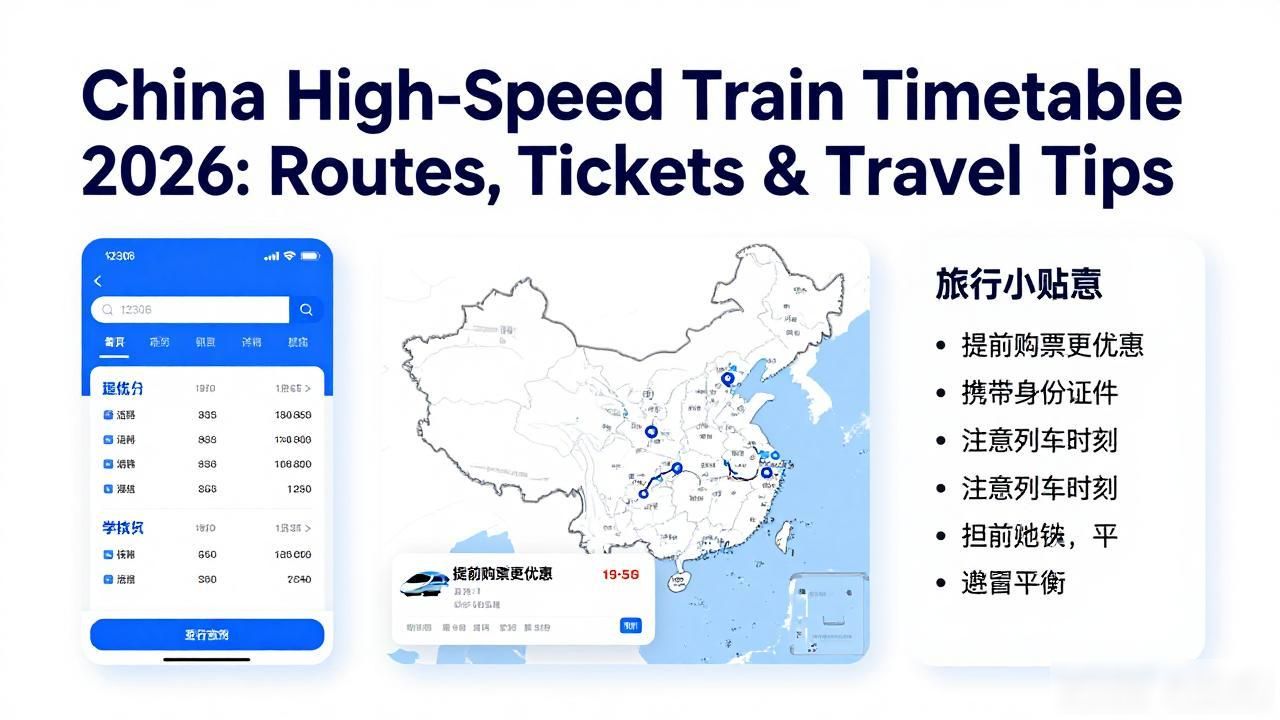
Planning a trip across China by rail can feel overwhelming, especially when you are trying to figure out the schedule. The China high-speed train timetable is actually quite straightforward once you understand how it works. Trains run from around 6:00 AM to midnight, with departures as frequent as every five minutes on busy routes like Beijing-Shanghai. The key is knowing which station you need, how early to arrive, and how to read the ticket information correctly.
How to check the daily schedule for your route

The most reliable way to check times is through the official railway app called 12306, which has an English version. You can also use third-party platforms like or China Highlights, but the official source is always the most accurate. When you search, you will see departure time, arrival time, and total duration listed clearly. For example, the Beijing-Shanghai line takes about 4.5 hours on the fastest train, while the slower ones take around 6 hours.
You should pay attention to the train number because it tells you the type of service. Trains starting with G are the fastest, usually running at 300-350 km/h. Trains starting with D are slower but still high-speed, running at 200-250 km/h. The letter C is for intercity trains, which are short distances. If you are flexible with your time, taking a D train can save you money, and the time difference is often less than an hour on shorter routes.
Another practical tip is to check the timetable a few days before your trip, because schedules can change seasonally. The railway system also adds extra trains during holidays like Chinese New Year and National Day, so the timetable you see today might not be the same next week. Always double-check the night before you travel, and set a reminder to book your ticket as soon as the booking window opens, which is usually 15 days in advance.
What ticket types and station rules you need to know
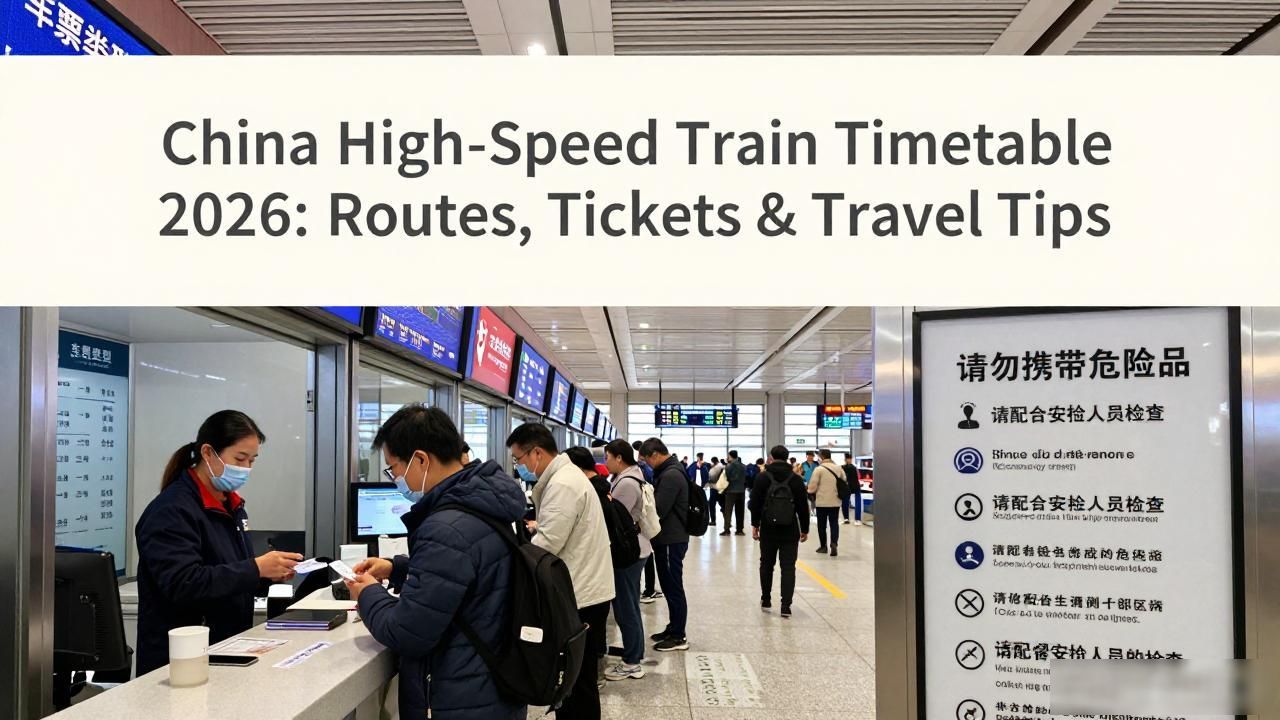
Your ticket will show a seat number and a carriage number, but you also need to know which waiting area to go to. At major stations like Shanghai Hongqiao or Guangzhou South, the waiting areas are divided by train number, and you will see the information on the big screens. Arrive at least 40 minutes before departure for high-speed trains, because security checks and ticket verification take time. If you are traveling during peak season, give yourself an extra 30 minutes.
There are three main seat classes on high-speed trains: second class, first class, and business class. Second class is the most affordable and still comfortable,with seats arranged in a 3-2 layout. First class uses a 2-2 layout with more legroom and wider seats. Business class offers fully reclining seats and is the quietest option, but it costs roughly three times the price of second class. For overnight trips, some D trains have sleeper compartments, but these are less common on the newer G trains.
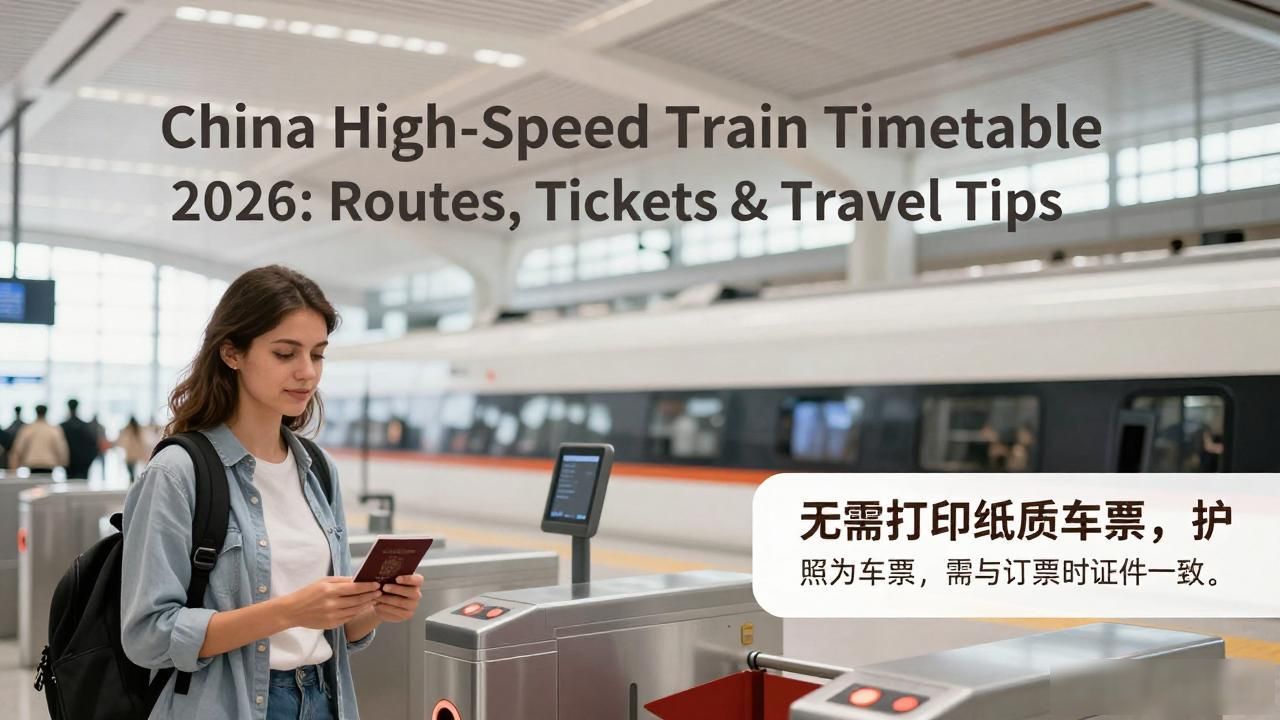
One thing many foreign travelers miss is that you do not need to print a paper ticket. Your passport is your ticket, and the gate will scan it directly. Just make sure you use the same document you used when booking. If you miss your train, you can usually rebook for a later departure on the same day, but there is a fee and it depends on availability. The timetable is your friend here—knowing the next departure time helps you decide whether to wait or rebook.
The China high-speed train timetable is designed for efficiency, and once you get the hang of it, you will find it more reliable than most other rail systems in the world. With thousands of daily departures connecting over 300 cities, your biggest challenge is not finding a train, but choosing the right one. Check the times, book early, and get to the station with enough buffer time. That is all it takes to travel smoothly across China at 350 kilometers per hour.