
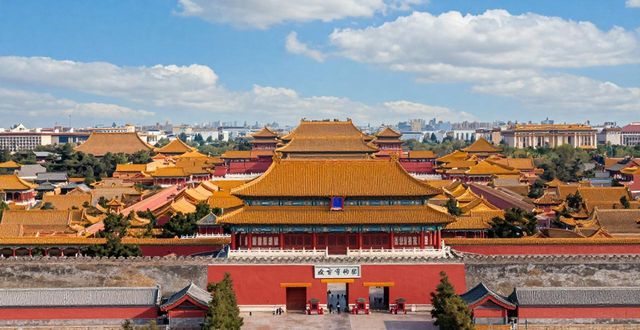
Ming and Qing dynasty architecture represents one of the most refined and enduring traditions in world building design. Spanning over five centuries from the 14th to the early 20th century, these two dynasties left behind palaces, temples, gardens, and city walls that continue to draw millions of visitors every year. What makes this architecture stand out is not just its age, but its deep connection to Chinese philosophy, social hierarchy, and craftsmanship. For anyone traveling to China or studying its history, understanding the architecture of this period is essential to grasping the culture itself.
What makes Ming and Qing buildings different from earlier Chinese styles

The Ming dynasty brought a strong return to traditional Chinese building standards after the Mongol Yuan dynasty. Builders focused on symmetry, axial layouts,and grand scale. The Forbidden City, built in the early Ming period, is the best example. It stretches along a central north-south axis, with halls, gates, and courtyards arranged in perfect balance. This layout was not just aesthetic—it reflected Confucian ideals of order and hierarchy. The emperor sat at the center, both literally and symbolically.
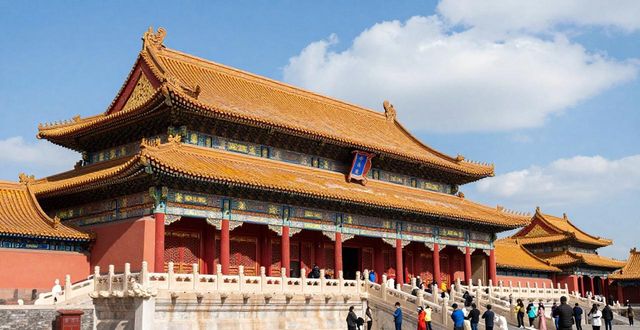
Wood remained the primary material, but Ming architects perfected interlocking wooden brackets called dougong. These brackets supported heavy roofs without nails, allowing walls to be non-load-bearing. That meant windows and doors could be larger, and walls could be decorated without weakening the structure. Roofs became more dramatic too. The sweeping curved eaves, often topped with glazed yellow tiles, became a signature of imperial buildings. Yellow was reserved for the emperor, while green and blue were used for lesser princes and temples.
The Qing dynasty continued these traditions but added more decorative detail. Colors became brighter, carvings more intricate, and roofs more layered. The Qing emperors, especially Kangxi and Qianlong, were great builders. They expanded the Forbidden City and built sprawling garden complexes like the Summer Palace and Chengde Mountain Resort. These gardens were not just leisure spaces. They were designed to recreate famous landscapes from southern China, using artificial lakes, hills, pavilions, and winding corridors to create a sense of endless depth. Every rock, tree, and bridge had symbolic meaning.
Where can visitors see the best surviving examples today
The most obvious destination is Beijing. The Forbidden City is the largest and best-preserved collection of Ming and Qing wooden architecture in the world. Walking through its halls, you can see how space was used to control access and project power. The Hall of Supreme Harmony, where the emperor held court, sits on a three-tiered marble terrace. The climb itself made visitors feel small and the ruler untouchable.
Just north of the Forbidden City, Jingshan Park offers a hill built from the earth dug to create the palace moat. From the top, you get a full view of the golden roofs stretching toward the horizon. It is one of the best photo spots in the city. The Temple of Heaven, also built during the Ming dynasty, is another must-see. Unlike the Forbidden City, which is straight and rigid, the Temple of Heaven uses circular forms to represent heaven. The Hall of Prayer for Good Harvests stands on a three-tiered marble base, with a blue-tiled conical roof that seems to float.
Outside Beijing, Pingyao Ancient City in Shanxi province preserves Ming and Qing streets, shops, and homes. Unlike the grand palaces, Pingyao shows how ordinary people lived. The courtyard houses are smaller but follow the same principles of symmetry and inward focus. The city wall, still intact, gives a sense of how these towns were fortified. In Suzhou, the classical gardens like the Humble Administrator’s Garden and the Lingering Garden show Qing dynasty garden design at its peak. These are UNESCO World Heritage sites and offer a quieter, more intimate experience than the imperial complexes.
For those short on time, even a single day in Beijing can cover the key sites. Start at the Forbidden City in the morning, walk through Jingshan Park at midday, and end at the Temple of Heaven by late afternoon. The contrast between Ming and Qing styles becomes clear when you see both dynasties’ contributions side by side. The Ming structures are bolder and simpler. The Qing additions are more refined and colorful. Together, they tell the story of how Chinese architecture evolved while staying deeply rooted in tradition.