
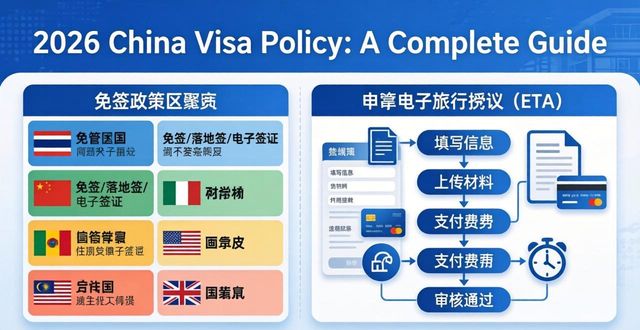
China’s visa policy in 2026 has undergone significant refinements to welcome more international visitors, business travelers, and skilled workers. As the country fully reopens and expands its economic cooperation globally, the new rules focus on simplifying applications, extending visa-free stays,and digitalizing the entire process. Whether you are a tourist planning a short trip or an expat seeking long-term employment, understanding the updated regulations is crucial for a smooth entry. This guide breaks down the most important changes, eligibility criteria, and practical steps you need to know before booking your flight.
Which Countries Enjoy Visa-Free Access
As of 2026, China has expanded its unilateral visa-free program to cover citizens from over 20 European nations, including France, Germany, Italy, Spain, and the Netherlands, along with Malaysia, Singapore, and Australia. Travelers from these countries can enter China for tourism, business, or family visits for up to 15 days without any visa. The policy also allows multiple entries within a 12-month period, provided each stay does not exceed the limit. This is a major shift from previous years when only transit passengers or Hainan Island visitors had such privileges.

For those not on the visa-free list, China now offers a streamlined electronic travel authorization for short stays. Nationals from the US, UK, Canada, and Japan still need a traditional visa, but the application process has been shortened to five working days on average. Additionally, the 144-hour transit visa waiver remains active for 31 ports across major cities like Beijing, Shanghai, Guangzhou, and Chengdu. This allows travelers from 53 eligible countries to stop over for up to six days without a visa, perfect for a quick city tour between international flights.
How to Apply for a China E-Visa Online
The biggest convenience upgrade in 2026 is the fully digital e-visa system for tourist and business visas. Applicants no longer need to visit a Chinese embassy or visa center in person unless fingerprinting is required for first-time visitors. You simply fill out the online form on the official China Visa Application Service website, upload a digital passport photo and scanned copies of your flight itinerary and hotel bookings. The system uses facial recognition technology to verify your identity, and most applications are processed within three business days.
Payment is made via credit card or international e-wallets like PayPal and Alipay. Once approved, you receive a PDF e-visa by email, which you can print or store on your phone. Border officials will scan the QR code at immigration. However, note that long-term work and student visas still require original documents and an in-person interview at the embassy. Also, the e-visa is only valid for single or double entries with a maximum stay of 30 days. For multiple entries or stays beyond 30 days, you must follow the traditional paper application route.

What Are the Work Visa Requirements
For foreigners planning to work in China in 2026, the Z-visa process now emphasizes skills and salary thresholds. The new point-based system assigns scores based on your educational background, years of experience, Chinese language proficiency, and annual salary above 400,000 RMB. A minimum of 60 points is required for a standard work permit. High-demand sectors like artificial intelligence, green energy, and advanced manufacturing receive bonus points. Additionally, employers must be pre-approved by the State Administration of Foreign Experts Affairs and provide a labor contract that meets Chinese labor law standards.
Applicants need to submit a criminal record certificate authenticated by their home country, a medical examination report from a designated hospital, and proof of at least two years of relevant work experience. The entire process takes about four to six weeks from the employer’s application to visa issuance. One notable change in 2026 is that work visa holders can now bring their spouse and children under 18 on a dependent visa without needing separate work permits. Dependents are allowed to study in local schools and access public healthcare after registration at the local police station.
Transit Visa Rules for 24/72/144 Hours

The transit visa waiver remains one of the most traveler-friendly policies. In 2026, China added three new transit ports: Qingdao, Xiamen, and Wuhan, bringing the total to 31 ports. Eligible travelers from 53 countries, including the US, UK, Canada, Australia, and all Schengen states, can stay for 24, 72, or 144 hours depending on the port. For example, Beijing, Shanghai, and Guangzhou allow 144-hour stays, while most regional ports offer 72 hours. The key requirement is that you must have a confirmed onward ticket to a third country or region (Hong Kong, Macau, and Taiwan count as third regions).
You cannot travel outside the designated administrative area—for instance, a 144-hour transit in Shanghai limits you to Shanghai, Jiangsu, and Zhejiang provinces. Also, the policy is strictly for transit, meaning your arrival and departure airports must be different or you must continue to a different country. Overstaying even by one hour results in fines and possible blacklisting. As of 2026, China has introduced a digital pre-registration system for transit passengers, allowing you to submit your flight and passport details online 48 hours before arrival to skip long queues at the transit counter.
Now that you understand the key updates to China’s visa policy in 2026, which change do you find most helpful for your travel or work plans? Share your thoughts and questions in the comments below, and don’t forget to like and share this guide with fellow travelers.