
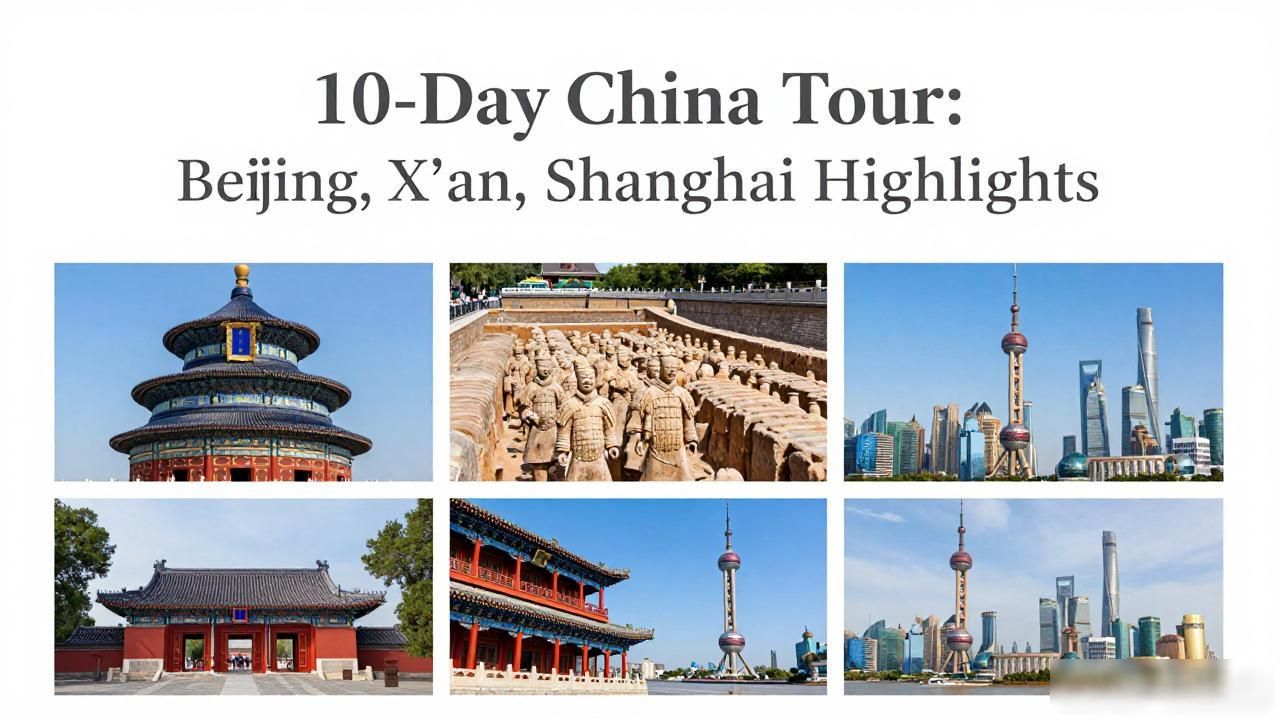
Planning a trip to China can feel overwhelming given the sheer scale of the country. However, a well-structured two-week window allows travelers to hit the absolute essentials without rushing. This itinerary focuses on the “Golden Triangle” of tourism: the imperial capital,the ancient historical hub, and the modern financial center. It balances deep cultural immersion with iconic sightseeing, ensuring you see the best of what this vast nation has to offer.
What are the best cities for a 10-day China trip?
Starting in Beijing is non-negotiable for any first-time visitor. The city’s weight in history is palpable. You will spend your first few days exploring the Forbidden City, a massive complex that once housed emperors. Walking through its gates feels like stepping back centuries. From there, head north to the Great Wall at Mutianyu. This section offers a manageable hike with stunning views and fewer crowds than Badaling. It is physically demanding but visually rewarding. The contrast between the manicured gardens and the rugged wall highlights the diversity of Chinese landscape design.
After soaking in northern history, fly west to Xi’an. This city is the starting point of the Silk Road and holds immense archaeological significance. The main attraction here is the Terracotta Army. Seeing thousands of life-sized clay soldiers arranged in battle formation is a humbling experience. It provides tangible proof of Qin Shi Huang’s ambition. Beyond the pits, Xi’an’s Muslim Quarter offers a sensory overload of street food and spices. Try the lamb burgers and cold noodles. The energy here is chaotic yet inviting.
How to navigate transportation and logistics efficiently?
Getting around China requires strategic planning. High-speed trains connect major hubs seamlessly. For instance, the bullet train from Beijing to Xi’an takes about four hours. It is faster and more scenic than flying when you account for airport security. Booking tickets in advance via official apps or your hotel concierge is essential during peak seasons.

Once you reach Shanghai, the pace shifts dramatically. The Bund offers panoramic views of the skyline, where futuristic skyscrapers loom over colonial-era buildings. This juxtaposition defines modern China. Use the metro system for local transit; it is clean, efficient, and covers every corner. Download Alipay or WeChat Pay before arrival. Cash is rarely used, and credit cards are not accepted everywhere. Mobile payments are the standard for everything from subway fares to street snacks.
Ensure your visa is processed well ahead of time. Electronic visas are available for many nationalities, simplifying entry. Pack comfortable walking shoes, as you will cover significant ground. The blend of ancient traditions and rapid modernization creates a unique travel atmosphere. This route ensures you witness the depth of Chinese heritage while experiencing its contemporary vitality.
The point about Mutianyu being a better pick than Badaling for fewer crowds is a practical detail many itineraries skip. Interesting that the article recommends the bullet train over flying to Xi’an once airport security time is factored in.