
When I first walked into a Beijing Opera rehearsal room, the sight hit me like a wall of living color. Actors draped in shimmering silk moved between rows of hanging garments — every piece a declaration of identity. These are not merely costumes; they are visual language. For over two centuries, the opera tradition has used fabric, thread, and ornament to tell audiences exactly who stands before them. This system is one of the most sophisticated in all of world theater.
I have spent more than fifteen years studying Chinese performing arts costumes, working closely with designers in Shanghai and Beijing. What struck me immediately was how nothing here is left to chance. Every hue, every motif, every stitch carries meaning that trained spectators decode without conscious effort.
What Do Beijing Opera Costume Colors Symbolize
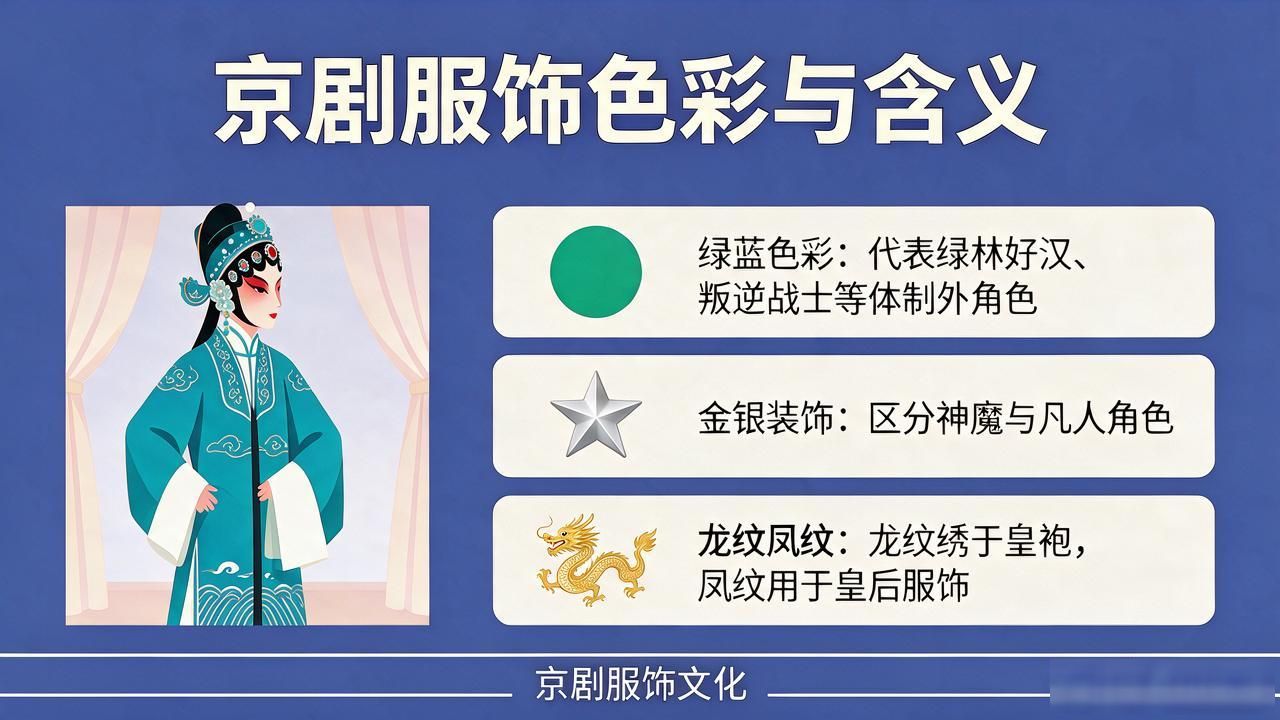
Color in Beijing Opera operates almost like a shorthand for morality and temperament. Red signifies loyalty and courage — Guan Yu, the archetypally devoted general, appears almost exclusively in crimson. White, by contrast, marks suspicion or treachery, frequently worn by scheming ministers and cunning female leads. Black conveys raw integrity and unyielding honesty, while yellow denotes ambition edged toward arrogance. Purple suggests dignity and gravitas, reserved for elders and high officials who command respect without demanding it.

Green and blue tend toward characters outside the establishment — forest outlaws,rebellious warriors, and those who live by their own codes. Gold and silver embellishments separate the divine and supernatural from ordinary mortals. Dragons woven into imperial robes and phoenix motifs on empress garments are not decorative flourishes but markers of bloodline and mandate.
The precision of this coding means actors and designers approach each production like translators working between two languages. A single wrong color can undermine a performance completely.
How Do Beijing Opera Costumes Distinguish Character Types
Chinese theatrical tradition divides performers into four fundamental role categories, and each type receives its own visual treatment. Sheng denotes male protagonists ranging from young scholars to seasoned warriors. Dan represents female roles spanning virtuous heroines to spirited young women. Jing paints the face with bold patterns and wears heavily embroidered armor that exaggerates physical presence. Chou fills comedic functions with simpler garments and distinctive facial white patches.
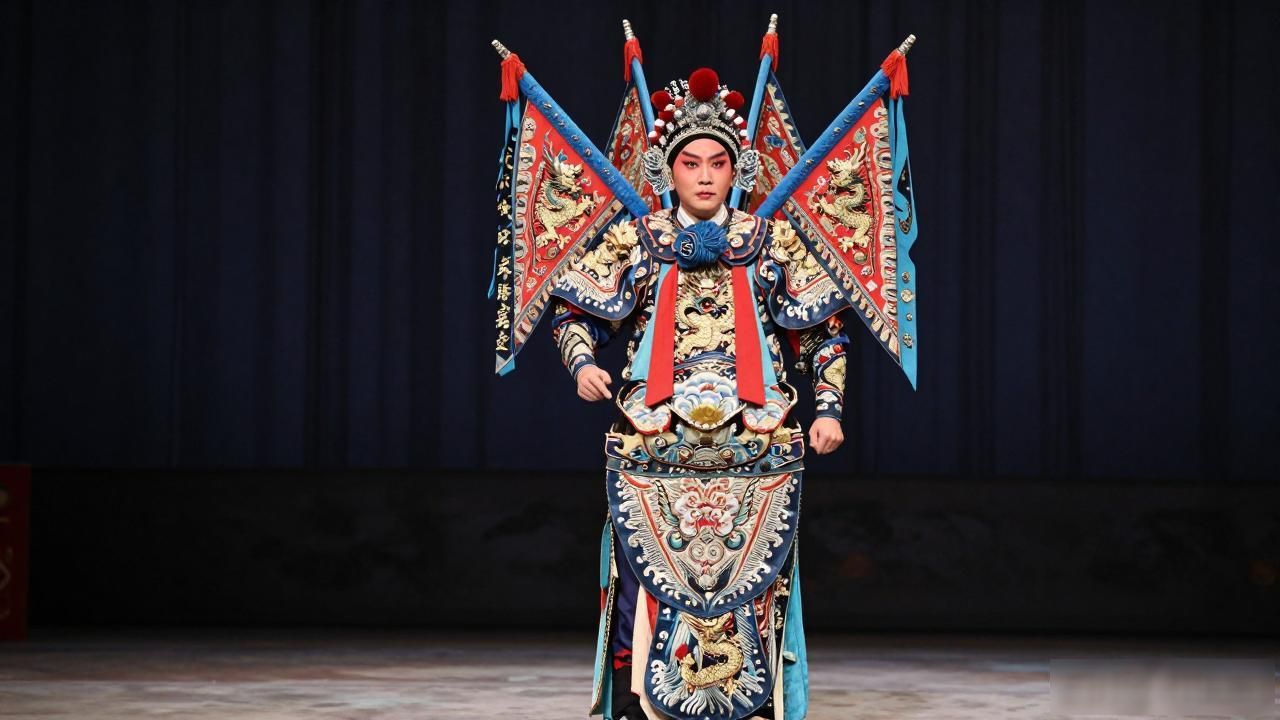
An armoured general like Jing’s Chiwen Ka — the cross-collar robe with padded shoulders — adds nearly twenty pounds of structured silk and metal thread to the actor’s frame. The embroidered dragons, clouds, and waves on such pieces are not random decoration; they project power outward so even spectators in the back rows understand who commands authority. Scholars wear lighter, flowing robes with subtle patterns suggesting education rather than brute force.
Female roles present perhaps the most nuanced spectrum. The Qingyi — the dignified woman — drapes in long, pale silk with minimal ornamentation, her movements communicating everything through gesture. The Huadan — the playful young woman — bursts in bright floral patterns and shorter skirts that allow acrobatic freedom. The Daomadan — the warrior woman — bridges both worlds in practical yet striking garb designed for sword fighting on stage.
How Are Traditional Beijing Opera Costumes Made
Handcrafting a single Beijing Opera costume can consume months of concentrated labor. Artisans layer multiple fabrics, stitch thousands of individual threads, and attach sequins and beads by hand until the surface achieves that characteristic depth and luminosity. The gold and silver metallic threads — often wrapped around silk cores — catch stage light in ways synthetic materials cannot replicate.
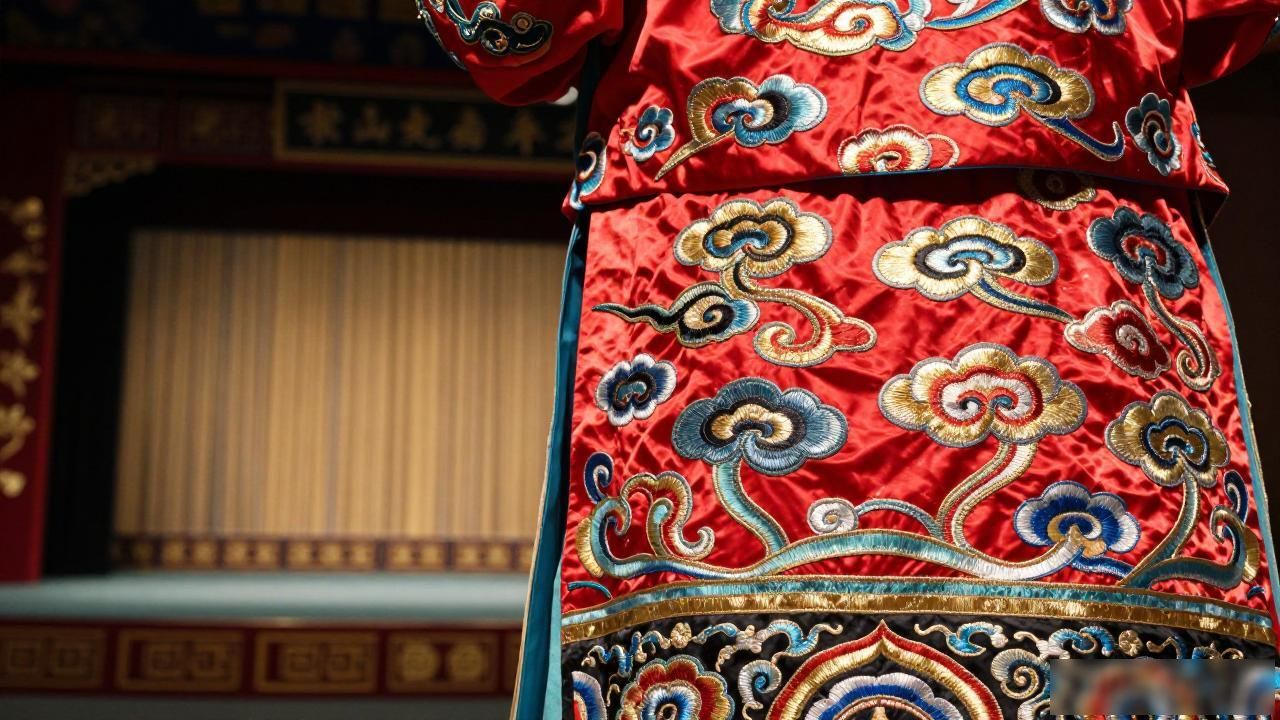
Certain techniques demand decades of mastery. The cloud-rolling embroidery that decorates shoulder areas requires needles thin as hair and hands steady enough to hold position for hours without tremor. Many workshops still operate within small family studios where knowledge passes orally from master to apprentice, making each surviving practitioner invaluable.
Modern productions occasionally blend traditional methods with contemporary textiles, but core pieces — especially those worn by principal artists in major companies — remain firmly rooted in ancestral techniques. The result is clothing that functions simultaneously as costume, sculpture, and portable heritage.
Watching an actor step into full regalia transforms their body into something mythic. These costumes persist because they communicate truths that words alone cannot carry.