
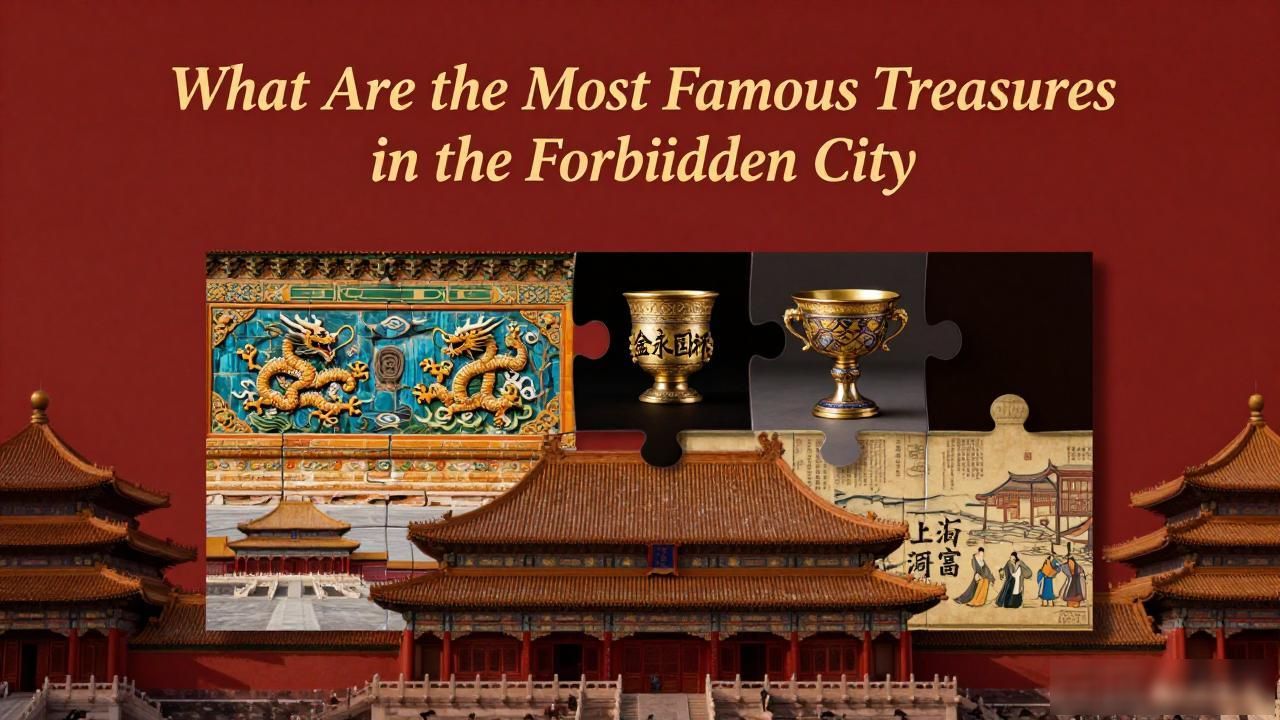
The Forbidden City in Beijing is not just a palace—it is a vast museum holding one of the most important collections of Chinese cultural relics in the world. The treasures inside span thousands of years, from ancient bronze vessels to delicate porcelain, imperial jewelry, and priceless paintings. These objects tell the story of China’s imperial past, its artistry, and its power.
What makes the Forbidden City treasures so valuable

Many people assume the value of these treasures comes from gold or jewels, but the real worth lies in their historical and cultural significance. The collection includes items that were made exclusively for emperors, such as the Jadeite Cabbage with Insects, a small but incredibly detailed carving that symbolizes fertility and purity. This piece alone shows the extraordinary skill of Qing dynasty artisans.
Another remarkable treasure is the Gold and Silver Inlaid Celestial Globe, created during the Qianlong reign. It combines astronomy with art, reflecting how Chinese emperors saw themselves as rulers of both heaven and earth. These objects were not just decorative—they carried deep symbolic meaning and were used in rituals, ceremonies, and daily court life.
The Forbidden City also holds a massive collection of ancient calligraphy and paintings, including works by masters like Gu Kaizhi and Zhao Mengfu. Many of these pieces are so fragile that they are rarely displayed,making each exhibition a rare opportunity for visitors and scholars.
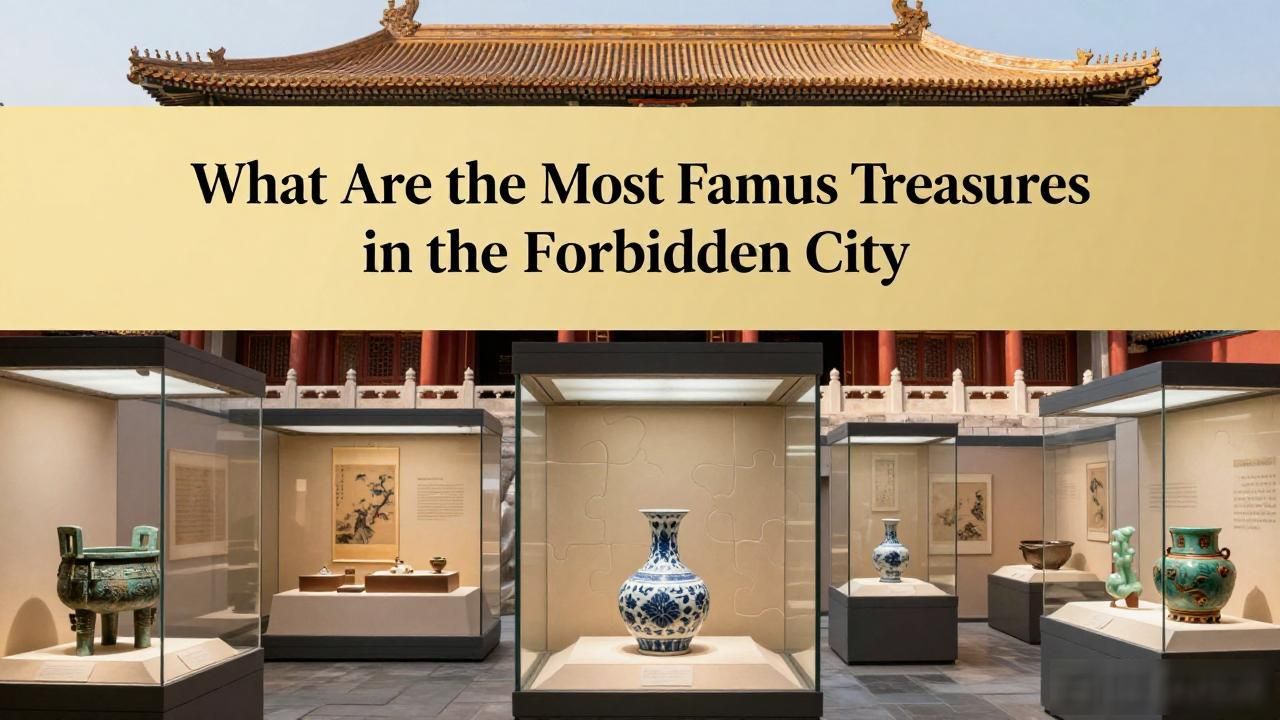
How are the Forbidden City treasures preserved and displayed
Preserving such a vast and varied collection is a constant challenge. The Palace Museum uses advanced climate control, special lighting, and careful handling to protect items that are centuries old. For example, silk scrolls and paper documents must be kept in low-oxygen environments to prevent decay.
Some treasures are displayed permanently, like the Hall of Great Harmony with its golden throne and intricate carvings. Others are shown in rotating exhibitions to reduce light exposure and wear. The museum also uses digital technology to create virtual tours, allowing people around the world to see these treasures without touching them.
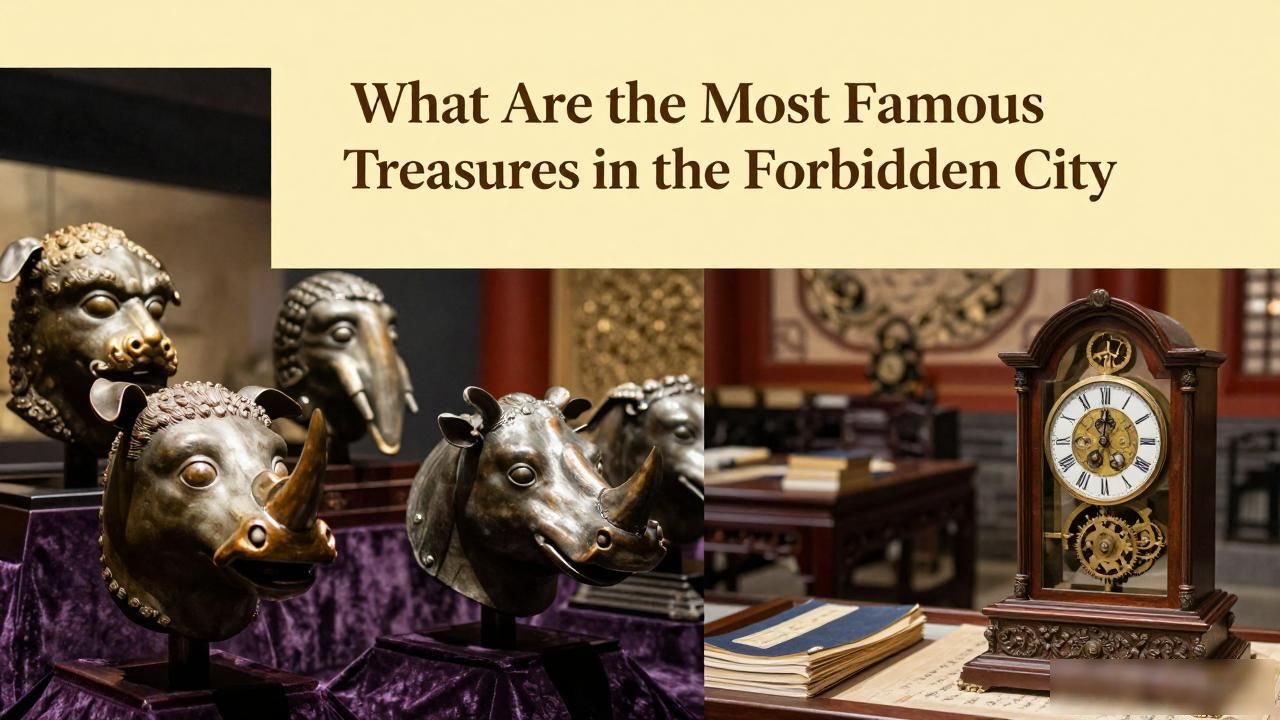
Visitors often wonder which items are the most important. The Twelve Bronze Animals from the Yuanmingyuan, though not all housed in the Forbidden City, are closely tied to its history. Inside the palace, the Clock and Watch Collection is a favorite, featuring elaborate mechanical clocks gifted by European monarchs. These pieces highlight the global connections of the Qing court.
The Forbidden City treasures are not just relics—they are living proof of China’s artistic and political legacy. Whether you are a history lover, an art collector, or a curious traveler, these objects offer a direct link to a world that shaped modern China.