
Taiyuan, the capital of Shanxi Province, is often overlooked by travelers rushing to Datong or Pingyao. But this city has its own quiet charm—ancient temples, heavy industry history, and a food scene built around noodles and vinegar. If you’re looking for a less touristy Chinese city with real depth, Taiyuan is worth a stop.
What are the must-visit attractions in Taiyuan
Start with the Jinci Temple, about 25 minutes southwest of the city center. It’s a sprawling complex of Song Dynasty architecture, ancient cypress trees, and a stunning cross-legged flying bridge over a pool. The圣母殿 (Hall of the Holy Mother) inside is one of the few surviving timber structures from the Song period. Plan at least two hours here—it’s not just a temple, it’s a museum of Chinese architectural history.
Don’t skip the Shanxi Museum either. It’s free, well-organized, and tells the story of Shanxi’s role as a cradle of Chinese civilization. The exhibits on ancient bronze ware and the Jin Dynasty artifacts are particularly strong. If you’re into industrial heritage, the Coal Museum of China is surprisingly interesting—it’s built into an actual former coal mine, and you can go underground to see how miners worked.
For a change of pace,walk around Yingze Park. It’s a large urban park with a lake, willow trees, and locals practicing tai chi or playing cards. It’s not a “sight” but it gives you a feel for daily life in Taiyuan. And if you have time, the Twin Pagoda Temple (Shuangta Si) offers a good photo op and a quiet escape from the city noise.
Where to find the best local food in Taiyuan

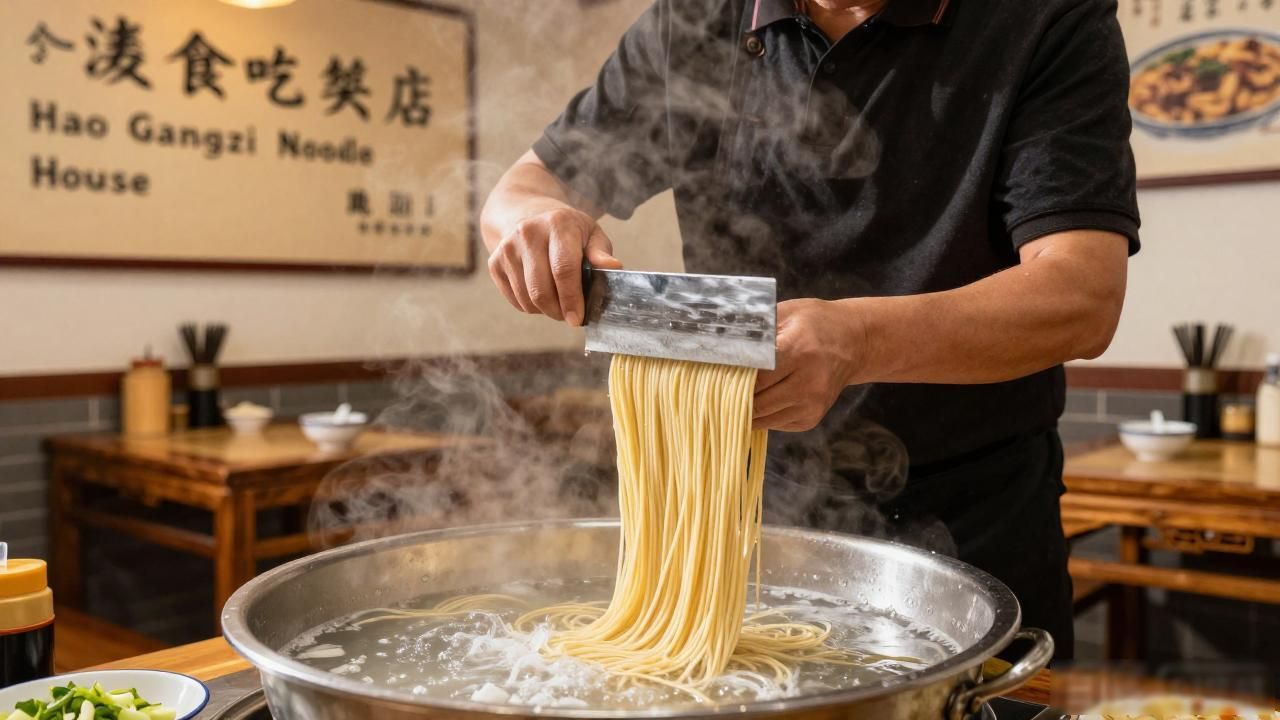
Taiyuan’s food is all about bold, simple flavors. The local specialty is刀削面 (knife-cut noodles), which are made by shaving strips of dough directly into boiling water. The texture is chewy and satisfying. Head to a place called Hao Gangzi Noodle House—it’s a no-frills chain that locals trust. Order the bowl with braised pork and a side of pickled vegetables.
Another must-try is 过油肉 (guoyou rou), a Shanxi classic of flash-fried pork slices with black fungus and bamboo shoots. It’s light, savory, and pairs perfectly with rice or flatbread. Many small restaurants near the train station serve a decent version for under 30 yuan.
And you can’t leave Taiyuan without tasting the local vinegar. Shanxi aged vinegar (老陈醋) is famous across China—dark, pungent, and complex. You can buy bottles at any supermarket or visit the Donghu Vinegar Museum to learn how it’s made and sample different ages. Don’t be shy: locals put vinegar on everything, even noodles and dumplings.
For a casual evening, try the food street near Liuxiang Night Market. It’s crowded, loud, and full of stalls selling grilled skewers, stuffed buns, and sweet potato cakes. Grab a cold beer from a convenience store and eat your way through the chaos. It’s not fancy, but it’s real.
Taiyuan won’t wow you with glitz or Instagram spots. What it offers is a raw, honest slice of northern Chinese life, with history that goes back a thousand years and food that sticks to your ribs. If you want to see a China that moves at its own pace, come here.