
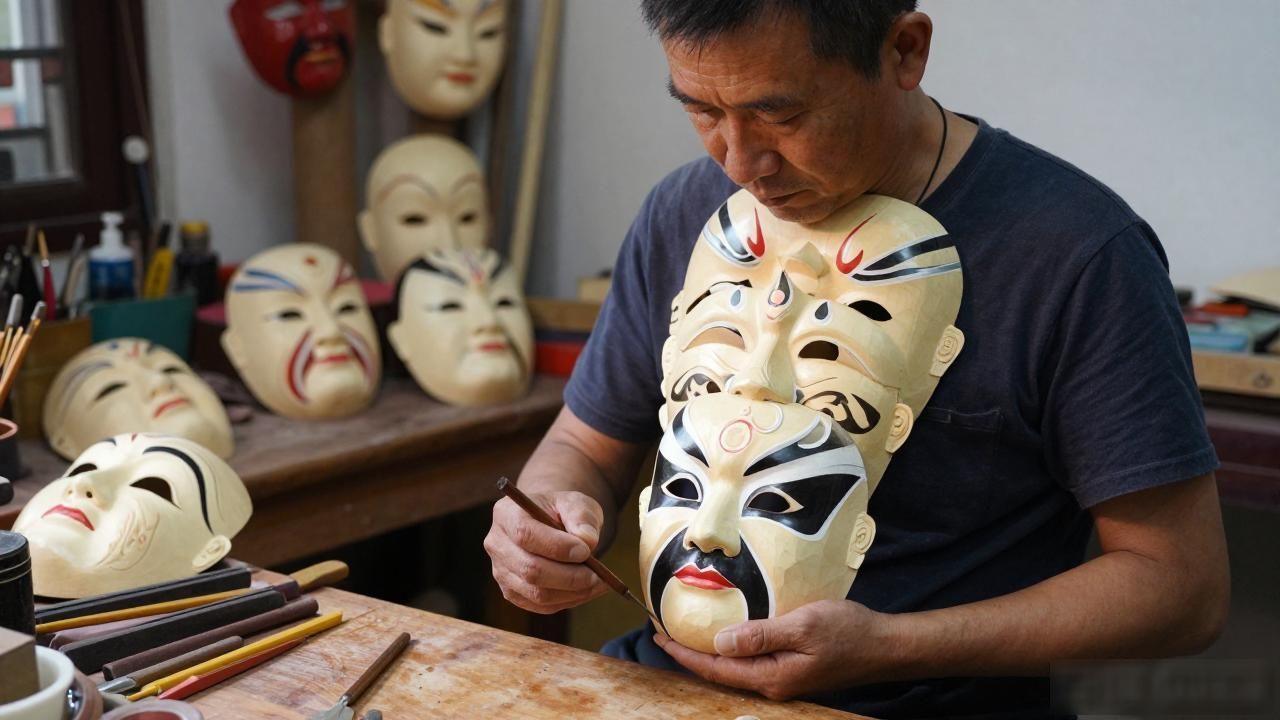
Sichuan Opera props are far more than decorative stage objects. They carry the story of a river spirit or a mischievous clown. I’ve spent thirty years shaping these objects in a small workshop in Chengdu, and the materials I reach for daily—silks, lacquer, thin wood, metal wire—explain why these props still feel alive on stage.
How a Face-Changing Mask Is Built
Each mask starts as a disc of laminated silk, no thicker than two centimeters. I stretch it over a curved wooden form, seal the edges with rice paste, and paint the facial expression freehand. The eyes matter most. A half-second delay in the snap of the eyelid ruins the whole illusion, so I carve the eyelid joints from thin birch and sand them until they move with almost no resistance.

The finished mask weighs under ninety grams. A performer can carry six or seven stacked against her chest during a single number, snapping through them in rhythm with the music. The lighter the mask, the faster the change, and that is why I still refuse to use plastic.
What Props Go Beyond the Mask
Hand fans, painted silk scarves,tiny bamboo trumpets, and embroidered pouches round out the standard kit. The fans fold on brass pins I forge myself. The scarves are dyed in copper-sulfate baths that give the blue a depth no synthetic color can match.
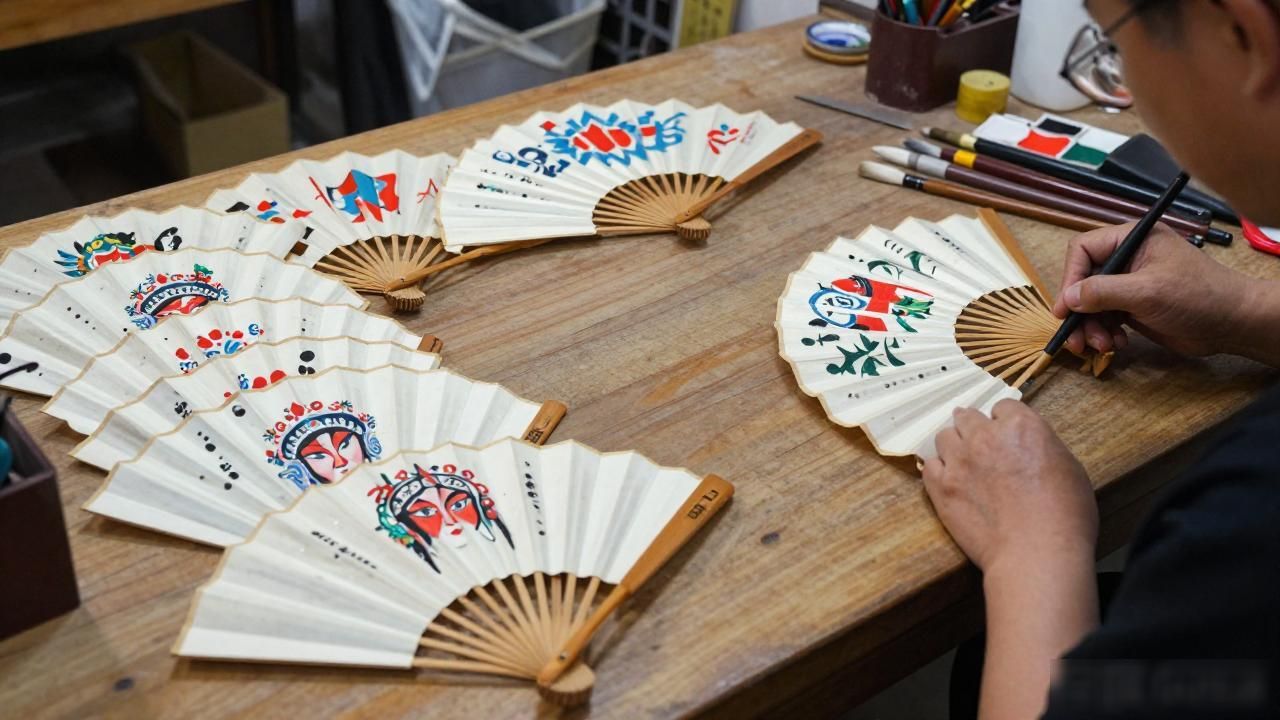
Troupes order these in batches of twenty. I mark each set with a small ink dot on the inside so the performer knows which fan belongs to which character. Lose one mid-show and the entire sequence falls apart.
Why Props Still Get Hand-Made
A factory could stamp out a thousand masks a week. They can’t replicate the micro-folds in silk that catch stage light the way a real face would. Performers tell me the difference in how the fabric drapes across the forehead. That single detail sells the character.
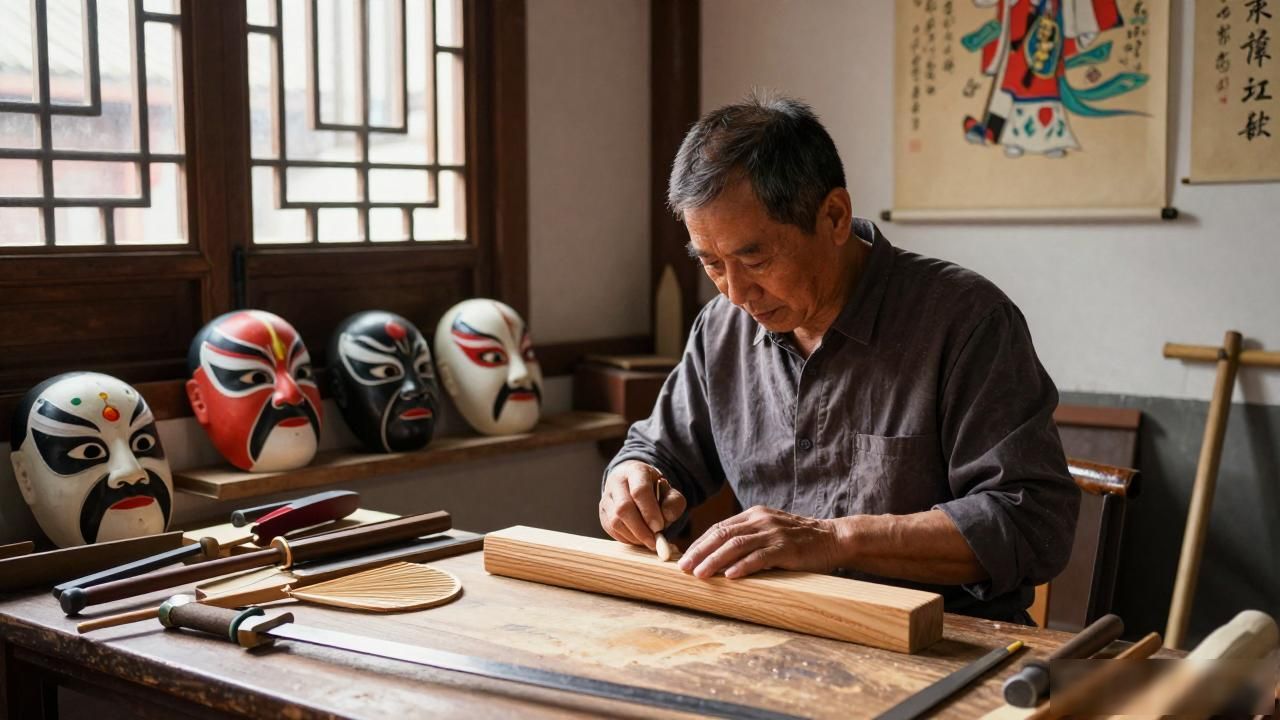
I don’t plan to change. My hands know the grain of the wood better than any machine, and the next generation of performers deserves props that feel like they were made by a person, not a press.
The workshop door stays open until the sun hits the lacquered shelves and turns them gold. Outsiders sometimes stop by, press a mask to their forehead, and ask if it hurts when the snap happens. I tell them it never has. Thirty years, and it still feels like the first one.