
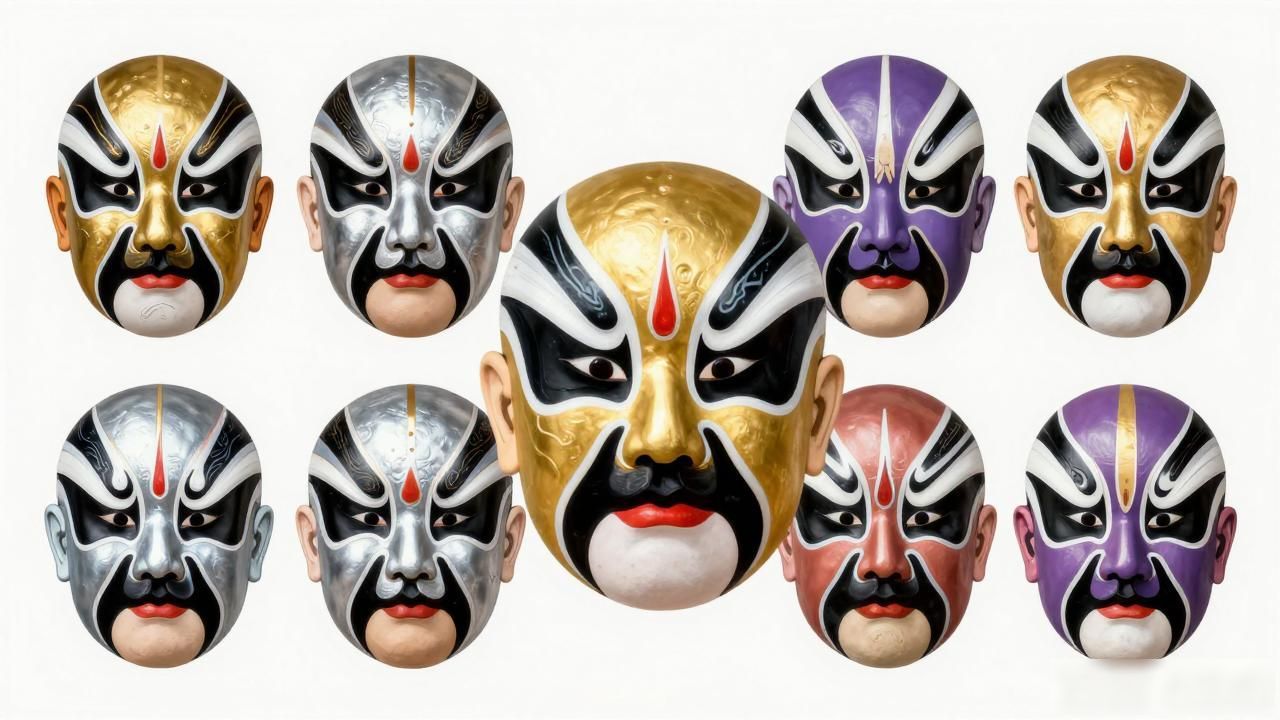
The painted faces of Sichuan Opera have fascinated audiences for centuries. These vibrant masks are not mere decoration; they carry deep cultural meaning and require incredible skill to create. Every stroke tells a story about the character’s personality, morality, and fate.
What Is Sichuan Opera Face Painting
Sichuan Opera originated in the southwestern province of Sichuan and became popular during the Qing Dynasty. The face painting tradition developed alongside the art form itself, creating one of the most distinctive theatrical makeup styles in Chinese culture.
Performers spend hours transforming their faces before stepping onto the stage. The process involves multiple layers of base paint, detailed brushwork, and careful attention to every line and curve. Each color carries specific symbolic meaning that audiences immediately recognize.
The art form has evolved over generations, with master painters passing down their techniques through years of dedicated practice. Modern performers must learn not only the physical application but also the cultural context behind each design choice.
How Colors Shape Character Meaning
Red faces represent loyalty, courage, and noble character. Guan Yu, the famous general from Romance of the Three Kingdoms, always appears with a red face to signal his unwavering honor. Green faces symbolize bravery mixed with impulsiveness, often used for warrior characters who charge forward without hesitation.
White faces indicate treachery and cunning. Cao Cao, the notorious prime minister and military strategist, wears white makeup throughout the opera. Black faces represent straightforwardness and integrity, worn by rough but honest characters like Zhang Fei.

Gold and silver faces are reserved for deities and supernatural beings. These metallic colors signal that the character exists beyond normal human limitations. Purple faces suggest wisdom and solemnity,typically used for elderly or authoritative figures.
The specific shade and application pattern matter just as much as the base color. Two characters might both wear red, but different patterns reveal completely different personality traits and story roles.
The Painting Process and Tools
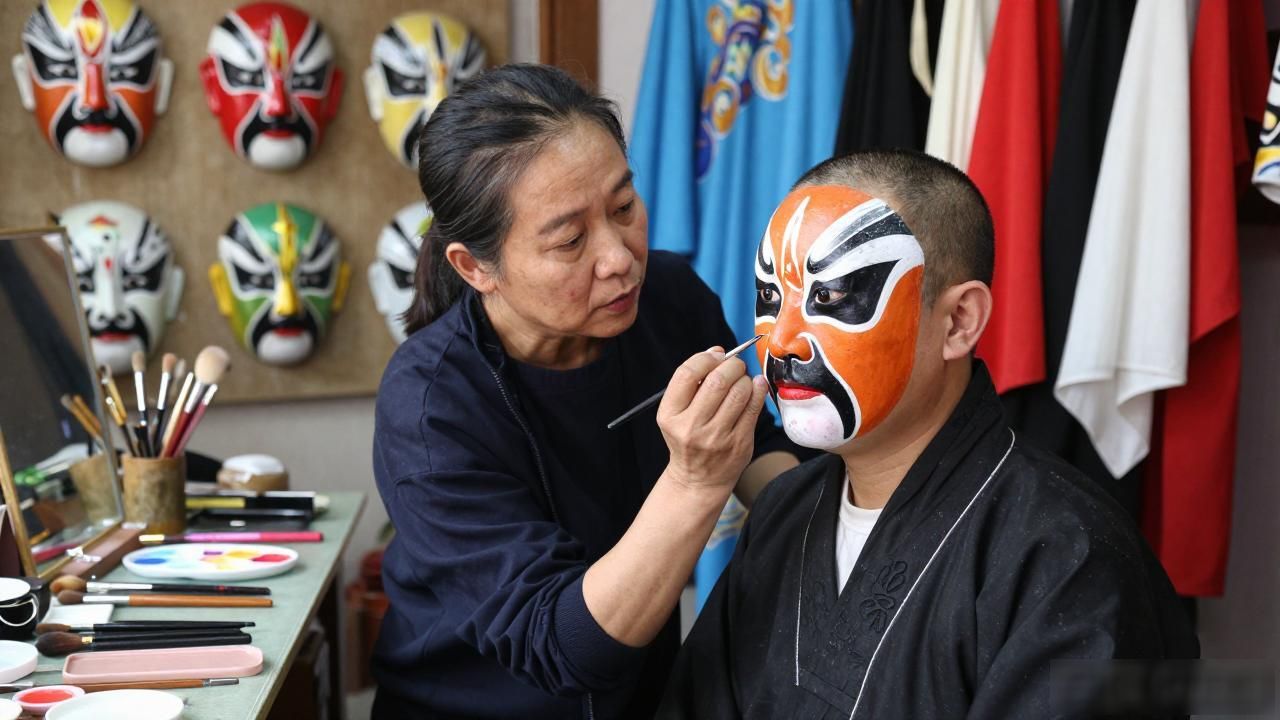
Artists begin with a clean face and apply a white base layer to create a smooth canvas. This foundation helps subsequent colors appear brighter and more vivid under stage lighting. The white base itself carries significance, representing the character’s true nature beneath social masks.
Brushes range from tiny squirrel-hair tools for delicate lines to larger camel-hair brushes for broad color fields. Special-shaped brushes create the flowing curves around eyes and mouth that define each character’s expression. The application technique requires steady hands and years of muscle memory.
Artists work systematically from large areas to fine details. Background colors fill first, followed by patterns, then precise lines around eyes, eyebrows, and mouth. The final result resembles a three-dimensional mask even though it sits directly on living skin.
Some modern troupes use photographs and printed templates to ensure consistency across performances. Traditional masters insist on freehand painting, arguing that machine repetition loses the spiritual energy essential to authentic expression.
Facial Features and Symbolic Patterns
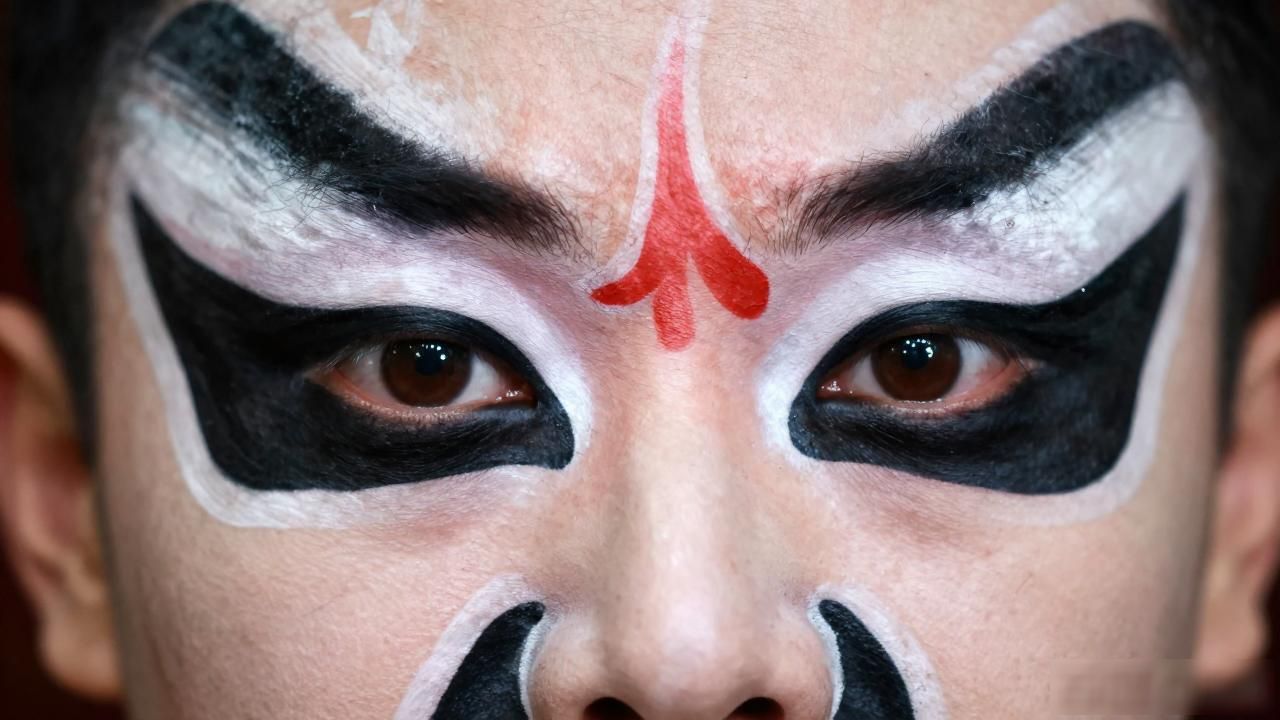
The area around the eyes receives special attention in Sichuan Opera makeup. Designs typically extend outward and upward, following the natural curve of the brow bone while exaggerating it beyond realistic proportions. This modification makes expressions visible to audiences seated far from the stage.
Mouth patterns create dramatic contrast against cheek designs. Some characters receive exaggerated red lips that suggest passion or aggression, while others get subtle outlines implying restraint or cunning. The specific shape communicates emotional state more effectively than any dialogue could.
Eyebrow designs vary enormously between characters. Straight thick brows suggest masculine assertiveness, while curved thin brows indicate elegance or scholarly refinement. Dragon-shaped eyebrows appear on supernatural warriors, and cloud patterns adorn divine beings.
The forehead area often contains the most intricate geometric patterns. These designs frame the character’s identity and can include symbols representing celestial bodies, natural elements, or abstract concepts tied to the storyline.
Practical Application Challenges
Performers must endure hours of careful application before each performance. The wet paint creates tension as it dries, making facial expressions feel restricted during the show. Despite this discomfort, experienced performers adapt their movements to work within the physical constraints.
Removing the makeup requires specialized oil-based cleansers that break down pigments without damaging skin. Multiple washing cycles eliminate every trace of color, and performers often apply moisturizer afterward to restore skin health. Improper removal can cause lasting irritation or allergic reactions.
Modern synthetic fabrics and waterproof formulas have improved the wearer experience significantly. These innovations allow performers to maintain tradition while reducing the physical strain that previous generations accepted as inevitable cost of the art form.
Cultural Preservation and Modern Context
Young artists entering this tradition face steep learning curves. Master painters expect decades of dedicated practice before students demonstrate competence. The apprenticeship model persists because technical precision cannot be rushed or shortcut through theoretical study alone.
International tourism has created new appreciation for Sichuan Opera face painting among foreign visitors. Many travelers specifically seek performances to photograph the elaborate makeup up close, recognizing the artistic achievement even without understanding Chinese language or mythology references.
Museums in Chengdu display historical examples of painted face documentation. These collections preserve designs that might otherwise disappear as older performers retire and fewer young artists commit to mastering the demanding craft.
Looking Forward
The future of Sichuan Opera makeup depends on balancing tradition with contemporary relevance. Some performers experiment with simplified designs that reduce application time while preserving core symbolic meanings. These adaptations aim to make the art form sustainable without sacrificing cultural authenticity.
Digital media offers unprecedented opportunities to document and share painting techniques globally. Video tutorials, virtual reality experiences, and online workshops reach audiences far beyond traditional theater subscribers. This expanded visibility helps preserve cultural heritage while introducing younger generations to a cherished Chinese art form.
The painted faces of Sichuan Opera remain among the most visually striking traditions in world theater. They embody centuries of cultural wisdom compressed into colorful strokes on living skin. Understanding these techniques opens doors to appreciating Chinese performing arts at their deepest cultural level.