Chinese street food is the real soul of this country. Forget the fancy restaurants and Michelin stars for a moment. The best flavors of China live on the sidewalk, in the blue flame, in the clatter of heavy woks and the sweet, charred smell of grilling lamb skewers. Walk through any old-town market after dusk and you’ll understand why millions of travelers make a yearly pilgrimage to these tiny, smoke-filled stalls.
What is famous Chinese street food
Start with jiaozi, the humble steamed dumpling stuffed with pork, chive,and a splash of sesame oil. Picture xiaolongbao, those delicate soup dumplings that burst with hot broth the second you bite in. Then there’s yangchun, crispy and oily, fried to golden perfection, and malatang, that thick peppery soup you slurp with rice on any corner of Chengdu. Each one costs less than a dollar.

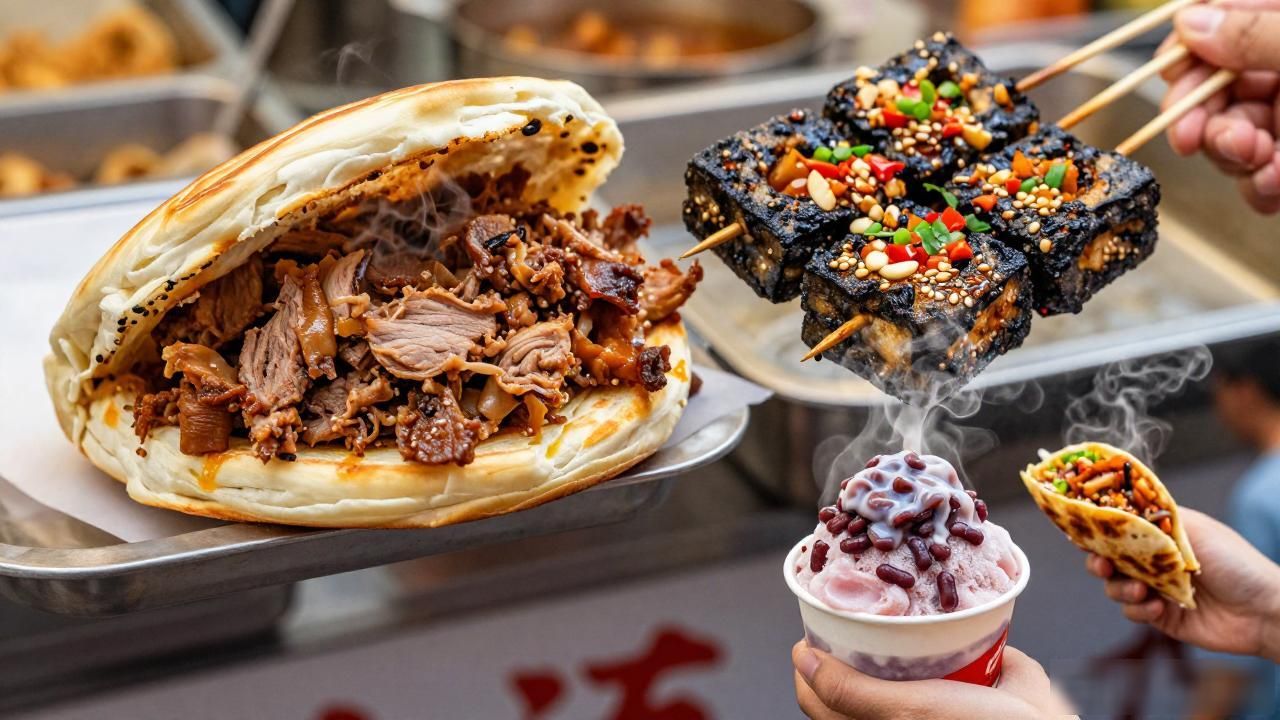
Every region guards its own signature dish. In Xi’an, you’ll queue for roujiamo, a crispy flatbread sandwiching tender braised pork. In Changsha, stinky tofu on a bamboo stick is the go-to midnight snack. In Harbin, frozen red-bean ice slides down your arm while you balance a hot jianbing. These are not just recipes; they’re the daily rhythm of an entire neighborhood.
Where to find famous Chinese street food
Night markets are your best friend. Beijing’s Nanluoguxiang, Shanghai’s Yuyuan Garden, Guangzhou’s Shangxiajiu pedestrian street—all of them flood with sizzling stalls the moment the sun drops. You grab a plastic stool, point at what looks good, and the owner fires it up right in front of you. No menu, no reservation, no pretense. The whole street becomes one long kitchen.
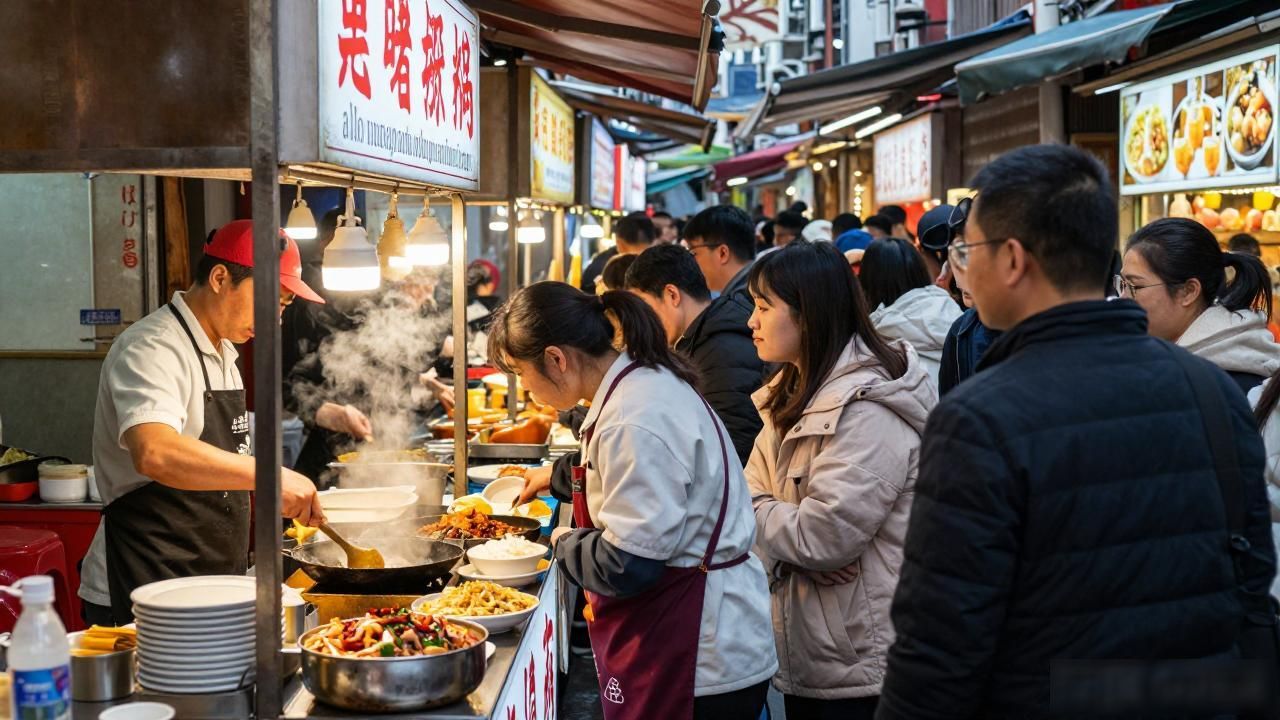
Here’s a tip that saves you from tourist traps: follow the locals. The stall with the longest line and the fewest English signs is almost always the one worth your money. Trust your nose way more than your phone.
Why Chinese street food tastes different
It comes down to the wok. A professional street vendor can hit temperatures over 300 degrees Celsius in seconds, something no home oven replicates. That flash-searing locks in flavors and gives you the smoky char that food writers call wok hei. Add locally sourced spices—Sichuan peppercorn, star anise, fresh ginger—and the depth just isn’t the same from a delivery app.
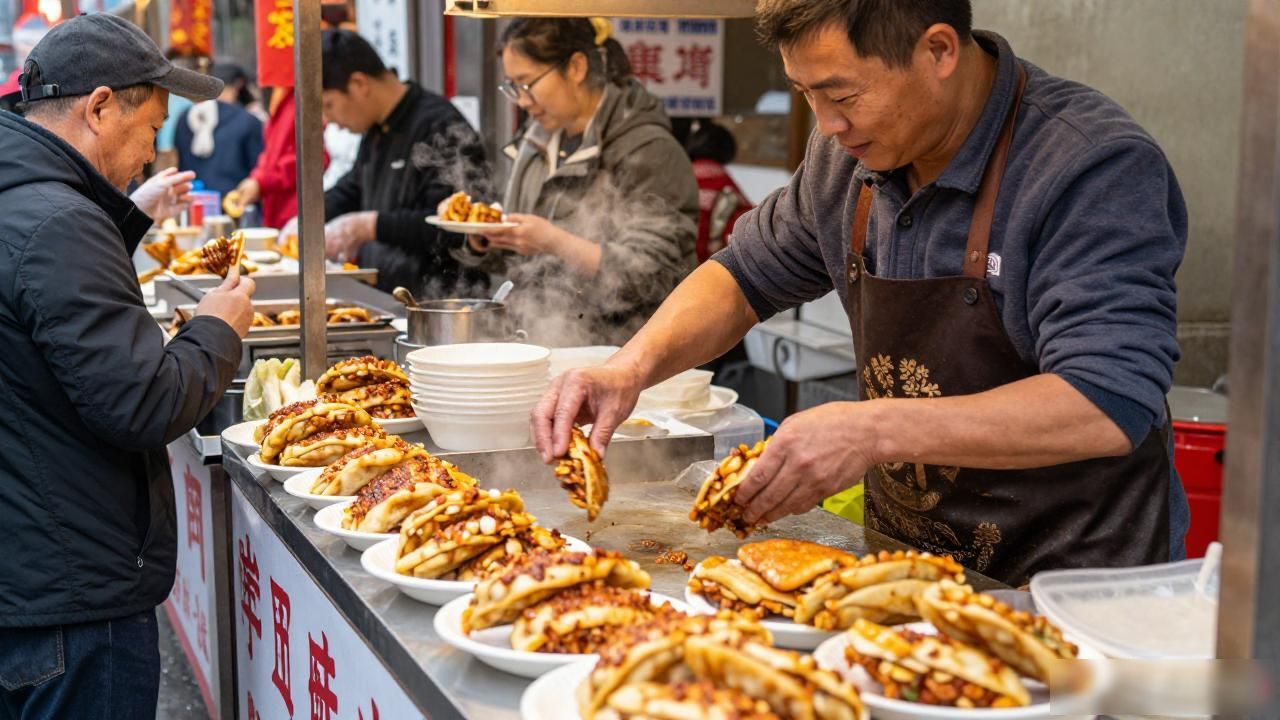
The speed matters too. Everything is made to order, seconds before it hits your paper plate. Nothing sits, nothing reheats. That freshness is the secret nobody can bottle, ship to London, and call it the same thing.
So next time you’re in China, skip the five-star dining for at least one evening. Grab a paper bowl, a pair of cheap chopsticks, and lose yourself in the steam. That’s where the real country is still waiting for you.