
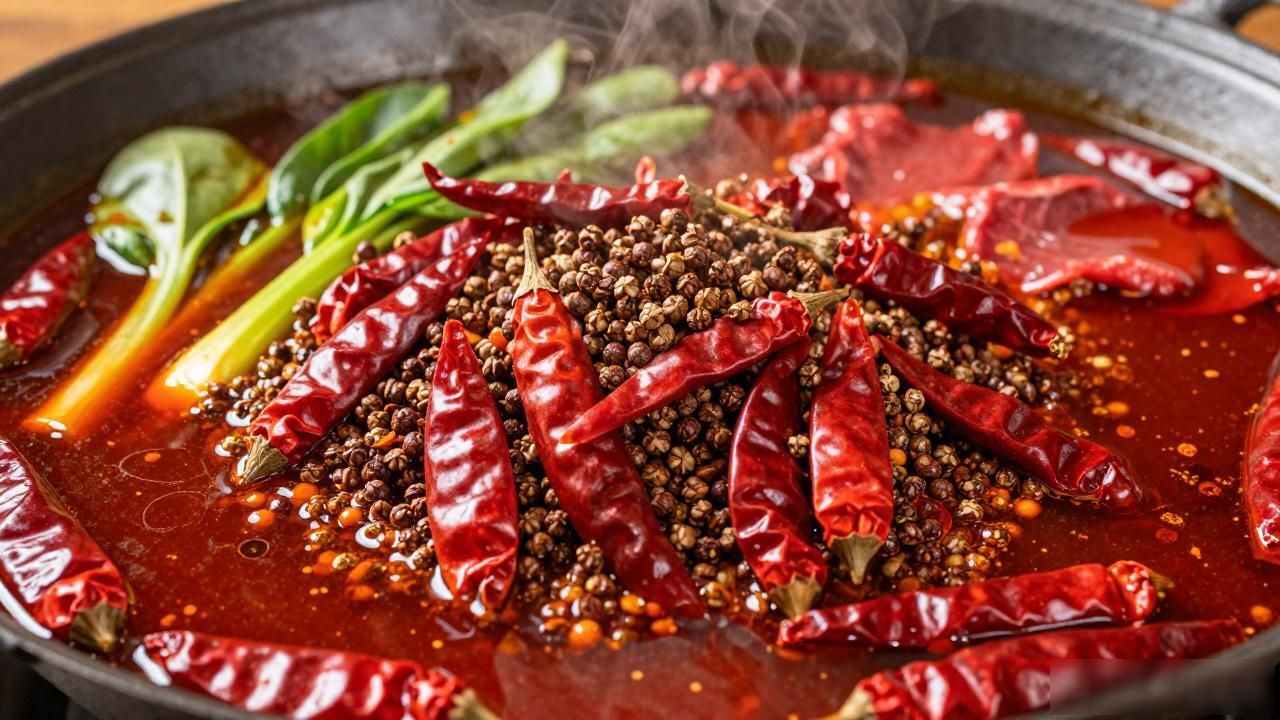
Chongqing hot pot is not some polite, mild introduction to Sichuan cuisine. It is loud, aggressive, and absolutely uncompromising. If you have ever eaten spicy food before and thought you could handle heat, stepping into a Chongqing hot pot restaurant will humble you within the first ten minutes. The city sits in a humid basin surrounded by mountains, and that geography shaped its food the way weather shapes landscapes. People here cook to sweat, to push heat out through the skin, to survive damp cold winters with pots bubbling at the center of every table.
The flavors are built around a few core principles that repeat across virtually every stall, from hole-in-the-wall joints to slightly fancier spots near Jiefangbei. The broth is always the star, and the broth is almost always red. But describing Chongqing hot pot as simply “spicy” misses everything that makes it worth traveling for. There is a texture to the heat, a conversation between numbing pepper and burning chili that plays out across your entire mouth.
What Makes Chongqing Hot Pot Flavor Different

The most important thing to understand is that Chongqing hot pot relies heavily on the concept of ma la, which translates roughly to “numbing spicy.” The la part comes from dried chilies, sometimes dozens of varieties layered together for depth. The ma part comes from Sichuan peppercorns, and this is where things get strange for first-timers. Peppercorns do not burn. They vibrate. They create a tingling, almost electric sensation that makes your lips feel like they are alive in ways you did not know possible.
What truly distinguishes Chongqing broth from other regional styles is its obsession with animal fat. Beef tallow forms the base, solidifying at room temperature and melting only when the pot reaches a rolling boil. That tallow carries every spice into your mouth and coats your tongue in a way vegetable oil simply cannot replicate. The result is a rich, glossy, deeply savory foundation that tastes almost meaty even before you add any ingredients.
The chili layers matter enormously. You will often find three or four different types of dried pepper in a single pot, each contributing something different. Some provide color, some provide quick heat, and some provide a slow-building warmth that does not peak until several minutes into a bite. Skilled hot pot makers treat their chilies like winemakers treat grapes, blending them for balance rather than simply turning up the volume.
Another element frequently overlooked is the aroma. Chongqing hot pot shops announce themselves from across the street. The smell of rendered beef tallow,toasted spices, and caramelized garlic hangs in the humid air and pulls people inside. That scent profile becomes part of the experience before you even sit down, creating anticipation that the meal has to justify. It almost always does.
Signature Flavors and Ingredients Worth Trying
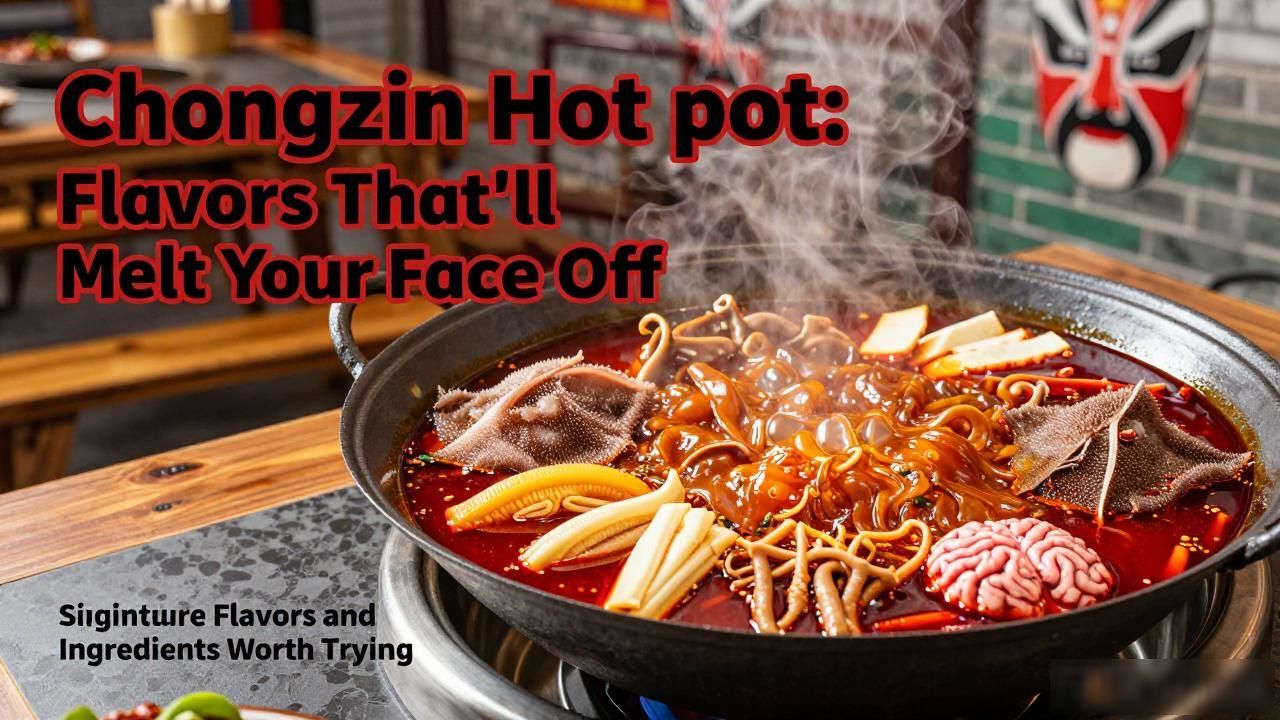
The ingredients you drop into the pot shape the flavor conversation just as much as the broth does. Tripe remains the undisputed king, specifically the honeycomb variety known as maodu. Fresh tripe has a crunch that borders on absurd, especially when cooked for only fifteen seconds. It absorbs the broth’s heat without losing its structure, giving you a textural counterpoint to the soft tofu and slippery noodles that follow.
Liver is another essential, though many outsiders skip it out of suspicion. Beef liver cooked briefly in boiling tallow broth becomes impossibly tender with a faint metallic sweetness that contrasts sharply with the aggressive spices. The trick is timing, which is why experienced diners watch the pot constantly rather than piling everything in at once.
Duck intestines deserve attention too, despite their intimidating appearance. They are remarkably clean-tasting, almost buttery when properly prepared, and they carry the chili oil beautifully. The combination of duck intestine and tripe in the same broth creates one of those magical flavor moments that makes Chongqing hot pot legendary among food travelers.
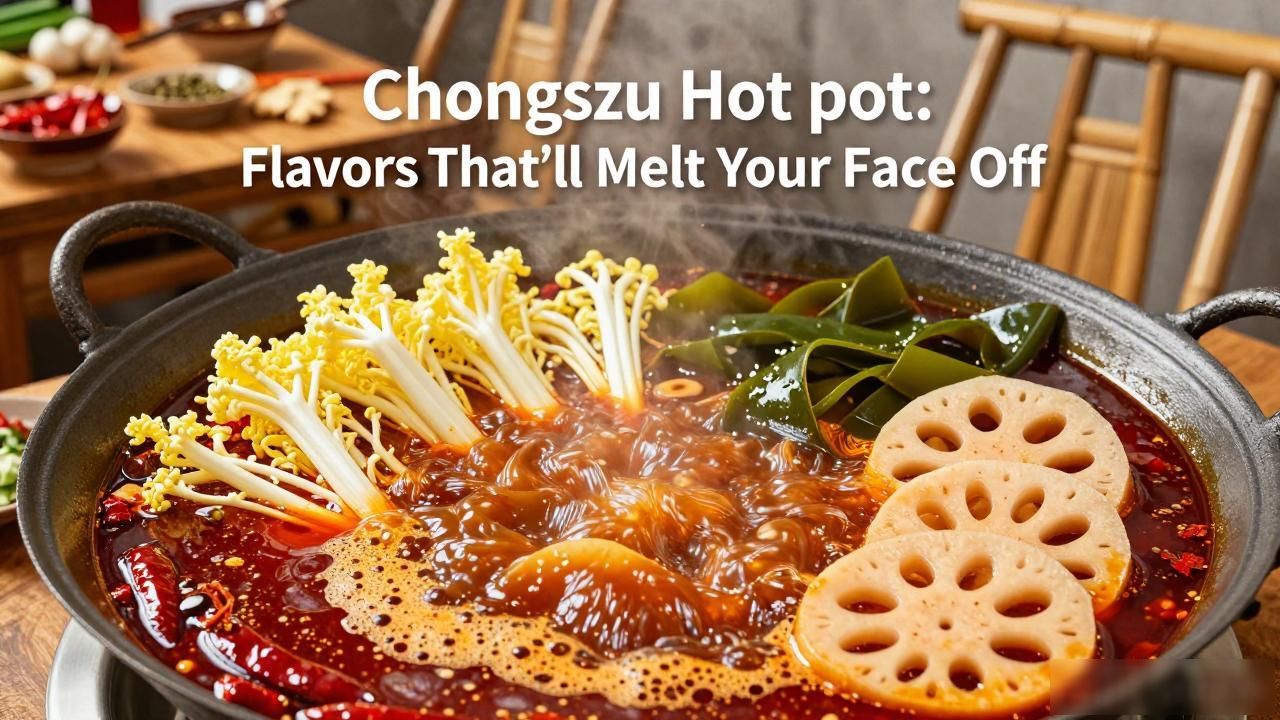
Vegetables play a supporting but crucial role. Daylily buds, lotus root, and kelp all absorb the surrounding spice while adding their own textures. The kelp in particular provides a subtle oceanic salinity that cuts through the richness of the beef tallow and refreshes your palate between heavy bites.
Finally, there is the dipping sauce, which some outsiders assume is unnecessary given how intensely flavored the broth already is. In Chongqing, the standard is simple: sesame oil with minced garlic. The oil cools the food slightly and creates a protective layer on your stomach, while the garlic adds a sharp bright note. You are not masking the broth, you are complementing it.
The overall effect is a dining experience that challenges you at every level. Your taste buds negotiate with the pepper, your eyes water from the steam, and your stomach warms from the inside out. Chongqing hot pot does not ask for your permission. It asks only that you show up hungry and willing to lose control of your eating pace. Most people who survive that encounter become regulars within a month.