
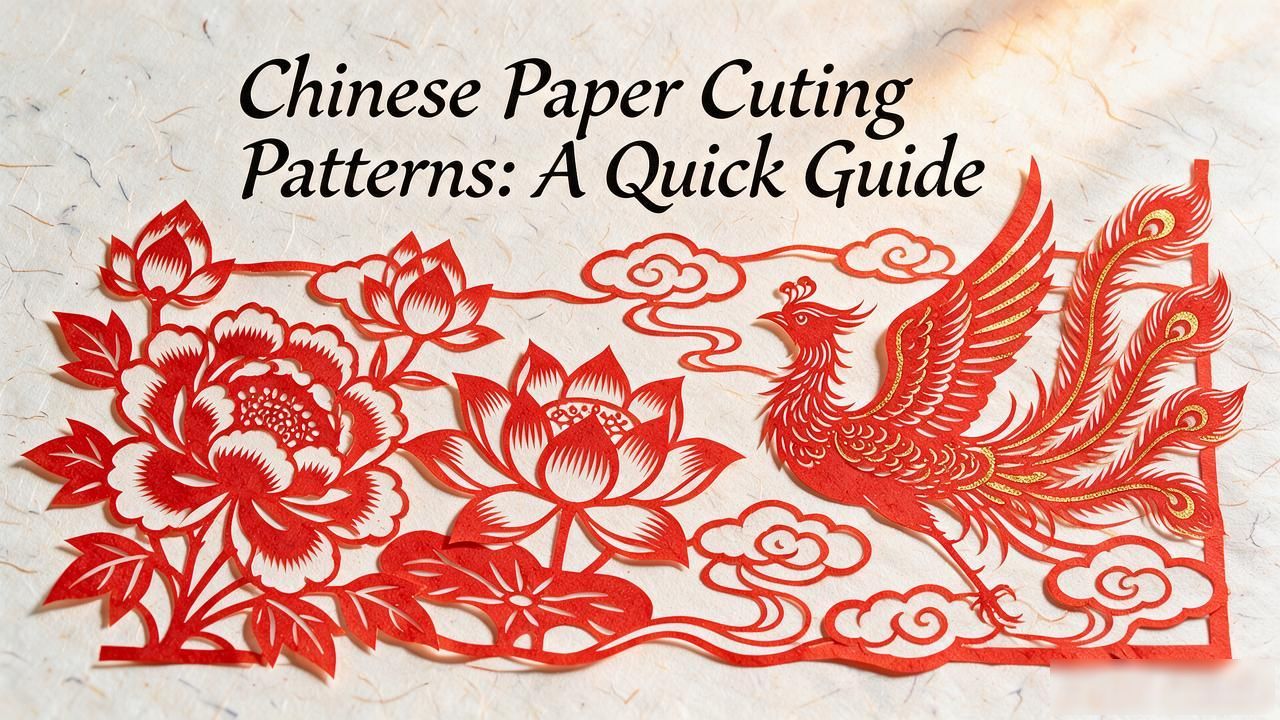
I’ve spent twenty years teaching paper cutting in a small village in Shandong, and the question I hear most from foreign visitors is always the same: what do all those intricate red patterns actually mean? Chinese paper cutting patterns aren’t just window decorations. They carry layers of meaning passed down through centuries of rural life, and once you learn to read them, the whole art shifts from merely pretty to genuinely personal.
What Do Chinese Paper Cutting Patterns Symbolize

Most patterns encode a single wish or virtue. The peony means wealth, the lotus means purity, and a phoenix rising above clouds signals good fortune climbing upward. These are not random shapes. Every curve and cut carries a specific phrase from folk life. My grandmother used to say a window cutting with five peaches meant “may you live to sixty and still be strong.” A pair of cranes meant peace, and a single plum blossom in winter meant quiet endurance through hardship.
The repetition matters too. You’ll see the same fish swimming in both directions, or flowers blooming symmetrically left and right. That mirroring isn’t purely aesthetic. It reflects the old village belief that balance in the cut brings balance to the household, and what you see on paper spills over into daily life.
How To Read Chinese Paper Cutting Patterns
Start from the center. The central motif is your main subject — a child, a deer, a specific flower. Work outward toward the corners and edges, where secondary symbols sit. Think of the whole piece like a sentence: the center is the noun,and the edges fill in as adjectives that soften or strengthen the main idea.
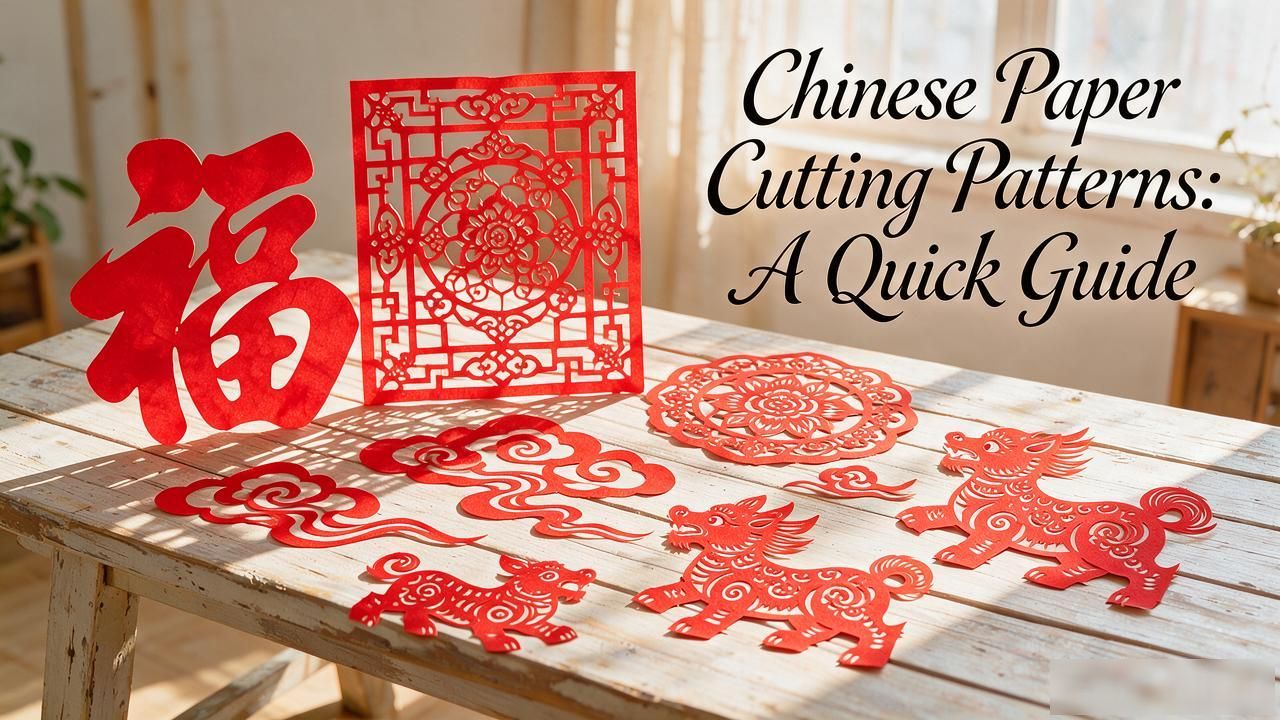
One common mistake beginners make is reading left to right, the way English text flows. The layout follows no single direction. You simply identify each symbol and piece together the wishes they represent, like collecting little phrases into a personal greeting. There is no wrong order to read them. If a fish catches your eye before the flower, let it.
When you see a window covered in red cut-paper, don’t just admire the color. Look closer. Somewhere in those tiny curls and petals, someone is quietly wishing you health, wealth, or a new grandchild. The patterns are the wish itself, folded into paper and held up to the light. That’s the whole story, and honestly, it’s enough to make you smile.