
Navigating China’s digital landscape as a foreign visitor can feel overwhelming at first. With cashless payments dominating every corner store and ride-hailing apps handling all transportation, having reliable mobile connectivity isn’t just convenient—it’s essential. A China SIM card bridges that gap, giving international visitors access to navigation, translation tools, payment apps, and emergency services throughout their journey. The good news is that getting connected has become considerably easier over the past few years, with multiple options available at airports,city stores, and even through eSIM providers before you depart. Understanding your choices helps you avoid costly mistakes and stay linked throughout your trip.
Where to Buy a China SIM Card as a Tourist
Physical SIM cards remain the most straightforward option for travelers arriving in China. China Mobile, China Unicom, and China Telecom operate extensive networks covering nearly every urban and rural area. You can purchase these at international airport arrival halls, where dedicated counters handle foreign passport registration on the spot, or at official carrier stores scattered throughout major cities. Beijing Capital Airport, Shanghai Pudong, and Guangzhou Baiyun all feature these service points in the arrivals terminal, making it possible to have a working number within thirty minutes of landing.

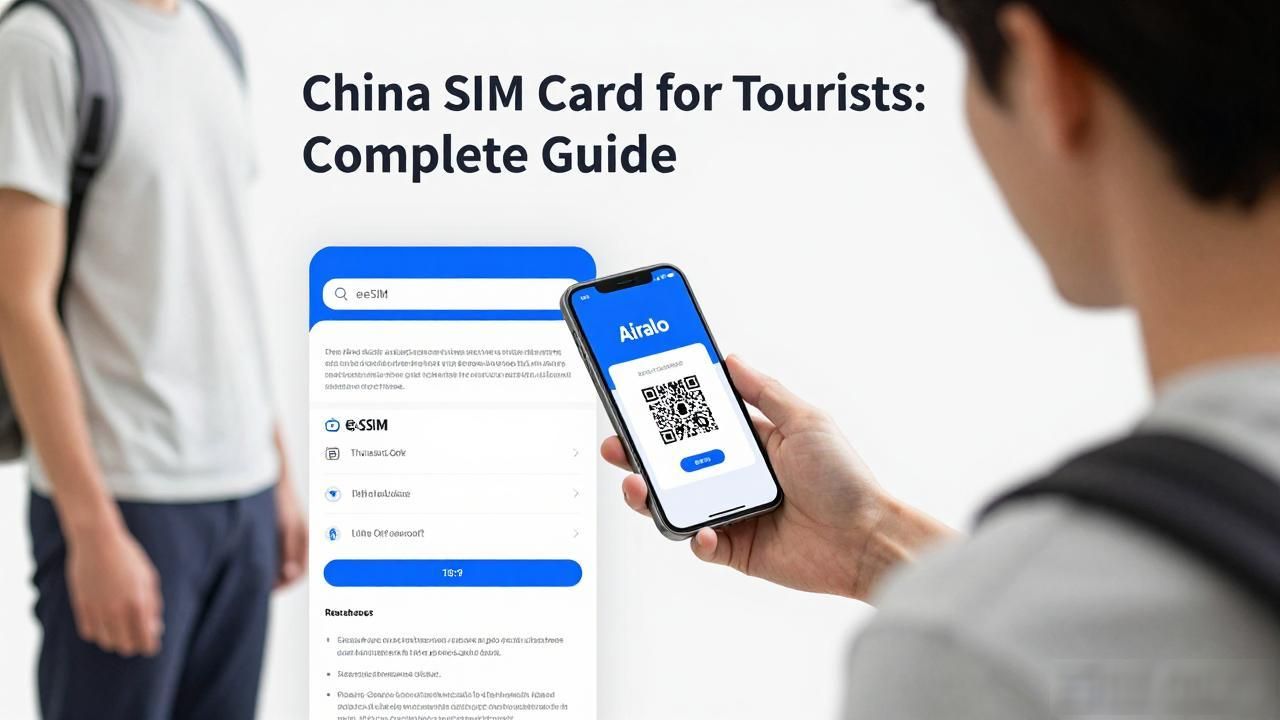
Esim technology has transformed the experience for many modern travelers. Providers like Airalo, Nomad, and Holafly offer data-only plans specifically designed for China, which you can activate before departure by scanning a QR code. These solutions eliminate the need to visit a store entirely and often deliver faster mobile data speeds than physical SIM cards in the budget tier. However, they typically won’t provide a Chinese phone number, which matters if you plan to call local businesses or register for certain services that require SMS verification.
The choice between physical and electronic solutions depends on your travel style and priorities. Solo travelers who value convenience often prefer esim for the seamless activation process. Groups traveling together might find the airport counter option more practical, since staff can help activate multiple lines simultaneously and answer questions in English. Consider also whether you need voice calling capabilities beyond data access when making your decision.
What Registration and Usage Rules Apply to Tourists
China requires all SIM card registrations to include passport verification under national telecommunications regulations. This is a straightforward process at airport kiosks or carrier storefronts, but it means you must carry your passport whenever you plan to activate a new line. Some smaller vendor stalls operating outside official channels may offer to skip this step for convenience, but doing so carries real risks including unexpected service suspension and potential legal complications during your stay.

Coverage quality varies significantly across different regions. Urban centers like Shanghai, Beijing, Chengdu, and Hangzhou enjoy excellent signal strength with widespread 4G and growing 5G coverage. Rural areas in provinces such as Yunnan, Guizhou, and parts of Tibet can present serious connectivity challenges, with signal dropping to edge-of-range status between small towns. Travelers heading to remote destinations should research their route carefully and consider carrying a secondary SIM from a different carrier as backup.
Payment ecosystems in China operate almost entirely through mobile platforms. Alipay and WeChat Pay dominate consumer transactions, from high-end department stores to street food vendors. Both applications require a verified Chinese phone number for full functionality, though limited versions accept international card linking for tourists. Having an active Chinese number greatly simplifies daily life and eliminates awkward moments when a vendor cannot process your payment method.
How to Stay Connected and Avoid Common Pitfalls
Data pricing structures in China favor longer-term plans over short tourist packages. A standard prepaid SIM from China Unicom typically offers monthly data allowances ranging from five to twenty gigabytes depending on the chosen plan tier. Daily rotation plans exist but cost considerably more per gigabyte. Understanding this pricing reality helps you select the right plan rather than overpaying for unnecessary short-term coverage.

Language barriers at service counters can complicate the purchase process, particularly outside major metropolitan airports. Preparing a written Chinese version of your requirements or using a translation app makes interactions smoother. Key phrases like requesting the longest available validity period and asking about included data volume will help you secure the best option available.
Network compatibility remains another important consideration for visitors from North America and some other regions. Ensure your device supports China’s 4G LTE bands, particularly bands 1, 3, and 38 through 41 for optimal performance. Most smartphones sold after 2018 include this support, but verifying compatibility before departure prevents expensive last-minute hardware purchases or the frustration of discovering your phone cannot access local networks once you arrive.
With the right preparation and an understanding of how China’s mobile infrastructure operates, international visitors can maintain reliable connectivity throughout their travels. Whether you choose a physical SIM card activated at the airport or an esim purchased online, the key is matching your choice to your itinerary and communication needs. Staying connected makes navigating unfamiliar cities far less stressful and opens doors to experiences that would otherwise remain out of reach.