
Chengdu sits on the edge of the Sichuan Basin and has sheltered over three thousand years of unbroken human settlement. Its cultural heritage stretches from Han dynasty burial mounds to Ming-era temple complexes and intangible folk practices that survive only in narrow old neighborhoods. Walk the side lanes at dusk and you meet layers of history that most passing travelers never bother to dig into.
What makes Chengdu cultural heritage special

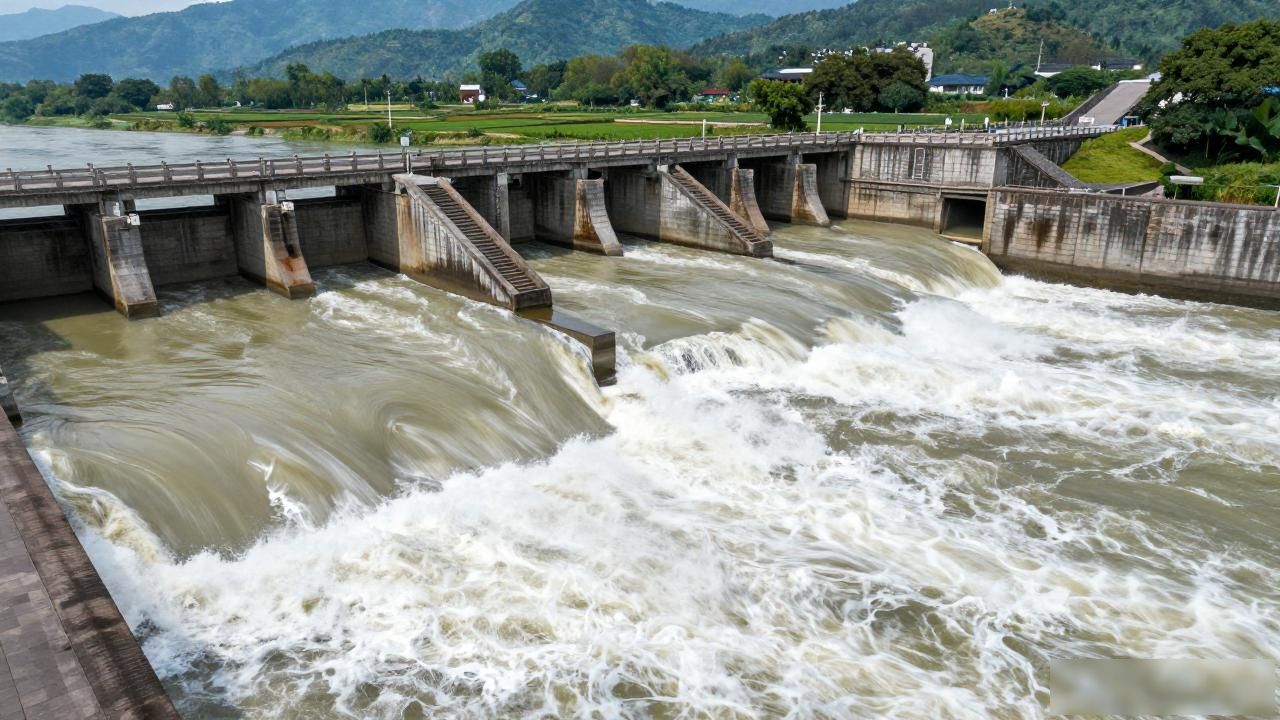
The Dujiangyan irrigation system, carved into the Min River roughly 2,500 years ago, still feeds farmland across a million hectares today. It is not a sealed ruin behind glass; the water keeps flowing, the fish-scale stone sluices shift with the seasons, and the core engineering logic remains functional. UNESCO inscribed the site in 2018, yet most first-time visitors have no idea they can stand on the original split channel and watch the river divide in real time.
Beyond the monumental sites, living traditions anchor the heritage. In the Kuanhai district, teahouses preserve a charcoal-brewing jasmine ritual that older residents perform while catching snippets of Sichuan opera drifting from a neighboring courtyard. These are not staged shows for tourists; the same patterns have continued, with breaks, through wartime evacuations and the rapid urbanization of the 1990s.
How to explore Chengdu cultural heritage sites
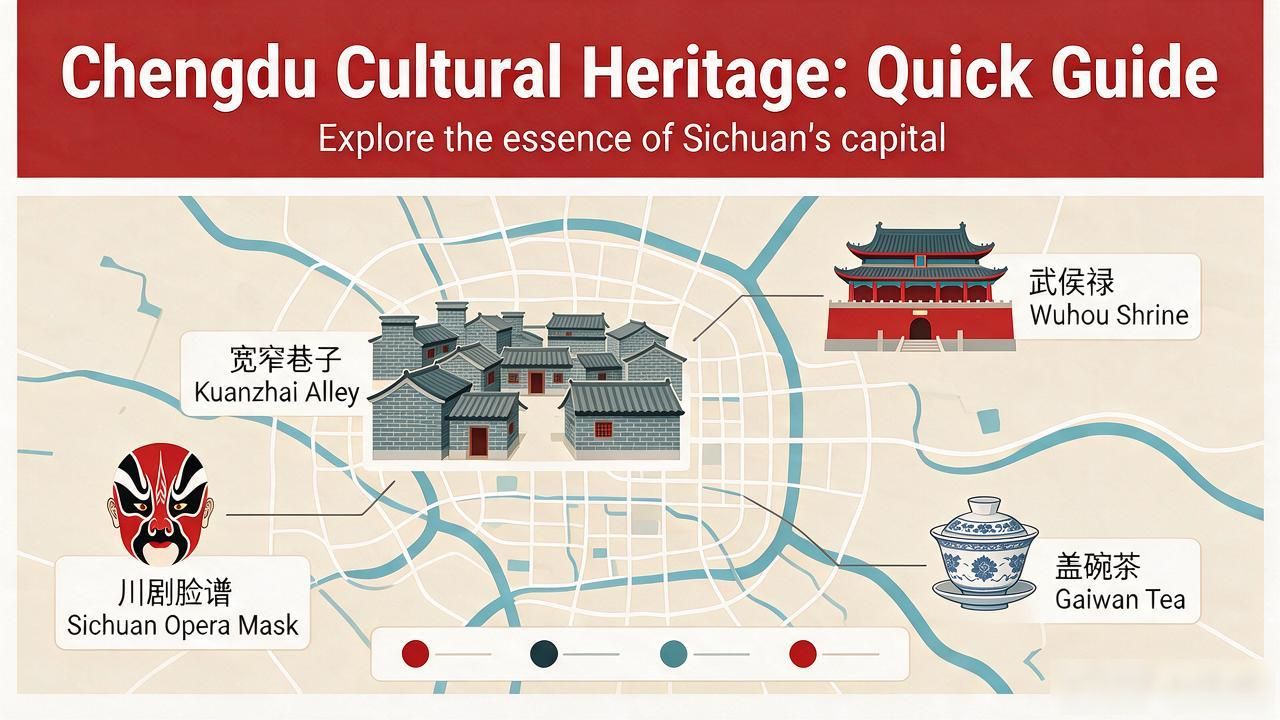
Start your walk at the Wuhou Shrine and Jinniu Temple complex in the city center. Allow two to three hours if you want to read the stele-garden inscriptions and trace the Three Kingdoms connections carved into every pillar. Admission is modest, and the morning light filtering through the maple canopy makes the stone corridors feel genuinely atmospheric in a way that midday crowds never capture.
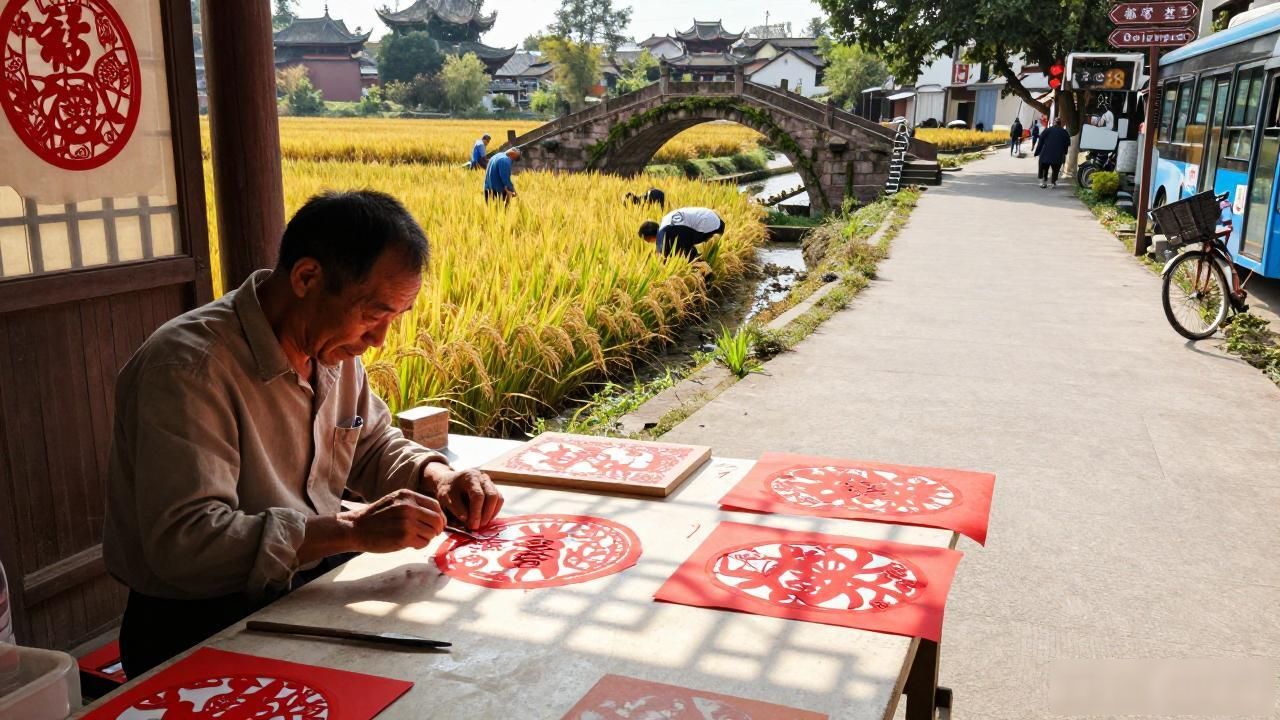
Past the temple,head south toward the Dujiangyan and Kuanhai corridor. Rent a bicycle or catch bus route 18; the stretch threads through working rice paddies, a restored Ming-era bridge, and a handful of unmarked folk-art workshops where artisans still carve New Year paper cuttings by hand. No ticket counter, no queue—just an hour of quiet observation that no guidebook photograph can replicate.
Chengdu’s heritage is not sealed inside one museum wing. It runs through the irrigation channels, the tea steam curling off a charcoal pot, the chisel marks on a six-century pillar, and the grandmother cutting paper patterns while muttering a folk song she learned before the republic. Give it one slow morning, set the photo checklist aside, and the city will hand you its real story without asking for a price.