
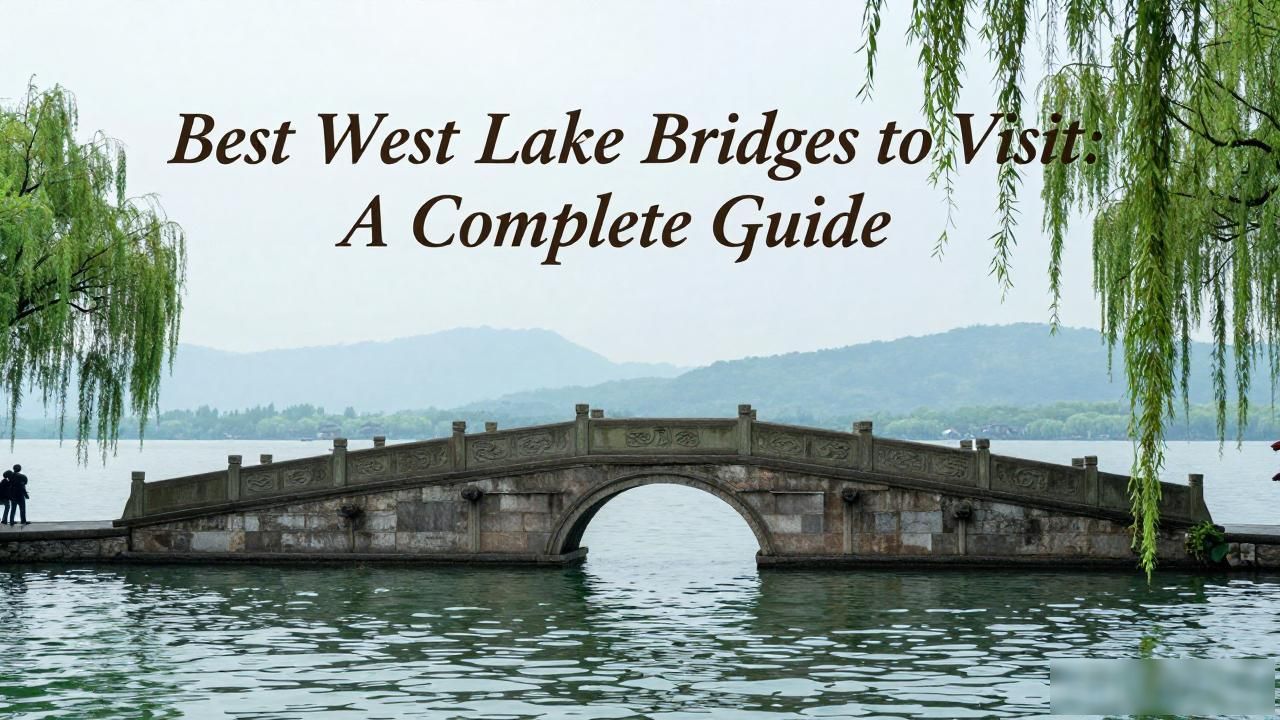
West Lake in Hangzhou has always been more than a body of water—it is a living canvas where stone arches, wooden walkways, and ancient causeways connect land and legend. I have walked these bridges at dawn, at dusk, and in the thin mist that rolls across the lake in early autumn. What strikes me most is how each bridge tells a different story, some rooted in poetry, others shaped by engineering ambition. For visitors, the challenge is not whether to cross them, but which ones deserve your time. This guide cuts through the noise and points you toward the bridges that truly matter.
Which West Lake Bridges Are Most Worth Visiting
Broken Bridge,or Duanqiao, is the name that comes up most often, and for good reason. It is the bridge that appears in countless paintings and the one linked to the legend of White Snake. The name itself is ironic—broken bridge does not mean it is falling apart. In winter, when snow settles on the southern side and melts quickly on the northern side, the bridge appears to crack in half. That visual trick is what gives it its poetic name. Walking across it at sunrise, when the lake is still and the city has not yet fully woken, feels like stepping into an old scroll painting.

Then there is Su Causeway, a long stretch of path lined with willows and punctuated by six small stone arch bridges. It is not a single bridge but a sequence, and that is exactly what makes it special. You can walk the full length or pick just one section. The Archway Bridge, or Liushu Qiao, is particularly elegant, with its single wide arch reflected perfectly in calm water. I recommend coming here in late March when the peach blossoms are in full bloom. The pink petals against the grey stone create a contrast that no photograph can fully capture.
Isoline Bridge, or Baidi Qiao, sits at the eastern end of the causeway named after the poet Bai Juyi. It is quieter than the Broken Bridge area, which means fewer crowds and more space to simply stand and watch the light shift across the water. The bridge itself is modest, but its setting is unmatched. On a clear evening, the distant hills turn purple and the lake becomes a mirror. This is the bridge I return to when I want silence.
How to Walk the Best Bridge Routes at West Lake
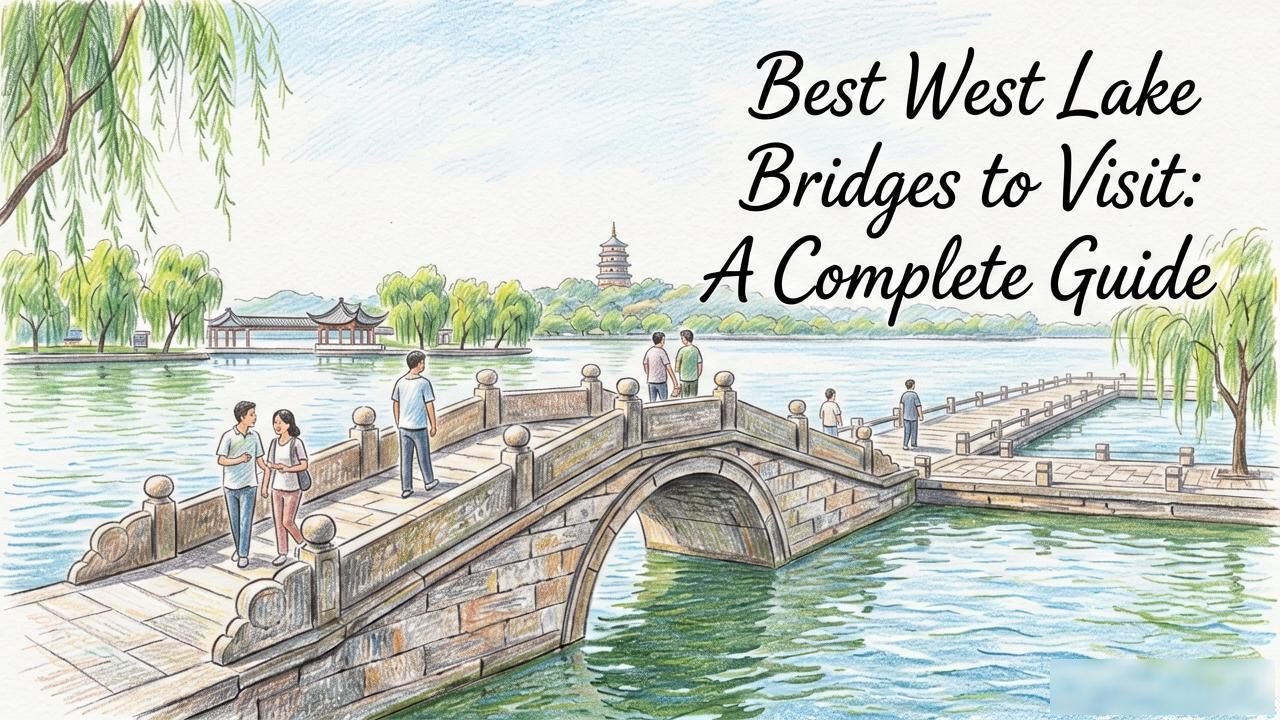
The most rewarding way to experience these bridges is on foot, and the route I always suggest starts at the Broken Bridge area and moves westward along the north shore. From there, you can cross over to the Su Causeway and walk its full length, crossing each of the six small bridges in turn. The path is mostly flat, though the stone steps on some of the older bridges can be uneven. Wear shoes you do not mind getting dusty.
If you have more time, extend your walk toward the western edge of the lake and seek out the Yuewang Temple Bridge. It is less visited by tourists but carries its own weight of history. The temple nearby was built to honor Yue Fei, the南宋 general remembered for his loyalty and tragic death. The bridge leading to it is simple, almost plain, but the atmosphere around it is heavy with memory. Standing there, you can feel the tension between beauty and sorrow that runs through so much of Chinese landscape culture.
For those who prefer a shorter route, a loop around the southern shore offers its own rewards. The bridges here are smaller and more intimate, and the views look back toward the city skyline rather than out toward open water. It is a different kind of experience, one that feels more personal and less performative. I often tell visitors that West Lake is not a checklist. The bridges you remember are the ones where you paused, where the light hit the water just right, where you happened to be alone enough to hear the sound of your own footsteps on stone.
What Makes West Lake Bridges So Special
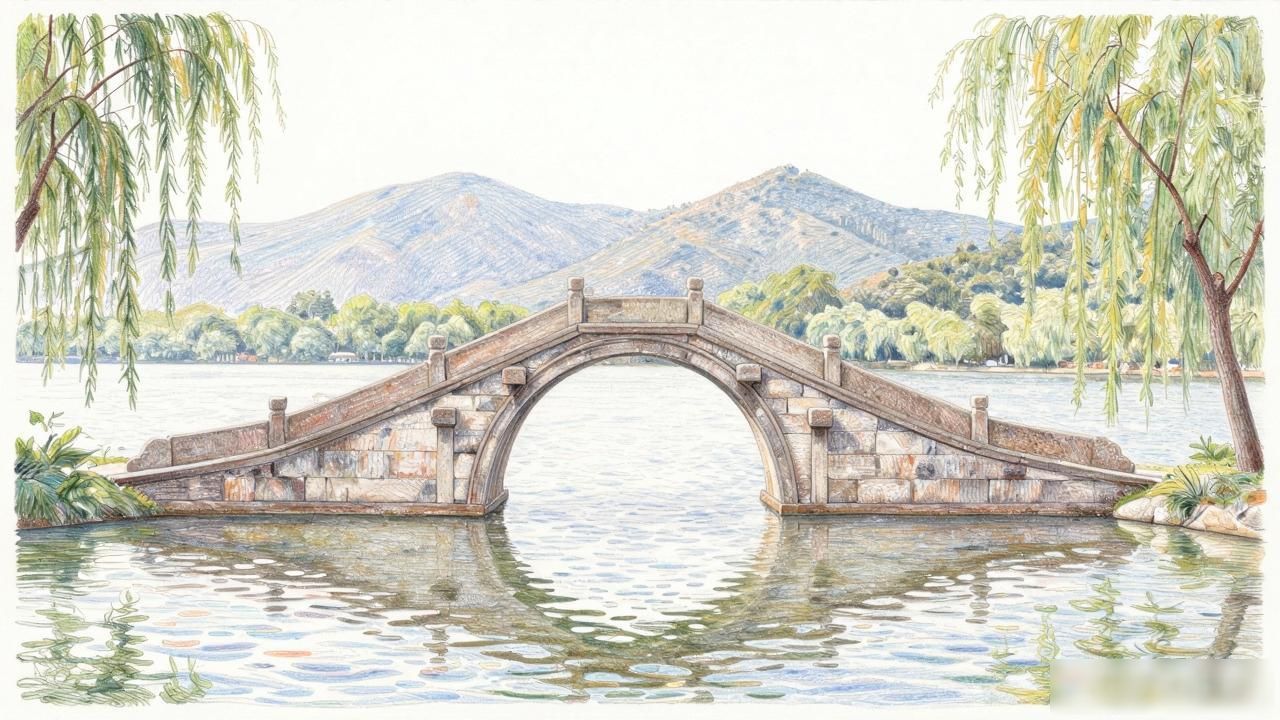
The bridges of West Lake are not remarkable because they are large or technically ambitious. They are remarkable because they were designed to be seen, to frame the landscape rather than dominate it. The single arches, the low profiles, the careful placement—they all serve the same purpose, which is to make the lake feel endless. This philosophy dates back over a thousand years, to the Tang and Song dynasties, when poets and officials shaped the water and the land into something that could be read like a poem.
What visitors often miss is that the bridges are part of a larger system. The causeways, the pagodas, the temples, and the gardens all work together. A bridge is never just a bridge. It is a threshold, a pause, a moment of transition between one view and the next. The Chinese word for bridge, qiao, also carries a sense of expectation, of something you are about to discover on the other side. That is why the act of crossing matters as much as the destination.
The best bridges at West Lake are the ones that make you slow down. They do not ask for your attention with grandeur. They earn it through subtlety, through the way a stone railing catches the afternoon light, through the sound of water moving beneath you, through the distant bell of a temple that arrives and fades like a thought. If you take nothing else from this guide, take this: walk slowly, look down at the water as often as you look ahead, and let the bridges do what they have always done, which is to connect you to something older than yourself.