
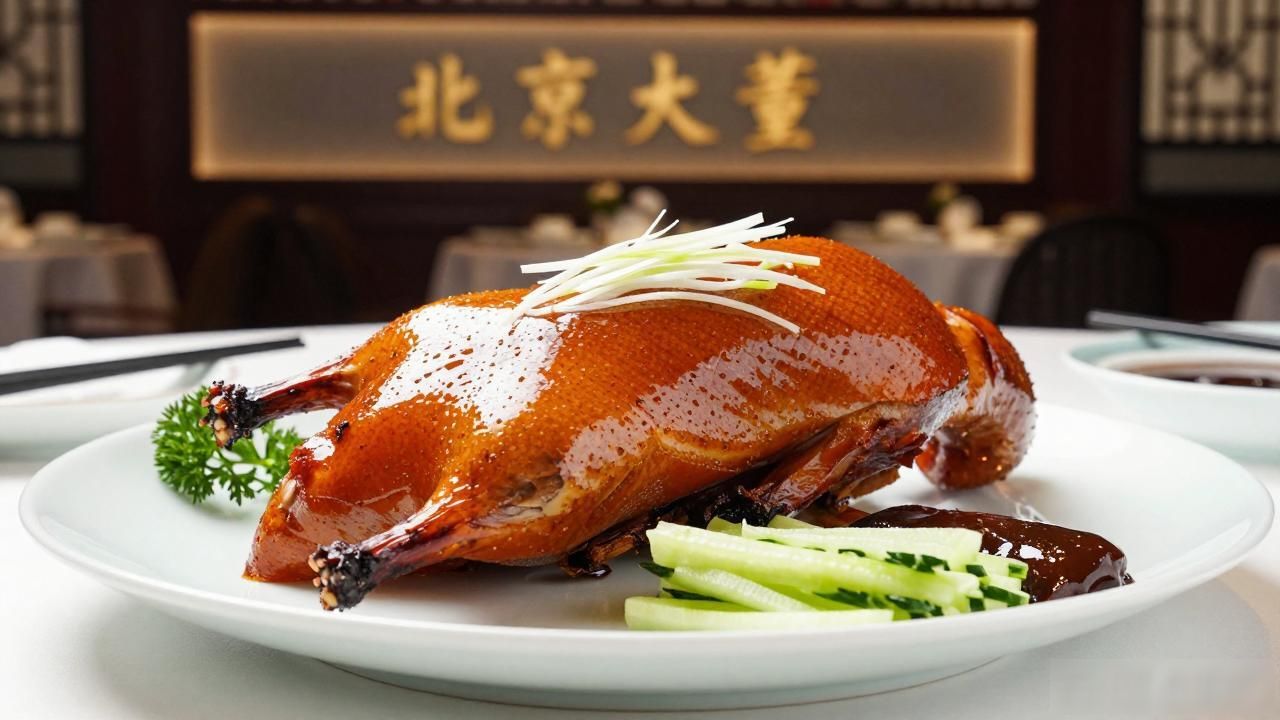
If you are visiting Beijing, there is one dish that simply cannot be missed. Peking duck is not just food; it is a cultural symbol, a centuries-old tradition, and arguably the most famous Chinese dish known worldwide. The combination of crisp golden skin, tender meat, and thin pancakes wrapped around sweet bean sauce and fresh scallions creates an unforgettable experience. Finding the right restaurant in a city as vast as Beijing can feel overwhelming, but knowing where to go makes all the difference.
Best Places to Try Peking Duck in Beijing
The most well-known name is undoubtedly Quanjude, founded in 1864. This century-old chain has locations all across Beijing and beyond. Tourists flock here for the historical atmosphere and the traditional hanging-oven method of roasting. The duck is cooked over an open flame,which gives the skin its signature crunch. It is a reliable choice, though some locals argue it has lost some of its former magic over the years.

For a more refined and modern experience, Da Dong is the answer. This restaurant has earned numerous international accolades and is beloved by both locals and foreigners. Da Dong uses a leaner breed of duck, which produces a richer flavor with less greasiness. Their presentation is theatrical, and the staff explains each step with genuine pride. The restaurant also has branches in Shanghai, Hong Kong, and New York, proving its reputation extends far beyond China.
If you want to eat where actual Beijingers go, try Siji Minfu. This unpretentious spot has built a loyal following over decades. The line outside often stretches down the block during dinner hours, which tells you everything you need to know. The duck arrives fresh from the oven, and the staff carve it tableside with impressive speed and skill. Prices are fair, and the atmosphere is warm and noisy in the best possible way.
How to Eat Peking Duck the Right Way
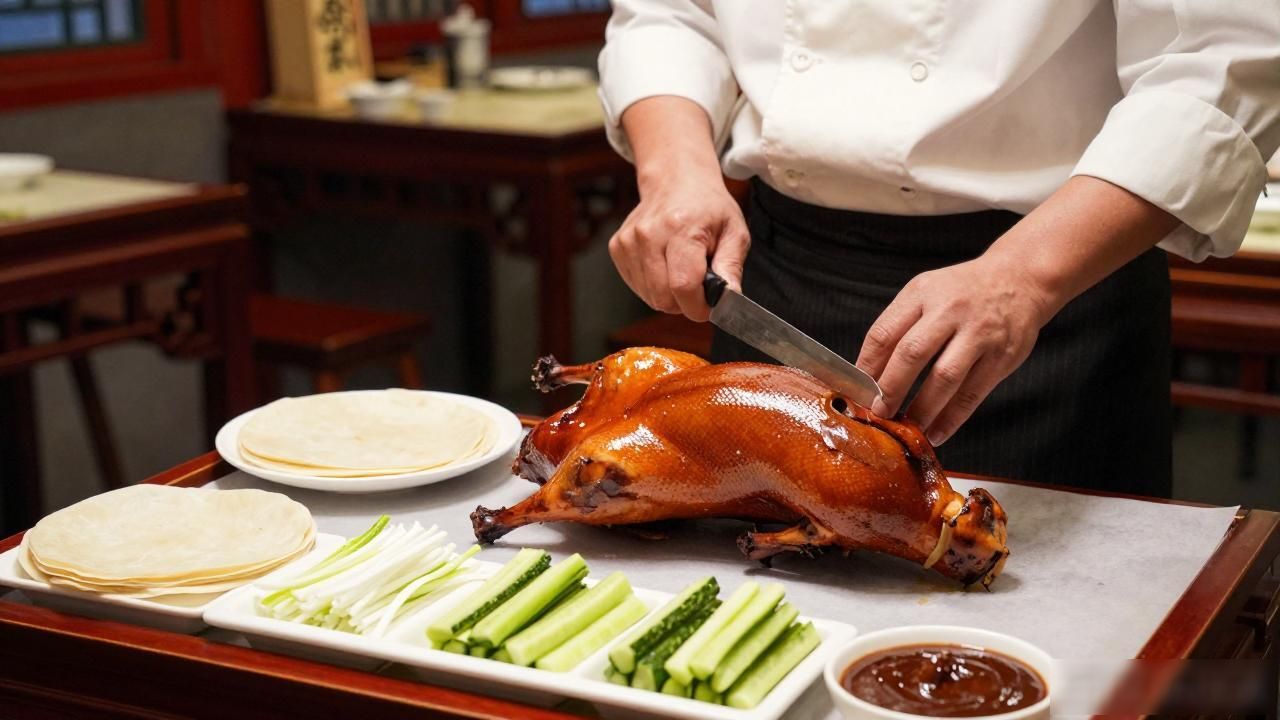
Eating Peking duck is a ritual that takes practice. The chef brings the whole roasted duck to your table and slices it with a sharp blade in front of you. Thin, paper-like wrappers called lotus leaf pancakes are placed on a plate alongside julienned scallions, cucumber strips, and a bowl of sweet bean sauce or salt, depending on your preference.
Start with the skin alone. Dip a piece of the crispiest skin into fine salt and eat it in one bite. The texture contrast between the shattering crust and the melting fat is extraordinary. After that, build your wrap. Lay a pancake flat, spread a thin layer of hoisin sauce, add a few strips of scallion and cucumber, place a slice of duck with skin facing up, and roll it tightly. Eat it immediately before the soft parts wilt.
Some people prefer the plain skin first without any condiments, while others dive straight into the wrapped version. There is no wrong approach here. The beauty of this dish lies in the personal rhythm you develop as you eat. Taking your time is the entire point. Rushing through the meal defeats the purpose of what is meant to be a leisurely, almost meditative dining experience.
Why Beijing Is the Only Place for Authentic Peking Duck
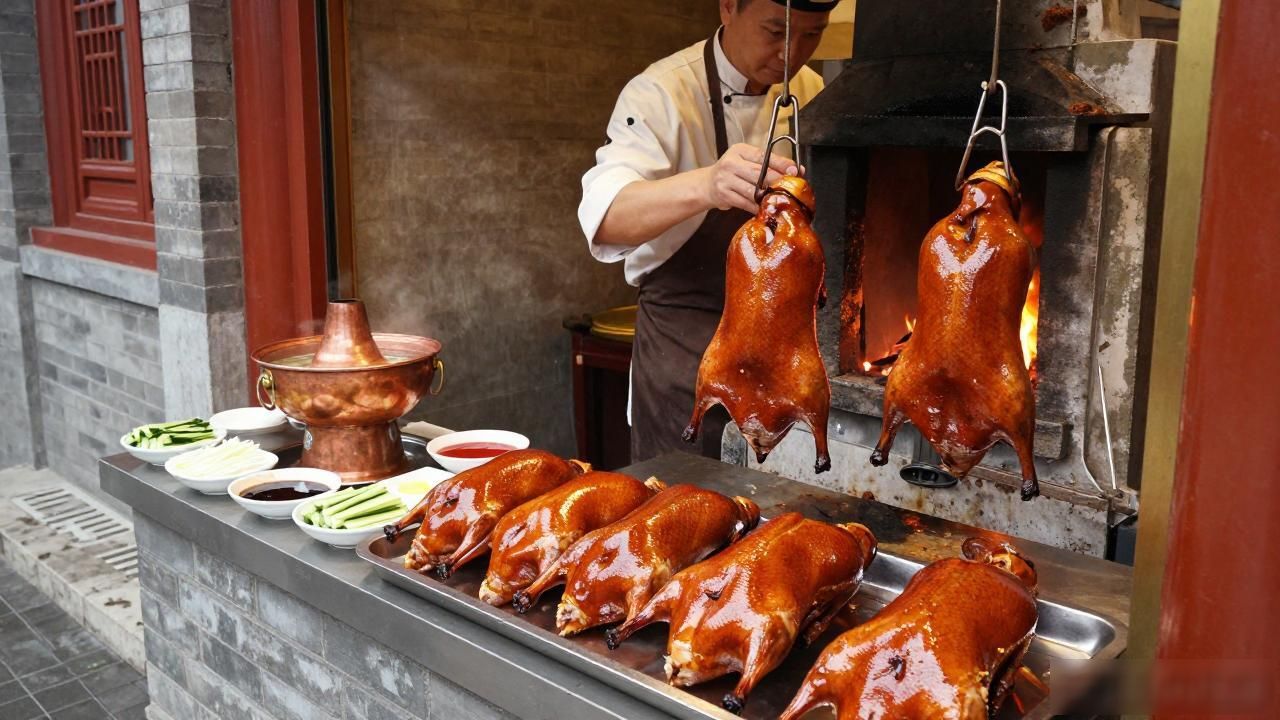
You might wonder whether you can get a decent Peking duck anywhere else in the world. The answer is no, and here is why. The ducks used in Beijing come from a specific breed raised in controlled conditions. The roasting technique relies on airflow, fuel quality, and oven design that is nearly impossible to replicate outside the city. Water source matters too, affecting both the meat texture and the final flavor profile.
Beijing residents grow up eating this dish at celebrations, family gatherings, and important milestones. It is woven into the social fabric of the city in a way that no other location can match. When you sit down to a proper Peking duck meal in Beijing, you are participating in something that has remained virtually unchanged for over six hundred years. The continuity of tradition is palpable.
A meal of Peking duck in Beijing leaves you with more than just a full stomach. It leaves you with a deeper understanding of Chinese culinary philosophy, where technique, patience, and respect for ingredients come together on a single plate. Book a table, arrive hungry, and let the duck do the talking.