
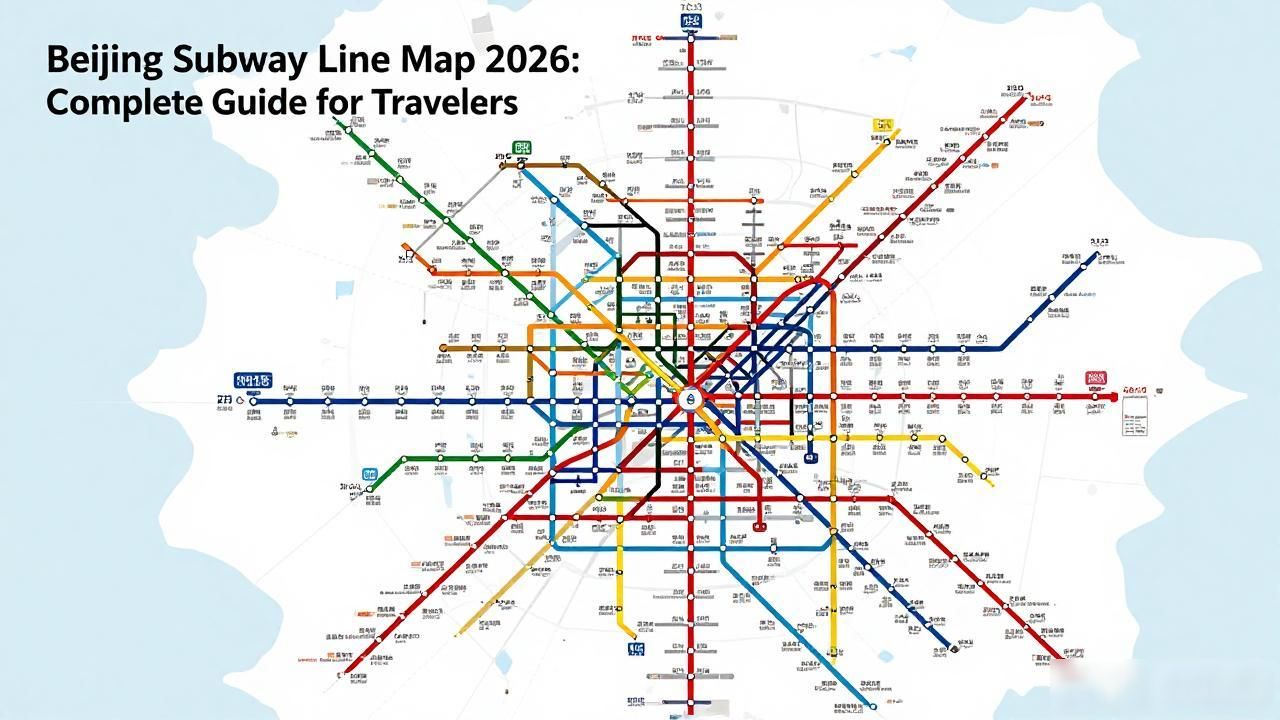
Navigating the Beijing subway is simpler than you might think once you understand the lay of the land. The city has built an extraordinary transit network over the past two decades, and today it stands as one of the busiest metro systems in the world. For foreign visitors and expats alike, a clear understanding of the Beijing subway line map can transform a potentially stressful journey into something smooth and efficient. The system serves as the backbone of urban transportation, connecting tourist hotspots, business districts, and residential neighborhoods in ways that are often faster and cheaper than taking a taxi. Understanding how the lines interconnect and which stations matter most will give you confidence moving around this vast capital.
What does the Beijing subway line map look like today

The Beijing subway network has expanded dramatically in recent years, growing from just a handful of lines when the system first opened to a sprawling web of over 27 operational lines as of 2026. The map resembles an intricate spiderweb crisscrossing beneath the city,with lines radiating outward from the historic center and forming concentric rings around it. The most iconic feature is Line 1, the original east-west artery that runs directly beneath Chang an Avenue and connects major landmarks like Tiananmen Square, Wangfujing, and Yongdingmen. Running roughly parallel to it is Line 2, the circular loop that traces the old city wall route and remains one of the most heavily used lines on the entire network.
If you look closely at the map, you will notice that several lines serve the airport connection. Line 10 forms a large outer loop encircling central Beijing, while Line 14 runs in a more irregular shape from northwest to southeast through some of the city’s most vibrant areas. The airport is served by both Line 10 and the dedicated Airport Express, making it straightforward whether you land at Capital International Airport or the newer Daxing International Airport. Daxing Airport connects via Line 19 and the Daxing Airport Express, both of which integrate seamlessly with the broader network.
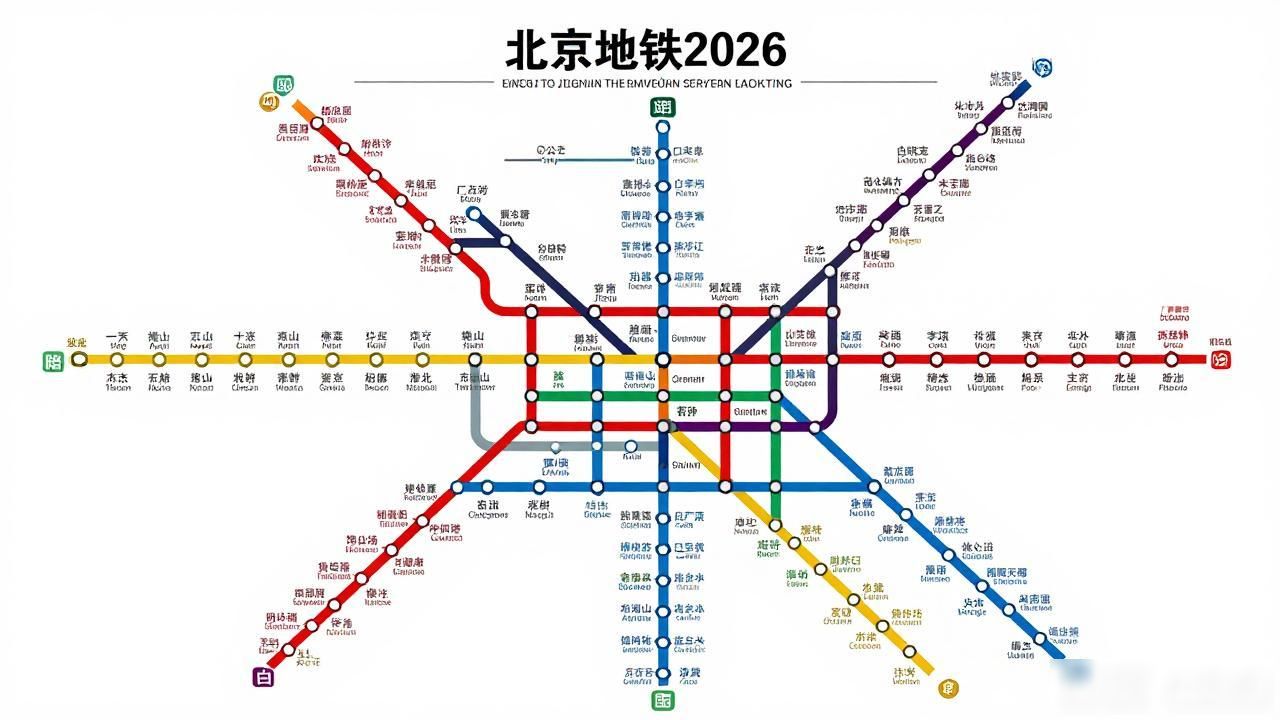
The color coding system on the map is surprisingly intuitive. Each line has its own distinct color, and station names are displayed in both Chinese characters and English, though the English translations can sometimes feel a bit literal. Transffer stations are clearly marked where multiple colored lines intersect, and the most important interchange hubs include Xizhimen, Guomao, and Dongzhimen. Knowing these key nodes gives you a solid mental framework for planning your routes.
How do foreigners navigate the Beijing subway easily
Getting around the Beijing subway as a foreigner requires a few practical strategies, but nothing overly complicated. The easiest approach is to download the Beijing Subway official app or use Apple Maps and Amap for real-time navigation. Both platforms provide accurate route planning with English support, and they will guide you step by step from your starting point to your destination including which line to take and where to transfer. Physical maps are also available at every station entrance, and they remain a reliable backup when your phone battery runs low or the signal drops in certain underground sections.

Payment has become remarkably convenient for visitors. You no longer need to purchase individual tickets at the counter for every journey. Simply use Alipay or WeChat Pay, both of which allow you to scan and enter the system without queuing. Foreign visitors can also register for the Beijing Yikatong card through the official transit app, linking it to a foreign credit card for seamless access. At major stations, there are ticket vending machines with English interfaces where you can buy single-journey tokens if you prefer the traditional method.
Language barriers are generally not a serious obstacle on the subway. Station announcements are made in both Mandarin and English, and the most popular tourist stations have clear English signage throughout. However, don’t expect all staff to be fluent in English, so having the Chinese name of your destination station written down or saved on your phone is a wise precaution. Learning a few essential phrases like where to transfer or which direction to go toward a specific landmark will go a surprisingly long way in making your subway experience stress-free and enjoyable.