
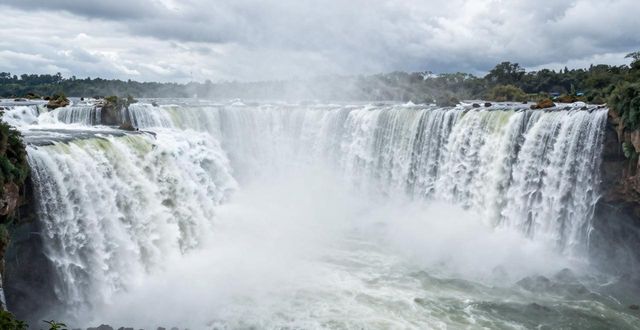
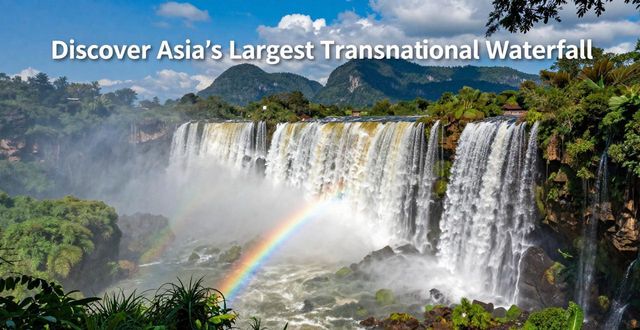
Straddling the border between China and Vietnam, the Detian–Bản Giốc Waterfall is the largest transnational waterfall in Asia and the fourth largest waterfall along a national border worldwide. Its thunderous cascades, jade-green pools, and karst backdrop create a spectacle that draws travelers from every corner of the globe. Unlike single‑drop falls, this system of three tiers stretches over 200 meters wide and drops more than 70 meters, shifting in volume and color with each monsoon season.
Best time to visit Detian waterfall

Timing your trip makes all the difference. From June to October, the wet season swells the river, turning the falls into a roaring curtain of white foam that can be heard from miles away. Visit between September and October, and you’ll also catch golden rice terraces nearby. In the dry season (November to May), the flow softens, revealing the rocky face beneath and cleaner, turquoise pools. If you want both dramatic water volume and manageable crowds, aim for late September – just after the summer peak but before the national holidays of either country.
How to see both sides of Asia largest transnational waterfall
The falls belong to two countries: the Chinese side is called Detian, the Vietnamese side Bản Giốc. On the Chinese bank, boardwalk trails lead you to the middle of the cascade, and you can rent a bamboo raft to drift right up to the spray zone – no passport check needed for the raft ride itself. To stand on Vietnamese soil, cross the official border gate with a valid visa (day trips can be arranged from the town of Trùng Khánh). The Vietnamese side offers a closer view of the main drop and a quiet cave behind the falling water, a perspective most Chinese tourists miss.
Why is it the largest cross-border waterfall in Asia
“Largest” here means combined width. At over 200 meters, this waterfall outpaces every other transboundary fall on the continent, including the famous Nohkalikai Falls (which is not transnational). The total height of its three drops – about 70 meters – adds vertical scale rarely seen in border‑sharing cascades. Moreover, the flow volume averages 300 cubic meters per second during peak season, rivaling many non‑border waterfalls. No other waterfall on an international boundary in Asia matches this combination of breadth, height, and year‑round water supply.
What to pack for a cross-border waterfall trip
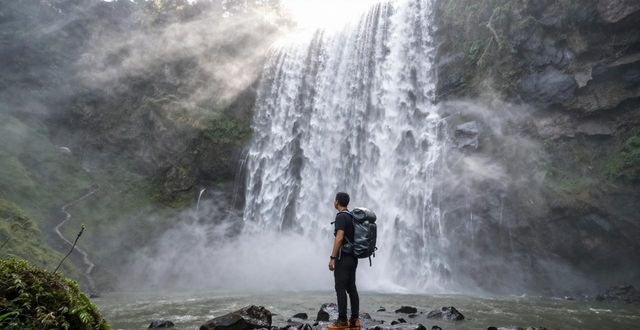
Don’t rely on basic rain gear. Bring a waterproof bag for electronics – the spray is constant on the raft, and mist drifts far onto the trails. Wear quick‑drying shoes with good grip; the rocks near the waterline are slippery even on a dry day. Pack a second passport‑sized photo if you plan to pop into Vietnam; border officials sometimes ask for an extra one. Also, stash small Vietnamese đồng and Chinese yuan separately – the floating markets on both sides sell fresh mangosteen and grilled fish, and they rarely offer card payment.
Now,here’s a question for you: Would you rather experience the roar from a Chinese bamboo raft or stand behind the curtain on the Vietnamese side – and why? Share your thoughts in the comments, and don’t forget to like and share this guide with your fellow waterfall chasers.