
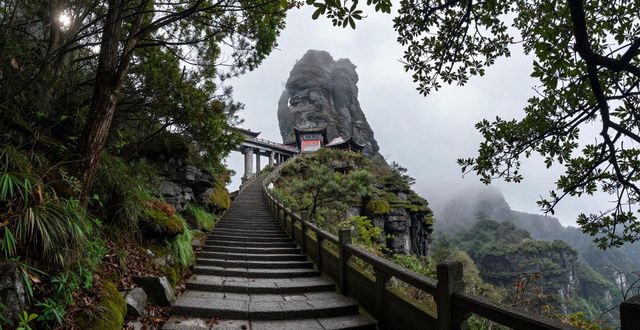
Fanjingshan, located in Guizhou province, is one of China’s most breathtaking UNESCO World Heritage sites. Rising nearly 2,500 meters above sea level, this sacred Buddhist mountain offers dramatic stone pillars, rare wildlife, and cloud-shrouded peaks that feel like stepping into a Chinese painting. For foreign travelers seeking an off-the-beaten-path adventure, Fanjingshan delivers both physical challenge and spiritual reward. Here’s everything you need to know before you go.
What makes Fanjingshan so special

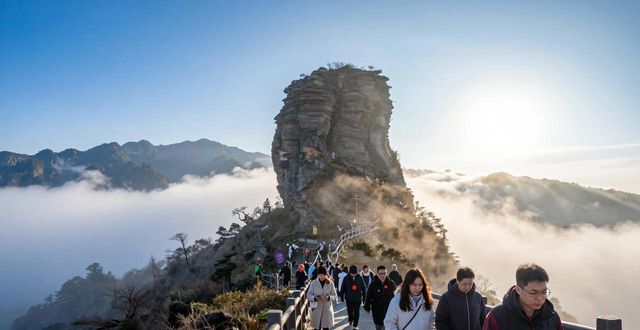
Unlike China’s more crowded tourist mountains, Fanjingshan has remained remarkably pristine. Its most famous feature is the “Finger of Buddha” – a slender rock pillar topped with two small temples connected by a narrow stone bridge. Reaching this summit requires climbing nearly 8,000 steep steps, though a cable car now reduces the effort dramatically. The mountain is also a biodiversity hotspot, home to the endangered grey snub-nosed monkey and over 2,000 plant species found nowhere else on Earth. Many visitors come for sunrise, when the peaks emerge above a sea of clouds like islands in the sky.
How to get to Fanjingshan from major cities
Getting to Fanjingshan takes planning but is absolutely doable. The nearest transportation hub is Tongren City, which has both a high-speed train station and an airport with flights from Shanghai, Guangzhou, and Beijing. From Tongren, you can book a direct bus (about 90 minutes) or hire a private driver to the mountain’s east entrance at Heiwan River. Many foreign travelers prefer flying into Guiyang, then taking a high-speed train to Tongren – the entire journey from Guiyang takes under two hours. Be aware that public buses from Tongren to the mountain stop running after 5 PM,so plan your arrival accordingly.
When is the best time to visit Fanjingshan
The optimal windows are late April through June and September through early November. Spring brings blooming rhododendrons and mild temperatures, while autumn offers crystal-clear skies and golden foliage. July and August are rainy and extremely crowded with domestic tourists – plus the stone steps become dangerously slippery. Winter visits (December to February) are possible but expect sub-zero temperatures, ice on the paths, and frequent fog that may obscure the famous peaks. The cable car closes during heavy snow or high winds, so always check weather forecasts three days ahead. Early morning arrivals (before 8 AM) give you the best chance to see the legendary cloud seas.
What should you pack for the Fanjingshan hike
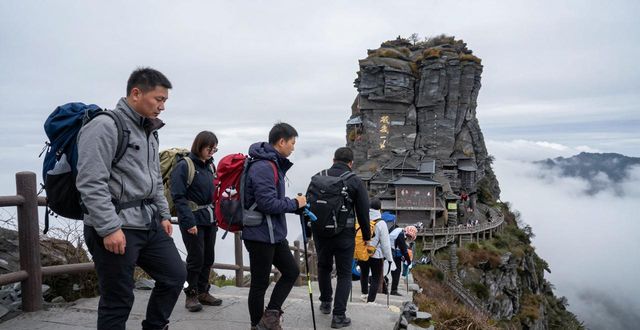
Even with the cable car, you’ll still walk at least 45 minutes uphill from the upper station to the Red Clouds Golden Summit. Wear sturdy hiking boots with deep tread – wet stone steps are deceptively slippery. Bring layered clothing: a moisture-wicking base layer, fleece mid-layer, and waterproof windbreaker. Temperatures at the summit can be 10°C cooler than at the base, and sudden rain showers are common. Pack a collapsible water bottle (there are refill stations at the cable car terminals), high-energy snacks like nuts or chocolate, and disposable rain ponchos. Don’t forget your passport – you’ll need it to buy tickets, which cost around 110 RMB for entrance plus 140 RMB for the cable car round trip.
Have you ever climbed a sacred mountain that completely took your breath away? Drop your own travel stories or questions in the comments below – and if this guide helped you, please share it with fellow adventurers planning their China trip.