

When you think of Hangzhou’s West Lake, the first image that often comes to mind is not just the shimmering water or distant pagodas, but the gentle, drooping willows that line its banks. These are not ordinary trees; they are living symbols of Chinese classical beauty, having inspired poets and painters for over a thousand years. For any traveler visiting Zhejiang Province, understanding the willows of West Lake is the key to unlocking the deep cultural soul of this UNESCO World Heritage site.
Why West Lake willows are so famous

The fame of West Lake willows begins with their unique partnership with the lake’s bridges and misty rains. Unlike straight, towering trees, these weeping willows have soft branches that hang low, almost touching the water’s surface. When a light breeze blows, they sway like dancers, creating a moving frame around the lake’s calm waters. Historically, scholars of the Southern Song Dynasty compared these scenes to “mist-woven willows” – one of the legendary Ten Scenes of West Lake. For foreign visitors, it helps to think of them as nature’s own traditional Chinese brush painting, alive and breathing. Their iconic status also comes from how they mark the seasons: turning yellow-green in early spring, lush in summer, and golden in autumn, always changing the lake’s face.
Best spots to see the willows around the lake
If you want the perfect willow-viewing experience, you cannot miss the famous Su Causeway, built by the poet Su Dongpo over 900 years ago. Here, willows are planted alongside peach trees, so in spring you get pink blossoms hanging above green branches – a stunning contrast. Another top location is the “Willows Wave at the Shore” area near the Leifeng Pagoda, where the trees grow thickest. In the early morning or at sunset, the low-angle light makes each branch glow like gold thread. For a quieter walk, head to the inner lake behind the Solitary Hill; the willows there are older and more twisted, giving a more ancient, peaceful feel. Remember to bring your camera, because every turn of the path offers a postcard-worthy shot.
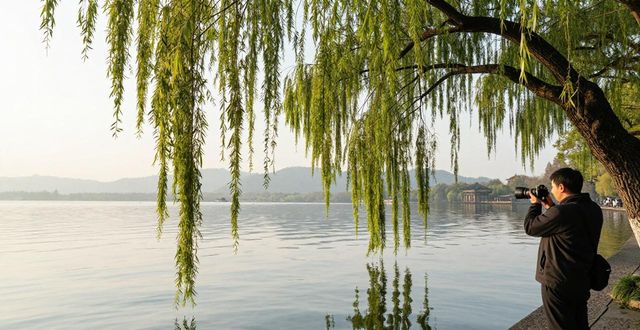
How to capture the perfect willow photo
Photographing West Lake willows can be tricky if you don’t know the tricks. First, avoid midday when the light is harsh – go during “blue hour” (just before sunrise) or “golden hour” (just before sunset). Use the lake’s reflections: frame a willow branch so it points toward a distant pagoda or arched bridge, with both the tree and its mirror image in the water. If you have a telephoto lens, compress the layers of willows, mist, and boats for a dreamy effect. Also, don’t just shoot the whole tree; get close and capture a single swaying branch against the grey stone of a classical bridge. For smartphone users, try the “portrait mode” to blur the background, making the green tendrils pop. Most importantly, wait for wind – a still willow is pretty,but a moving one tells the story of life.
What time of year are West Lake willows most beautiful

This is perhaps the most common question from travelers. The willows offer four distinct faces across the year, but late February to April is the undeniable peak. During this period, the trees sprout tiny new leaves that are so light and yellow-green, the Chinese call it “willow gold.” March brings the famous “willow mist” when warm air meets cool lake water, creating a low fog that tangles in the branches. Summer provides dense green shade, perfect for escaping heat, while October coats the leaves in amber tones. Winter is underrated: bare, reddish-brown branches covered in a dusting of snow create a stark, ink-wash beauty. If you have only one chance, aim for late March – that’s when the willows, peach blossoms, and migratory birds all come together in a single frame.
Now, after reading this, which season would you choose to see West Lake’s willows, and what kind of experience are you hoping for? Share your thoughts in the comments – and if you found this guide helpful, please give it a like and share it with your fellow travel lovers.