
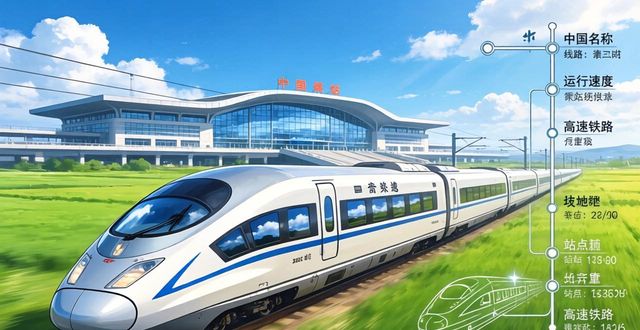
China’s high-speed rail (HSR) is the largest and most advanced network in the world, spanning over 45,000 kilometers and connecting nearly every major city. For international travelers, it offers a fast, comfortable, and surprisingly affordable way to explore the country. Unlike flights, trains depart from city centers, involve no long security lines, and run on time. This guide breaks down everything you need to know about riding China’s high-speed trains, from speed and cost to booking and onboard experience.
How Fast Is China High Speed Rail?
China’s high-speed trains regularly reach top operational speeds of 350 km/h (217 mph) on main lines like Beijing–Shanghai and Beijing–Guangzhou. For example, the 1,318 km trip from Beijing to Shanghai takes just 4.5 hours on the Fuxing (Rejuvenation) bullet train. Some experimental models have hit 600 km/h, but commercial services stick to safe, reliable 300–350 km/h. Trains run on dedicated tracks with advanced signaling, so delays are rare.

Compared to Japan’s Shinkansen (max 320 km/h) or France’s TGV (320 km/h), China’s trains are among the fastest in regular use. The ride feels incredibly smooth, thanks to precision engineering and continuous welded rails. You won’t feel sick or shaky even at top speed. For short hops between cities like Tianjin and Beijing, the train takes only 30 minutes, beating any car or plane option.
Is China High Speed Rail Affordable?
Yes, surprisingly. A second-class seat from Beijing to Shanghai costs around 550 RMB (roughly $75 USD) one way. That’s about the same as a budget airline ticket before baggage fees, but you avoid airport transfers and long waits. First class costs about 900 RMB, and business class around 1,700 RMB. For shorter trips, prices drop dramatically – a 30-minute ride from Shanghai to Hangzhou costs just 70 RMB ($10 USD).
When you compare comfort and convenience, high-speed rail often beats flying. Trains leave from downtown stations, and you arrive in another city center. No fuel surcharges, no strict weight limits for luggage, and you can bring your own snacks. Students, seniors, and group travelers get discounts on many routes. Even budget backpackers find the second-class seats spacious enough, with legroom similar to premium economy on a plane.
How to Buy China High Speed Rail Tickets
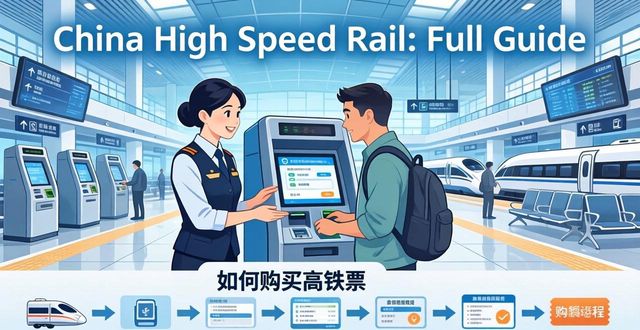
Foreigners can buy tickets online or at station counters using a passport. The official platform is (China Railway’s website), which has an English version and mobile app. You can book up to 15 days in advance, or up to 30 days during holidays. For simpler payment and customer support, use third-party apps like ,which charge a small service fee but accept international credit cards.
At the station, look for the manual counter marked “Foreign Passengers.” Major hubs like Beijing South, Shanghai Hongqiao, and Guangzhou South have English-speaking staff. You can also buy tickets from red vending machines – switch the language to English, then scan your passport at the reader. Remember: tickets are real-name based, so always carry your original passport when boarding. E-tickets are common; you just scan your passport at the gate.
What Is the Travel Experience Like
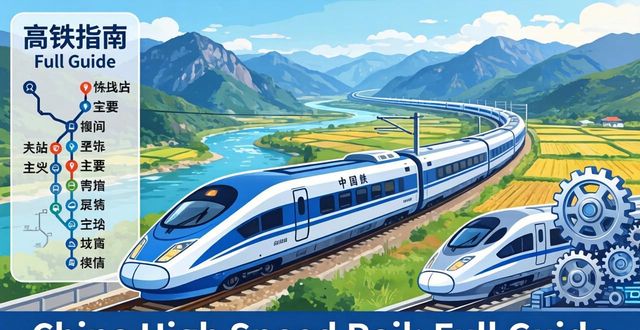
Step inside a China high-speed train, and you’ll find modern interiors with air conditioning, power outlets under every seat, and free WiFi on most new trains. Second-class seats are arranged 2+3 across, with decent recline and a fold-down tray. First-class is 2+2, wider and plusher. Business class offers lie-flat seats, similar to international flights. Luggage racks are overhead, plus larger storage areas near doors.
Food options include a dining car selling hot meals (noodles, rice dishes, snacks) for around 30–50 RMB, or you can pre-order a boxed meal through the app. Vendors walk through aisles with drinks and chips. Toilets are clean and feature both squat and Western styles. Announcements are in Mandarin and English. Trains are famously punctual – if it says departure at 14:00, the doors close at 13:59. Don’t be late.
Have you ridden China’s high-speed rail? What surprised you most – the speed, the price, or the onboard comfort? Share your story in the comments, and give this guide a thumbs up if it helped you plan your trip.