
When travelers think of China’s ancient capital, Xi’an immediately comes to mind as a living museum of dynastic glory. This city is not just about the famous Terracotta Warriors; it is a treasure trove of historical sites that span over 3,000 years. From city walls to pagodas and imperial tombs, every corner tells a story of power, culture, and faith. For anyone fascinated by Chinese history, Xi’an offers an authentic journey through time that you simply cannot find elsewhere.
What are the must-see ancient landmarks in Xi’an
The Terracotta Army is undoubtedly the crown jewel of Xi’an’s historical sites. Discovered in 1974 by local farmers, this vast underground army of over 8,000 life-sized soldiers, horses, and chariots was built to guard Emperor Qin Shi Huang in the afterlife. Walking through the three excavated pits, you will marvel at the astonishing detail on each warrior’s face, hairstyle, and armor—no two are identical. This UNESCO World Heritage site alone draws millions of visitors every year, and it rightfully tops every traveler’s list.

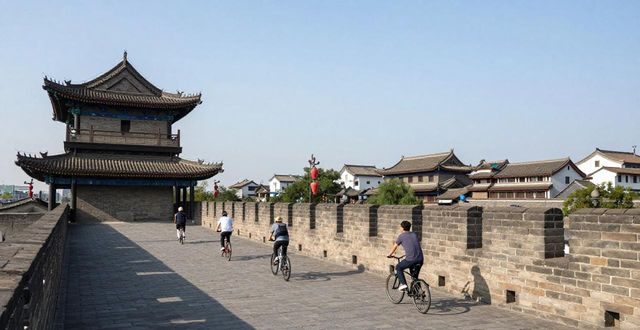
Beyond the Terracotta Warriors, the ancient City Wall of Xi’an is another unmissable landmark. Constructed during the Ming Dynasty on the foundations of the Tang imperial city, it is the best-preserved city wall in China, stretching nearly 14 kilometers in a rectangle. You can rent a bicycle and ride along the top, which offers fantastic views of the modern city blending with ancient architecture. The wall’s massive ramparts, watchtowers, and drawbridges give you a vivid sense of how formidable this fortress once was.
How to visit Xi’an’s historical sites on a budget
Many of Xi’an’s historical attractions offer discounted or even free admission on specific days, especially for students and seniors. For example, the Great Mosque and the Small Wild Goose Pagoda have low entrance fees that rarely exceed ten US dollars. You can also purchase a combined ticket for multiple sites like the City Wall, the Bell Tower, and the Drum Tower to save money. Taking public bus number 5 or 306 from the train station to the Terracotta Warriors costs less than two dollars, far cheaper than a taxi or tour bus.
Accommodation near the Muslim Quarter is both affordable and centrally located, allowing you to walk to many historical sites. Hostels and budget hotels in this area start at around ten dollars per night, and you can easily explore the Drum Tower, the Great Mosque, and the old alleyways on foot. Eating from street vendors instead of sit-down restaurants also cuts costs while giving you authentic local snacks like roujiamo (Chinese burger) and yangrou paomo (lamb soup with bread). With careful planning, you can experience Xi’an’s top historical wonders for under fifty dollars a day.
Why is the Big Wild Goose Pagoda a must-visit spot
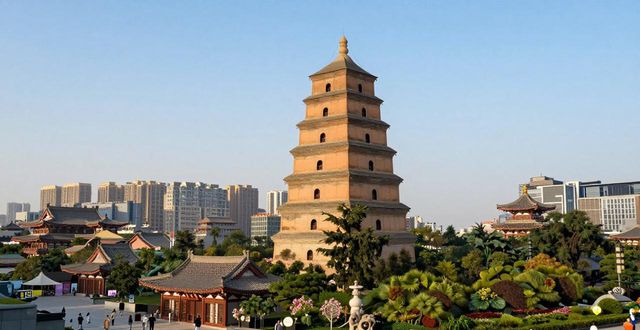
The Big Wild Goose Pagoda is one of Xi’an’s most iconic Buddhist landmarks, dating back to the Tang Dynasty in 652 AD. It was built by the famous monk Xuanzang to store Buddhist scriptures and artifacts he brought back from India. The pagoda stands at a height of 64 meters with seven stories, and climbing to the top rewards you with a panoramic view of the entire city. Unlike many modern reconstructions, this brick pagoda retains its original Tang-era architecture, making it a rare and authentic historical structure.
Surrounding the pagoda is the North Square, home to the largest musical fountain in Asia. Every evening, a spectacular water and light show takes place, choreographed to traditional Chinese music. The contrast between the ancient pagoda and the modern fountain display creates a magical atmosphere that appeals to all ages. For history lovers, the nearby Xi’an Museum offers free admission and houses thousands of relics from the Tang Dynasty, including gold and silver wares,murals, and calligraphy. Together, the pagoda and the museum provide a deep dive into Xi’an’s golden age of culture and religion.
What are the hidden gems among Xi’an historical sites
While most tourists flock to the Terracotta Warriors, the Hanyangling Mausoleum offers a quieter and equally fascinating experience. This tomb complex belongs to Emperor Jingdi of the Western Han Dynasty, and its underground museum allows you to walk through burial pits with glass floors. You can see miniature terracotta figures—only about one-third the size of Qin’s warriors—representing servants, eunuchs, and livestock. The site is much less crowded, giving you ample time to appreciate the subtle differences in Han Dynasty burial customs.
Another hidden treasure is the Stele Forest Museum, a vast collection of engraved stone tablets and calligraphy masterpieces. Housed in a former Confucian temple, this museum contains more than 3,000 steles dating from the Han Dynasty to the Qing Dynasty. These stones record everything from Confucian classics and historical events to poetry and medical texts. For scholars of ancient Chinese writing, this is a paradise. Even if you cannot read classical Chinese, the artistry of the carved characters is visually stunning. The museum’s tranquil courtyards also provide a refreshing escape from the city’s hustle.
Have you ever visited an ancient Chinese capital, and which Xi’an historical site would you explore first? Please share your thoughts in the comments below, and don’t forget to like and forward this guide to fellow history lovers!