
The Forbidden City (Palace Museum): A Comprehensive Introduction
The Forbidden City, known today as the Palace Museum, stands as one of the most magnificent and culturally significant architectural complexes in the world. Located at the very heart of Beijing, it served as the imperial palace for 24 emperors across two dynasties—the Ming (1368–1644) and the Qing (1644–1911)—for nearly 500 years. Encompassing over 720,000 square meters (178 acres) and housing more than 8,700 rooms, it is the largest and best-preserved collection of ancient wooden structures on Earth . Inscribed as a UNESCO World Heritage Site in 1987, the Forbidden City is not only a testament to China’s imperial past but also a vibrant museum that safeguards and showcases the pinnacle of Chinese art and craftsmanship .
Historical Origins and Imperial Legacy
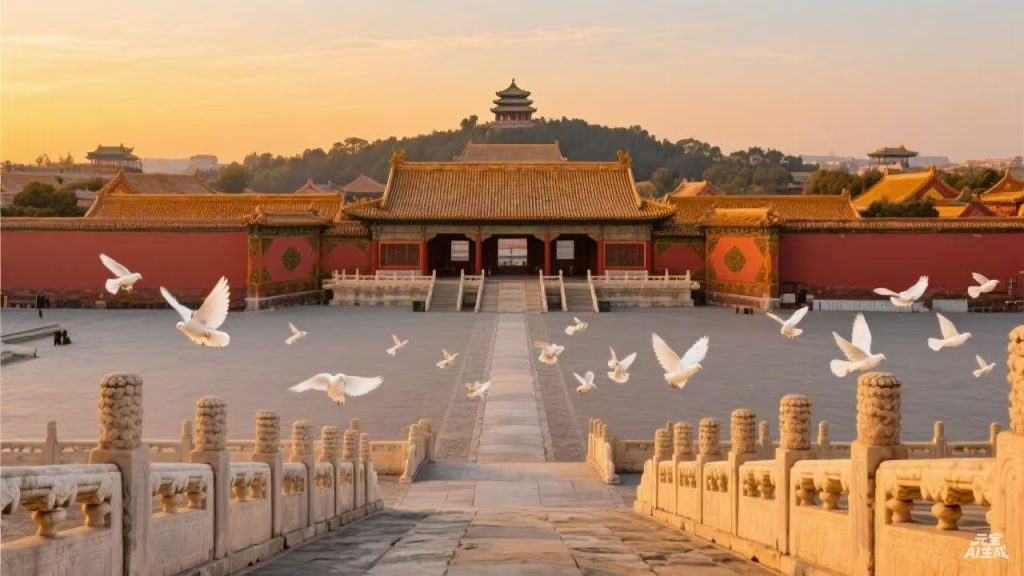
The Forbidden City’s construction was commissioned in 1406 by the Yongle Emperor, the third ruler of the Ming Dynasty, who moved the capital from Nanjing to Beijing . The palace complex was completed in 1420 and first officially occupied by the imperial court that same year . Its name, “Forbidden City” (紫禁城 Zijincheng), derives from the fact that access was strictly prohibited to ordinary subjects and even most government officials; only the emperor, his family, and his designated servants could enter its inner sanctums at will .
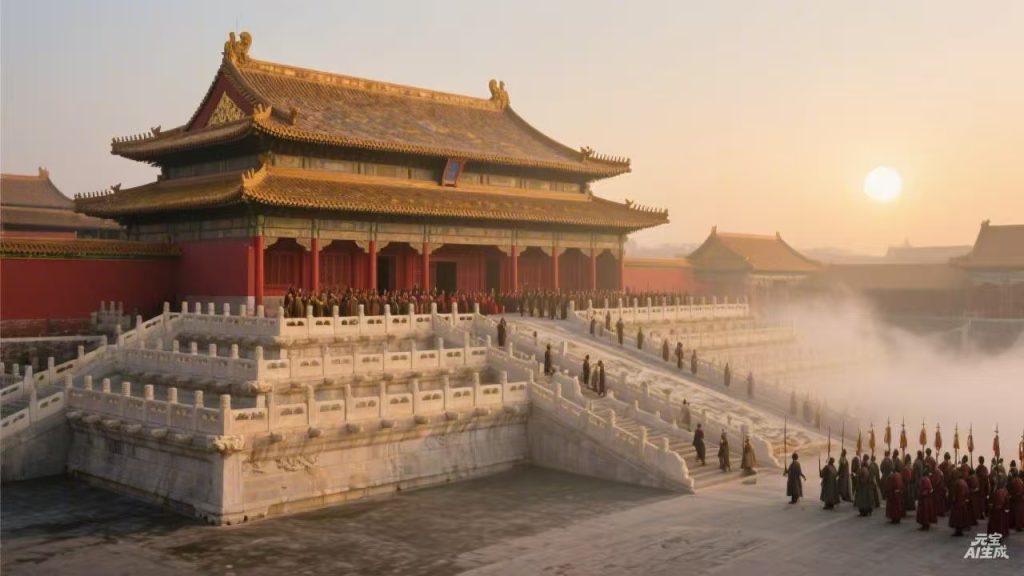
For five centuries, it was the political and ceremonial center of the Chinese empire. Here, emperors held court, conducted state affairs, celebrated grand ceremonies, and lived with their families. The complex witnessed the rise and fall of dynasties, including the transition from Ming to Qing rule in 1644. The last emperor, Puyi, was expelled from the palace in 1924, marking the end of its role as an imperial residence .
On October 10, 1925, the Palace Museum was established within the Forbidden City and opened to the public, transforming a symbol of exclusive imperial power into a national treasure shared by all people . This shift was, as former curator Shan Jixiang noted, “groundbreaking and epoch-making” . 2025 marked the museum’s centennial, celebrated with special exhibitions reflecting on a century of preservation and scholarship .
Architectural Mastery and Symbolic Design
The architecture of the Forbidden City is a profound embodiment of traditional Chinese cosmology, philosophy, and statecraft. Its design rigidly adheres to principles of feng shui (geomancy) and hierarchical order.
Layout and Axis: The entire complex is meticulously arranged along a north-south central axis, which aligns with the broader central axis of old Beijing, stretching 7.8 kilometers from the Yongding Gate in the south to the Drum and Bell Towers in the north . This axis represents cosmic order and imperial authority. All major halls face south, honoring the sun, which was associated with the emperor’s yang energy and benevolence .
Defensive Structures: The city is surrounded by a massive 10-meter-high wall and a 52-meter-wide moat, providing formidable defense . Each corner of the wall is adorned with an exquisitely crafted corner tower. There are four main gates: the Meridian Gate (Wumen) to the south, the Gate of Divine Might (Shenwumen) to the north, and the East and West Glorious Gates.
The Outer Court and Inner Court: The complex is divided into two primary sections: the Outer Court (Wai Chao) and the Inner Court (Nei Ting) .
- The Outer Court, comprising the southern section, was the realm of state affairs. Its heart is the “Three Great Halls” (San Da Dian), built atop a three-tiered marble terrace overlooking a vast plaza capable of holding tens of thousands of subjects .
- Hall of Supreme Harmony (Taihedian): The largest and most important building, used for major ceremonies like coronations, imperial weddings, and the winter solstice celebrations. It houses the magnificent Dragon Throne .
- Hall of Central Harmony (Zhonghedian): A smaller square hall where the emperor prepared for ceremonies and received ministers.
- Hall of Preserving Harmony (Baohedian): Used for banquets and, later in the Qing dynasty, for the final stage of the imperial examinations.
- The Inner Court, located north of the Gate of Heavenly Purity (Qianqingmen), was the private residential area for the emperor, his consorts, and the royal family. Its central buildings are the Palace of Heavenly Purity (Qianqinggong) (the emperor’s residence), the Hall of Union (Jiaotaidian), and the Palace of Earthly Tranquility (Kunninggong) (the empress’s residence) . Beyond these lie the intricate networks of the Eastern and Western Six Palaces, where imperial concubines lived.
Architectural Details: The relative importance of any structure is communicated through details like the style of its roof (hip, gable, or pyramidal), the number of mythical animal figurines on its roof ridges, and the color of its glazed tiles—yellow being reserved for imperial roofs . The ubiquitous red of the walls symbolizes good fortune and joy.
The Palace Museum: A Treasure House of Civilization
Today, the Palace Museum is one of the world’s most prestigious museums, with a collection so vast it is often described as a “treasure trove” of Chinese civilization .
The Collection: The museum safeguards over 1.86 million items or sets of cultural relics, with more than 8,000 designated as “first-class” national treasures . This collection was formed from the original imperial holdings, augmented over the past century through careful acquisitions, transfers from other institutions, and generous public donations. Since 1945, more than 800 donors have contributed over 35,000 artifacts to the museum .
The relics are categorized into 25 major types, including:
- Paintings and Calligraphy: Masterpieces spanning centuries, such as Along the River During the Qingming Festival and Five Oxen by Tang dynasty artist Han Huang .
- Ceramics and Porcelain: A comprehensive collection from Neolithic pottery to exquisite Ming and Qing imperial porcelain.
- Bronze Ware: Ritual vessels from the Shang and Zhou dynasties, representing the zenith of ancient Chinese metallurgy.
- Timepieces: A fascinating collection of elaborate clocks and watches, many gifted by European envoys to the Qing court, housed in the dedicated Clock Exhibition Hall .
- Jade, Lacquer, Enamel, and Textiles: Exquisite examples of decorative arts and craftsmanship.
- Imperial Seals, Documents, and Archives.
Exhibitions and Halls: While many artifacts are displayed in their original palace settings, others are shown in specialized galleries. Key exhibition halls include the Treasure Gallery (displaying gold, jewels, and other precious items), the Clock Gallery, the Ceramics Gallery, and the Sculpture Gallery . The museum also hosts rotating thematic exhibitions, such as the centennial exhibition “A Century of Stewardship” and exhibitions featuring donated artifacts .
Visiting the Forbidden City: A Practical Guide
As one of the world’s most visited museums, planning is essential for a rewarding experience.
Tickets and Booking (2026 Information):
- Advance Booking is Mandatory: Tickets are not sold on-site. All visitors must book online via the official “Palace Museum” WeChat mini-program or website .
- Release Schedule: Tickets are released exactly 7 days in advance at 8:00 PM Beijing time. During peak season (April-October), they sell out extremely quickly .
- Prices: ◦ Peak Season (Apr 1 – Oct 31): 60 RMB ◦ Off-Season (Nov 1 – Mar 31): 40 RMB ◦ Treasure Gallery & Clock Gallery: 10 RMB each (highly recommended add-ons) . ◦ Discounts/Free: Available for children, seniors over 60, students, active military, and disabled visitors with valid ID, but a $0 reservation is still required online .
Opening Hours and Closures:
- Open: 8:30 AM year-round.
- Last Entry: 4:10 PM (peak season) / 3:30 PM (off-season).
- Closing: 5:00 PM (peak) / 4:30 PM (off-season).
- Closed: Every Monday (except for national holidays) .
Getting There and Entry:
- The Only Public Entrance is the Meridian Gate (Wumen) on the south side .
- Smart Route to Avoid Crowds: Instead of going through the crowded Tiananmen Square security check, a local-favored route is to take Subway Line 8 to Jinyu Hutong Station (Exit C), walk south for about 10 minutes along the scenic eastern moat to the East Glorious Gate (Donghuamen), and then proceed to the Meridian Gate .
- One-Way Route: The visit follows a strict south-to-north flow. Entry is at the Meridian Gate, and exit is at the Gate of Divine Might (Shenwumen) in the north .
Recommended Itineraries:
- Central Axis Express (1.5-2 hours): Covers the essential Three Great Halls, Three Rear Palaces, and the Imperial Garden. Ideal for those short on time .
- Classic Highlights (4-5 hours): The best choice for first-time visitors. Follows the central axis and adds one wing of the Six Palaces (e.g., the Western Six Palaces, including the Hall of Mental Cultivation) and the Treasure/Clock Galleries .
- Deep Dive (6+ hours): For history enthusiasts or return visitors, covering both eastern and western palace wings, multiple exhibition halls, and quieter corners .
Post-Visit Must-Do: After exiting the Gate of Divine Might, cross the street and enter Jingshan Park. For a nominal fee (2 RMB), climb to the top of the hill for a breathtaking, iconic panoramic view of the entire Forbidden City complex .
The Forbidden City in the Modern Era
The Palace Museum has dynamically evolved to remain relevant and accessible in the 21st century.
Digital Transformation: The museum has undertaken massive digitization projects, creating high-definition records of over 1 million artifacts and ancient structures and making images of more than 100,000 items available online, vastly expanding global access to its collections .
Cultural Creativity: The museum has successfully bridged tradition and contemporary life through its popular cultural and creative products. These include the wildly successful Palace Museum Calendar (with a cumulative circulation of over 8.5 million copies), mythical beast-shaped ice creams, and a wide range of merchandise inspired by palace artifacts, making cultural heritage a part of modern lifestyle .
Expansion and International Exchange: To display more of its vast holdings, the museum is constructing a new branch in Beijing’s Haidian District, which will feature 33,000 square meters of exhibition space . It also actively engages in global cultural dialogue, hosting exhibitions like one on Greece’s Minoan civilization and lending its treasures to institutions worldwide, serving as a gateway for cross-cultural understanding .
Conservation: A monumental, ongoing restoration project began in 2005 to repair and restore all buildings to their pre-1912 condition, the largest such effort in two centuries . This ensures that this architectural marvel is preserved for future generations.
Conclusion
The Forbidden City is far more than a static monument to a bygone era. It is a living museum, a scholarly institution, and a cultural symbol of enduring power. From its awe-inspiring architecture that narrates the philosophy of imperial rule to its unparalleled collections that chronicle the artistic genius of Chinese civilization, it offers an immersive journey through five centuries of history. As it celebrates its first century as a public museum, the Palace Museum continues to innovate, ensuring that the secrets and splendors of the Forbidden City remain open, engaging, and inspiring for all humanity. A visit here is not just a tour of a palace; it is an encounter with the very soul of Chinese culture.