
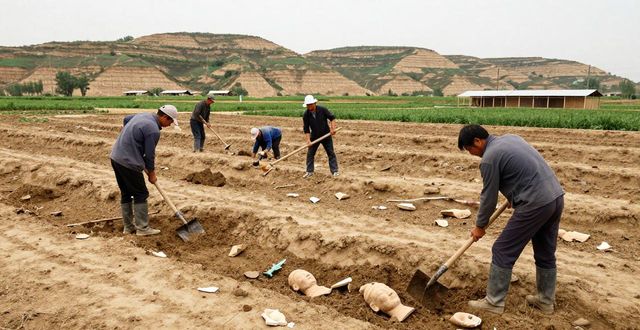
The discovery of the Terracotta Army is one of the most astonishing archaeological finds of the 20th century. In March 1974, a group of farmers digging a well near Xi’an, China, accidentally unearthed fragments of clay figures and bronze weapons. This chance encounter revealed the existence of a vast underground army built to guard the tomb of China’s first emperor,Qin Shi Huang. Since then, over 8,000 life-sized soldiers, horses, and chariots have been uncovered, offering an unprecedented glimpse into ancient Chinese military organization, art, and beliefs. The story behind this discovery is as dramatic as the warriors themselves.
How a well digging led to an ancient army

Local farmers in Lintong County were simply trying to find water when their shovels struck hard, burnt soil and dozens of broken terracotta heads. At first, they thought they had found a kiln or an old brickworks. But as they dug deeper, more body parts and bronze arrowheads appeared. One of the farmers, Yang Zhifa, later recalled that the clay heads looked like “living men.” The men reported the find to local authorities, who soon realized this was no ordinary pottery deposit. Within weeks, Chinese archaeologists arrived and confirmed that the site was part of the mausoleum complex of Qin Shi Huang, the ruler who unified China in 221 BCE. That accidental well hole became the gateway to one of history’s greatest archaeological treasures.
Why the Terracotta Army matters so much
Before this discovery, almost nothing was known about Qin Shi Huang’s tomb, despite ancient texts mentioning a massive underground palace. The Terracotta Army proved those texts were true and far exceeded expectations. Each warrior is unique, with distinct facial features, hairstyles, and armor, reflecting the real soldiers of the Qin dynasty. The scale is staggering: three main pits covering over 20,000 square meters, containing not only infantry but also archers, charioteers, cavalry, and high-ranking officers. Moreover, the discovery reshaped our understanding of ancient Chinese engineering and art. The level of organization required to produce such a huge clay army – each piece being handmade and assembled – shows a sophisticated labor system that predated the Roman Empire’s legions by two centuries.
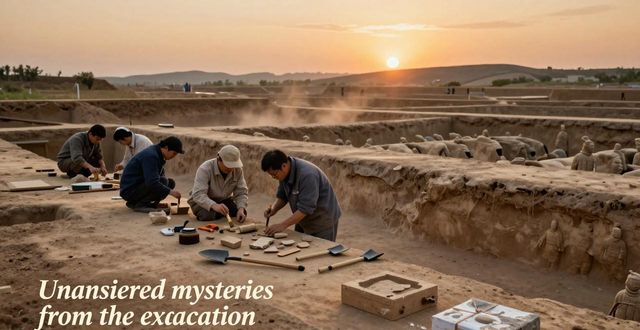
Unanswered mysteries from the excavation
Despite decades of digging, many puzzles remain. Why are there no written records about the creation of the Terracotta Army? How did artisans achieve such naturalistic sculpting without models? The most intriguing mystery involves the lacquer and pigments: after excavation, many warriors lost their bright colors within minutes of exposure to air, turning into dull grey. Scientists are still racing to develop preservation techniques. Another question is whether the main tomb of Qin Shi Huang, which remains unopened due to fears of damaging booby traps and mercury poisoning, contains even greater wonders. Ancient records say the emperor’s coffin floats in a model of China’s rivers made with liquid mercury. Recent soil tests around the tomb mound show abnormally high mercury levels, confirming some of those legends. The excavation has only just begun to reveal its secrets.
Visiting the site today what travelers should know
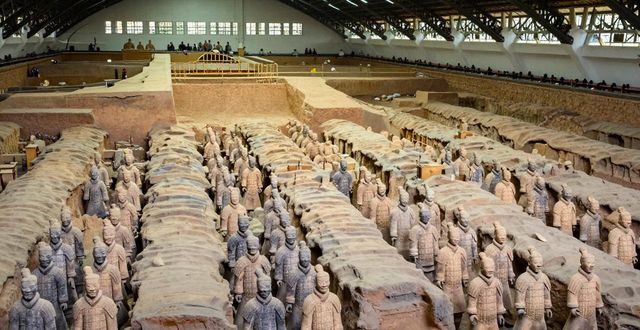
Today, the Terracotta Army is housed in the Emperor Qinshihuang’s Mausoleum Site Museum, a massive structure built over the original pits. Visitors can walk through Pit No. 1, where the main army stands in battle formation, as well as Pits No. 2 and 3, which contain the command post and specialized units. The museum also displays exquisite bronze chariots, each half the size of a real carriage but crafted with incredible precision. For foreign travelers, hiring an audio guide or a licensed guide is highly recommended to understand the historical context. The best time to visit is during weekdays outside Chinese public holidays to avoid crowds. And remember, photography without flash is allowed, but don’t touch anything – these warriors have survived over 2,200 years, and they deserve our respect.
Now here’s a question for you: If you could spend one hour alone inside the unopened tomb of Qin Shi Huang, what would you most hope to find – and are you brave enough to face his mercury rivers? Share your thoughts in the comments below, and don’t forget to like and share this article with fellow history lovers!