
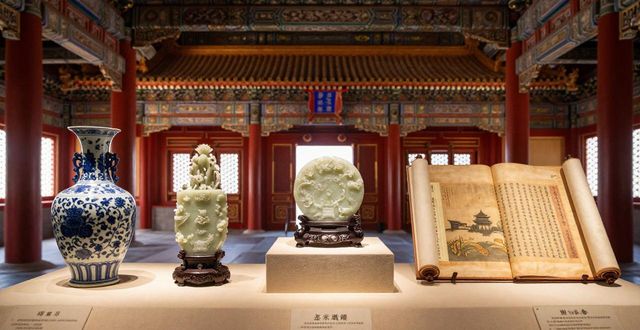
The Palace Museum, housed within Beijing’s Forbidden City, holds one of the world’s most extensive and significant collections of Chinese imperial art and artifacts. With over 1.8 million pieces spanning thousands of years, this collection offers an unparalleled glimpse into the lives, tastes, and craftsmanship of China’s emperors. From delicate porcelain and shimmering jade to ancient calligraphy and monumental paintings, the Palace Museum collection is not just a treasure trove of beauty but also a living record of Chinese civilization. For international visitors and art lovers, understanding this collection means stepping into a world where every object tells a story of power, faith, and artistic genius.
What makes the Palace Museum collection so special

Unlike many museums that gather artifacts from diverse sources, the Palace Museum collection is almost entirely inherited from the Ming and Qing imperial families. This direct lineage means the pieces were not only created for the court but also used, admired, and preserved by emperors themselves. You will find everyday items like intricately carved snuff bottles alongside grand ceremonial vessels, all sharing the same imperial origin. This continuity gives the collection a unique authenticity and narrative coherence, allowing you to trace the evolution of Chinese aesthetic tastes from the 14th century through the early 20th century without interruption. Many items also carry inscriptions or seals added by emperor collectors, adding another layer of historical dialogue.
How to see the most famous items in the Palace Museum collection
First-time visitors often wonder which pieces they absolutely cannot miss. The “Ten Great Treasures” is a helpful list, but many are rarely on display due to conservation needs. Instead, focus on the Hall of Clocks and Watches,where elaborate mechanical timepieces from Europe and China dazzle with moving figures and chimes. The Hall of Mental Cultivation showcases the private rooms of emperors, including the legendary two-bellied vat that served as a hidden safe. For ceramics, the Galleries of Ancient Porcelain feature the famed Ru, Guan, Ge, Jun, and Ding wares—some of the rarest ceramics on earth. The Painting and Calligraphy Gallery rotates masterpieces like “Along the River During the Qingming Festival,” though it is exhibited only for short periods to protect the silk. Always check the museum’s official website before your visit to see what is currently on view.
Why jade and porcelain dominate the Palace Museum collection
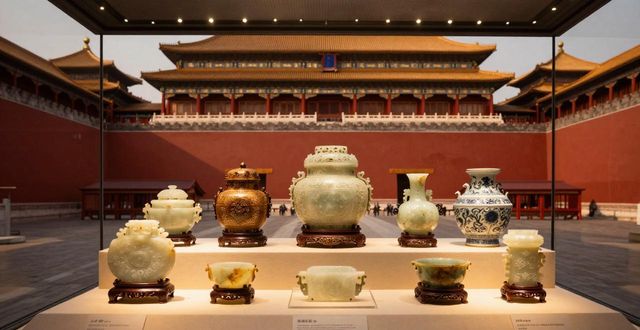
Jade and porcelain are the twin pillars of the Palace Museum collection, and for good reason. The imperial court commissioned millions of porcelain pieces for daily use, rituals, and diplomatic gifts. The museum holds near-complete series of Ming blue-and-white and Qing famille rose porcelains, allowing scholars to study glazes and motifs across centuries. Jade, considered more precious than gold in Chinese culture, was carved into ritual objects like the bi disc and cong tube, as well as ornamental pieces such as the famous large jade mountain “The Great Yu Taming the Flood.” These materials were not chosen randomly—porcelain demonstrated China’s technological mastery over kilns and chemistry, while jade embodied Confucian virtues of purity, strength, and elegance. Together, they represent the material soul of imperial China.
Can you explore the Palace Museum collection online for free
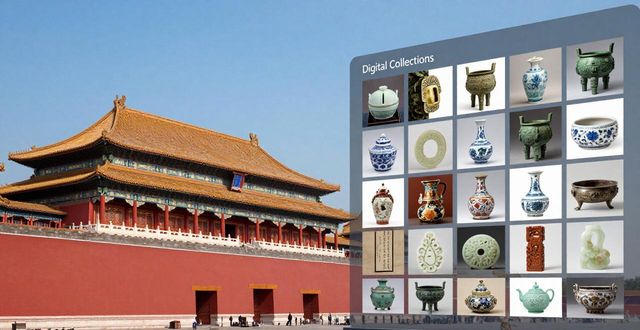
Yes, the Palace Museum has invested heavily in digital access, especially since the COVID-19 pandemic. Its official website offers a “Digital Collections” section where you can browse over 60,000 high-resolution images of artifacts, with new ones added monthly. The “Panoramic Forbidden City” feature allows you to walk through virtual halls and click on objects to see detailed descriptions and historical context. There is also a dedicated mobile app called “Palace Museum” that includes curated tours and 3D models of key pieces. For researchers, the museum provides downloadable datasets of pottery marks and painting seals. All these resources are free and require no registration, making it possible to study the collection deeply from anywhere in the world. However, nothing beats the experience of seeing the gold filigree and aged silk in person—the digital versions are just a starting point.
Now that you know the highlights and hidden gems of the Palace Museum collection, which type of artifact would you most want to see up close—an emperor’s jade seal, a Tang dynasty horse sculpture, or a Qing dynasty European-style clock? Share your choice in the comments, and if you found this guide useful, please like and share it with fellow travelers planning a trip to Beijing. Your engagement helps more people discover this incredible cultural heritage.