
The Great Wall of China: A Monument Through Time
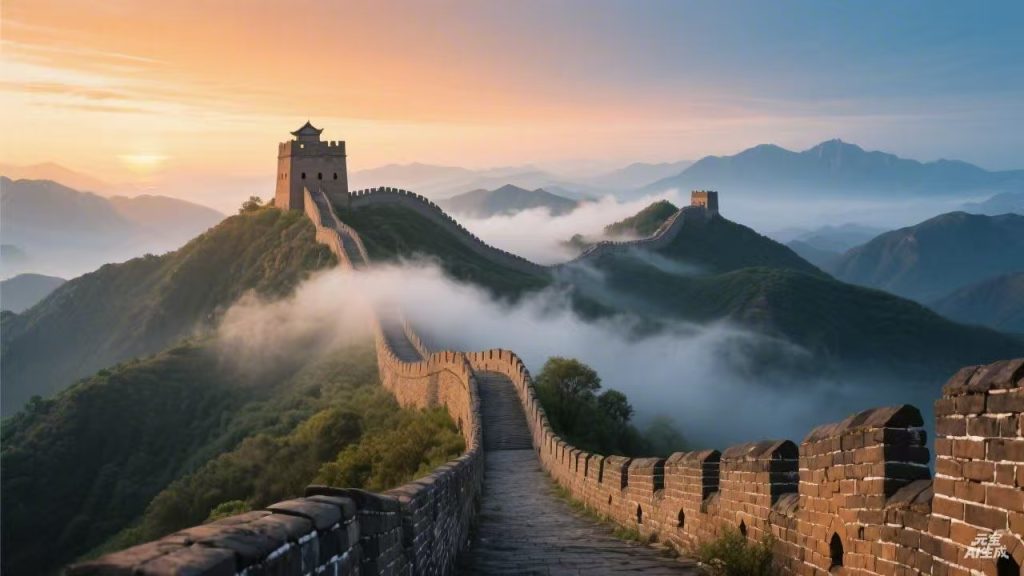
Stretching like a stone dragon across the vast and varied topography of northern China, the Great Wall stands as one of humanity’s most iconic and enduring symbols. More than just a wall, it is a sprawling, discontinuous network of fortifications—incorporating walls, watchtowers, garrison stations, and natural barriers—that represents over two millennia of Chinese history, engineering prowess, and strategic thought. Its total length, including all branches and sections built across various dynasties, exceeds 21,000 kilometers (13,000 miles), earning it the Chinese name “Wànlǐ Chángchéng,” or “The Long Wall of Ten Thousand Li.”
A Historical Tapestry: From Disunited Frontiers to a United Front
The genesis of the Great Wall was not a single, unified project but a response to a perennial threat: the incursions of nomadic tribes from the steppes of modern-day Mongolia and Manchuria. The earliest precursors, dating to the 7th century BCE, were disparate walls built by rival states during the Warring States period to defend their own territories.
The first emperor to conceive of a truly “great” wall was Qin Shi Huang, the unifier of China in 221 BCE. After conquering the warring states, he ordered the connection and extension of the existing northern walls to form a cohesive defensive line against the Xiongnu confederation. This monumental effort, achieved through the labor of soldiers, peasants, and prisoners, established the Wall’s primary purpose: to define a border, control trade and migration, and act as a formidable psychological and physical barrier. However, the Qin wall, largely built of rammed earth, has largely eroded.
The Wall’s most famous and well-preserved sections owe their existence to the Ming Dynasty (1368–1644 AD). Following the collapse of the preceding Yuan (Mongol) Dynasty, the Ming emperors faced renewed threats from Mongol tribes. In a massive, centuries-long project of unprecedented scale and sophistication, they rebuilt, reinforced, and greatly expanded the frontier fortifications. Rejecting the earlier tamped earth, the Ming constructed walls of stone blocks, bricks, and mortar, creating the formidable structure recognized today. They integrated sophisticated features like crenellated battlements, beacon towers for signaling, and fortified passes that served as heavily guarded gates and custom houses along the Silk Road.
Architectural Marvel: Adapting to Earth and Enemy
The genius of the Great Wall lies in its adaptation. It is not a single, uniform structure but a masterpiece of military engineering tailored to its environment. Across mountain ridges, it snakes along the highest contours, utilizing the terrain for height and advantage. In the deserts and plains, it was often constructed from layers of rammed earth and reeds. The Ming builders developed advanced techniques, using kiln-fired bricks and stone slabs bound with a mortar made from lime and sticky rice paste, a formula of remarkable durability.
Key architectural elements served specific functions. The wide ramparts allowed for the rapid movement of troops and supplies. Watchtowers, spaced at regular intervals, provided lookout points, signaling stations (using smoke or fire), and garrison quarters. Fortresses at strategic passes, like Shanhaiguan where the Wall meets the sea (“Old Dragon’s Head”) and Jiayuguan in the western desert, were formidable military strongholds and vital control points for the caravan trade.
More Than a Wall: Functions and Cultural Resonance
While its military utility was primary, the Wall’s role was multifaceted. It regulated and taxed Silk Road commerce, becoming an economic tool. It facilitated communication across the empire via its chain of beacon towers. Demographically, it helped delineate the agricultural civilization of China from the nomadic pastoralists of the steppe, reinforcing a cultural and political boundary.
Over centuries, the Wall has transcended its original function to become a profound national symbol. It represents the sheer will, collective effort, and strategic depth of Chinese civilization. In Chinese culture, it is a source of immense pride, a testament to enduring strength, and a poignant reminder of the cost of defense, echoed in folklore and ballads about the conscripted laborers who built it. For the world, it is the ultimate symbol of human ambition and persistence. Its listing as a UNESCO World Heritage Site in 1987 cemented its status as a treasure of all mankind.
The Wall Today: Legacy and Preservation
With the expansion of the Chinese empire beyond the Wall and the advent of modern military technology, its strategic military purpose became obsolete. Large sections fell into ruin, with materials sometimes recycled for local building. However, its cultural and historical significance only grew.
Today, the Great Wall is the centerpiece of China’s cultural heritage tourism. Sections like Badaling and Mutianyu near Beijing are meticulously restored, offering millions of visitors a glimpse into its grandeur. Meanwhile, remote segments like at Jiankou or in Gansu province remain “wild,” showcasing their rugged, decaying beauty, a testament to time’s passage.
Preservation is a constant challenge, battling natural erosion, irresponsible tourism, and urban encroachment. The Chinese government and international bodies work to protect this fragile monument. The Great Wall endures not as a static relic, but as a living landscape of history. Walking its undulating path is to traverse time—feeling the weight of history, admiring the ingenuity of its builders, and contemplating the timeless human themes of conflict, separation, perseverance, and the enduring desire to mark and protect one’s home. It remains, truly, one of the most powerful and palpable connections to the ancient world.