
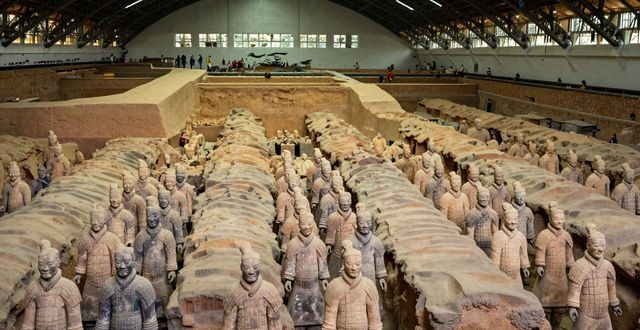
The Terracotta Army in Xi’an is one of the most extraordinary archaeological discoveries of the 20th century. Buried for over two millennia, this vast collection of life-sized clay soldiers, horses, and chariots was created to guard China’s first emperor,Qin Shi Huang, in the afterlife. For anyone planning a trip to Xi’an, seeing this UNESCO World Heritage site is an unforgettable experience. Below I’ll share essential tips on how this army was found, what makes it so special, the best time to visit, and how to get there—so you can make the most of your journey.
How the Terracotta Warriors were discovered
In 1974, a group of farmers digging a well near the city of Xi’an stumbled upon something unexpected: fragments of clay heads, bronze arrows, and terracotta body parts. They had no idea they had just uncovered one of the greatest historical treasures in the world. Local authorities were alerted, and archaeologists soon realized that this was only the tip of an enormous underground complex. The discovery completely changed our understanding of ancient Chinese military and funerary practices, revealing the incredible scale and ambition of Emperor Qin Shi Huang’s tomb project.

Today, the original excavation site has been transformed into the Museum of the Terracotta Warriors, also known as the Qin Tomb Mausoleum Site Park. Visitors can walk through massive pits where thousands of soldiers stand in battle formation. Each warrior is unique, with distinct facial features, hairstyles, and armor that reflect the real armies of the Qin Dynasty. The discovery site itself is now the main attraction, and you can see the actual well where the first farmers dug. It’s a humbling reminder that history often lies just beneath our feet.
What makes the Terracotta Army unique
No two terracotta warriors are exactly alike. Archaeologists have documented over 8,000 soldiers, 130 chariots, and 670 horses, each one crafted with remarkable attention to detail. The figures range from infantrymen and archers to generals and cavalry, arranged precisely according to military rank. Their heights vary from 1.8 to 2 meters, and their facial expressions—serious, confident, or weary—seem to capture individual personalities. This level of craftsmanship was unprecedented for its time, requiring hundreds of skilled artisans working for decades.
Beyond the soldiers themselves, the site reveals advanced engineering techniques. The warriors were originally painted in bright colors, though most pigments have faded after exposure to air. Arrowheads, swords, and crossbow triggers made of bronze were found still sharp, thanks to an anti-rust coating that modern scientists are still trying to fully replicate. The layout of the pits also shows sophisticated planning, with wooden ceilings, rammed earth walls, and drainage systems to protect the army from groundwater. All these details make the Terracotta Army not just a burial site, but a window into the technological and artistic achievements of ancient China.
When is the best time to visit the Terracotta Army
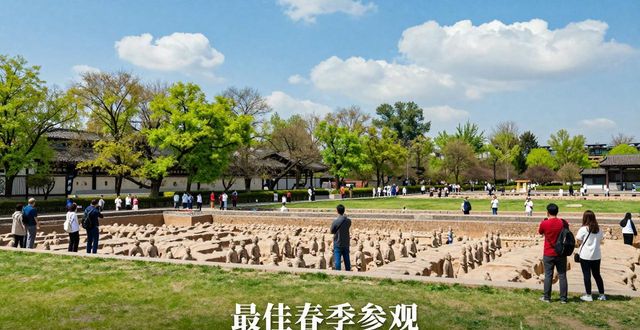
The ideal time to visit is during spring (March to May) or autumn (September to October). During these months, the weather in Xi’an is mild and comfortable, with average temperatures ranging from 15°C to 25°C. You’ll avoid the summer heat, which can soar above 35°C, and the winter cold that sometimes drops below freezing. More importantly, these shoulder seasons see fewer domestic tourists compared to summer holidays and the National Day week in early October. Fewer crowds mean you can spend more time examining the warriors up close without feeling rushed.
If you must go in summer, arrive right when the museum opens at 8:30 AM or later in the afternoon after 3:00 PM. Weekdays are significantly less crowded than weekends. Winter visits have their own advantage: very thin crowds and a chance to see the site dusted with snow, which creates a hauntingly beautiful atmosphere. Just be prepared for cold winds and shorter opening hours. No matter the season, avoid Chinese public holidays like Labor Day (May 1st) and National Day (October 1st–7th) at all costs—the queues can stretch for hours.
How to get to the Terracotta Army from Xi’an
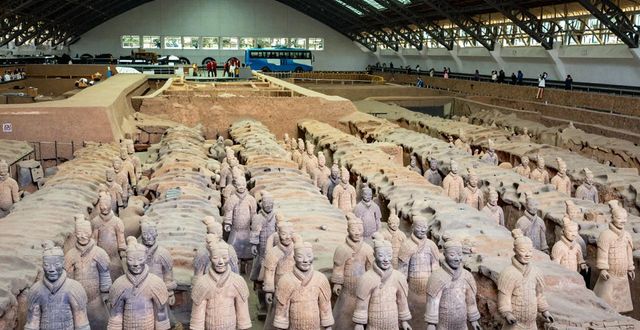
The Terracotta Army site is located about 40 kilometers east of downtown Xi’an, in Lintong District. The most convenient and affordable way is to take public bus line 游5 (Tour Bus 5) from the Xi’an Railway Station. Look for the official blue-and-white buses with a sign reading “Terracotta Warriors” – ignore touts or fake buses that may try to redirect you. The ride takes roughly one hour and costs only 7 RMB (about $1 USD). The bus drops you right at the museum entrance, making it a hassle-free choice for independent travelers.
For a more comfortable journey, consider taking a taxi or a ride-hailing service like Didi. The fare from the city center to the museum is around 100–120 RMB (about $14–17 USD), and the trip takes 45 minutes without traffic. Many tour operators also offer half-day or full-day trips that include transport, an English-speaking guide, and sometimes admission tickets. If you choose a tour, read reviews carefully to avoid overpriced options. Whichever method you pick, always start your day early—the museum gets crowded after 10:00 AM, and you’ll want at least three hours to fully explore Pit 1, Pit 2, and Pit 3.
Have you ever dreamed of standing face-to-face with an ancient army? Share your thoughts or questions about visiting the Terracotta Warriors in the comments below—and don’t forget to save this guide for your next trip to Xi’an