
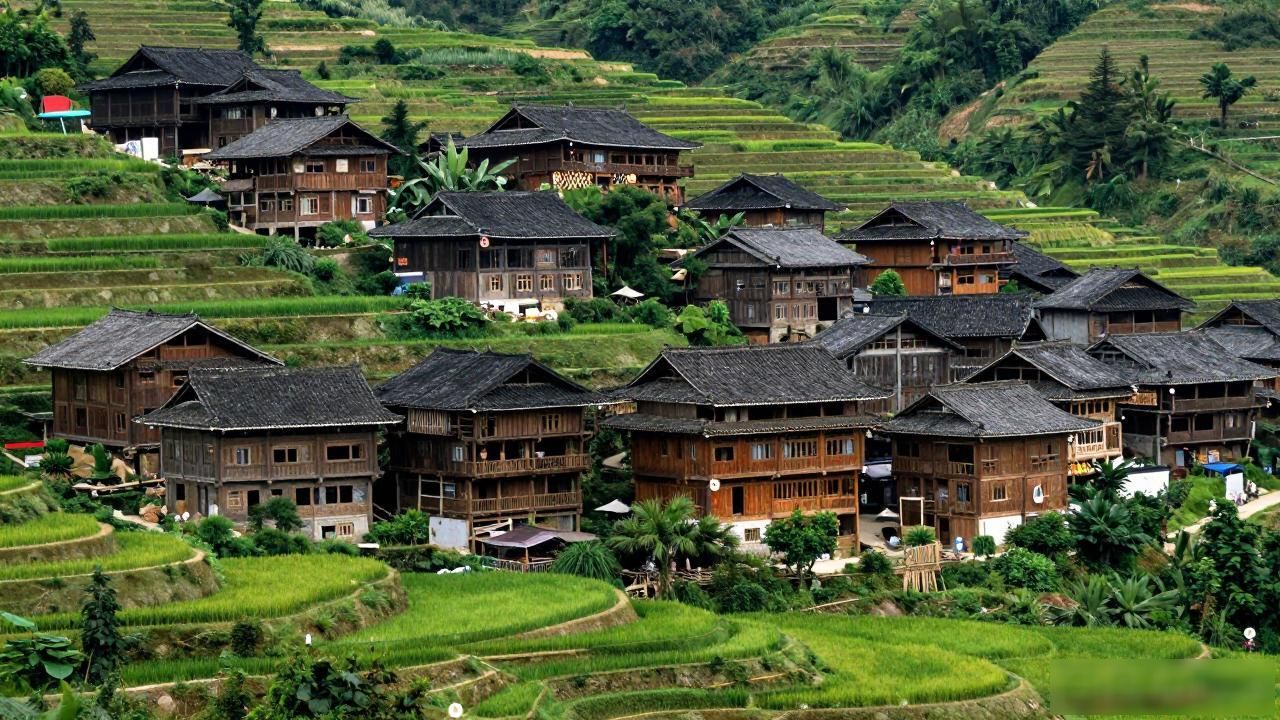
The Dong people form one of China‘s largest ethnic groups, yet their hillside villages remain invisible to most foreign travelers. After months walking through Guangxi’s muddy rural roads, I found these settlements hold a living timber architecture and a community rhythm that no guidebook prepares you for. It’s quiet, slow, and a little bit wild.
Where to find Dong villages in China

Xiangshui Village sits on a steep slope in Liping County, Hunan, roughly two hours by bus from the county seat. You’ll hear the wooden stilted structures before you see them, perched at the tree line where jungle gives way to terraced rice. The village is small, maybe 200 households, but the communal drum tower at its center is the tallest traditional wooden tower in the country, standing over 26 meters. Locals built it without a blueprint, just generational memory and a shared refusal to use metal fasteners. The stilted houses around it lean into the hillside like they’ve been there for a few hundred years, because they have.
South of that, in Sanjiang and Rong’an counties in Guangxi, you’ll find denser clusters of Dong hamlets strung along muddy paths that wash out every rainy season. Few public buses reach them, so most visitors arrange a motorbike or shared tricycle from the nearest town. The remoteness is part of the point.

What to expect in Dong villages China
The most immediate thing you notice is the wood. Every beam,railing, and interlocking joint is timber, latched together without a single iron nail. The Dong construct this on principle, not habit—their tradition holds that metal invites fire and misfortune. You’ll see families drying fermented rice cakes on balconies, the sour smell thick enough to make you stop mid-step. Laundry hangs between poles that have held the same position since before you were born.
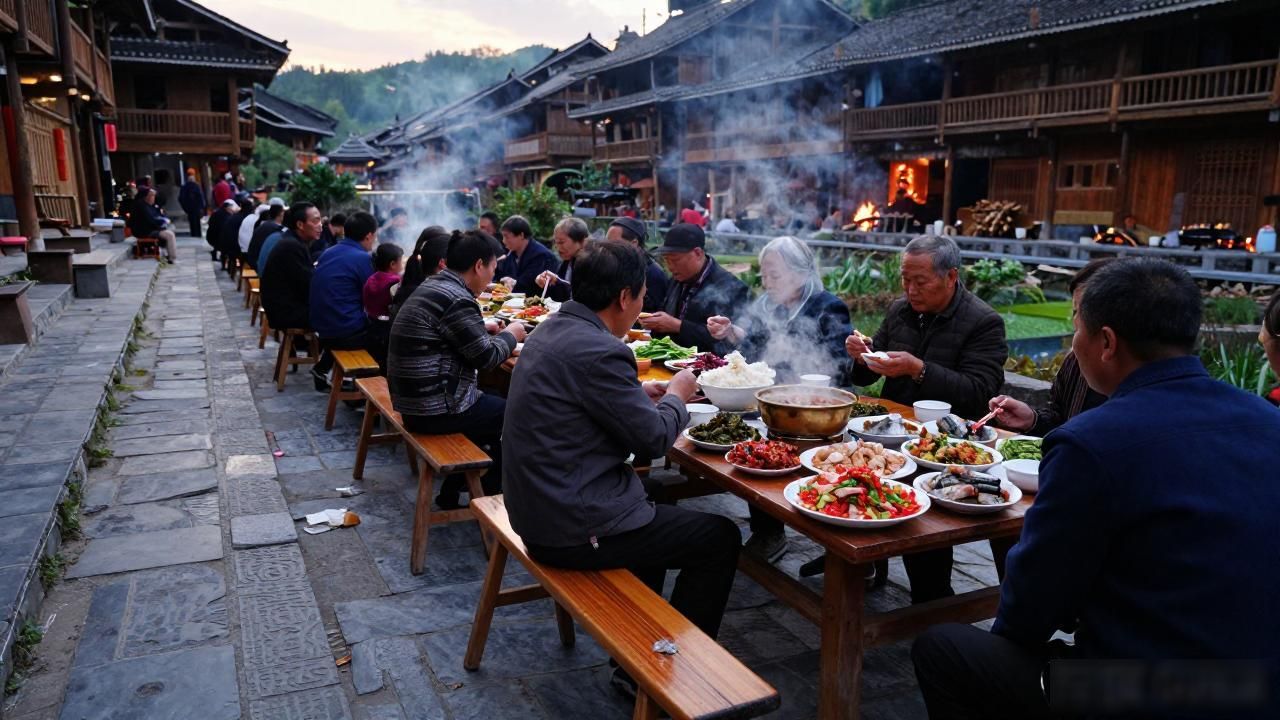
Evenings bring the communal long-table feast, where a single stretch of wooden benches can seat the whole village down a lane. If you happen to catch one, you’ll be pressed to eat and drink whether you want to or not. Expect sticky rice, pickled river fish, and the sharp tang of fermentation that’s been going on for weeks. No one performs for you. They’re just being neighbors.
No ticket counters. No staged songs. Just wet timber in the rain, a creaking wooden gate, and a grandmother who won’t stop naming every tree on the slope. You leave with dirt under your nails and a slow headache from the rice wine.