
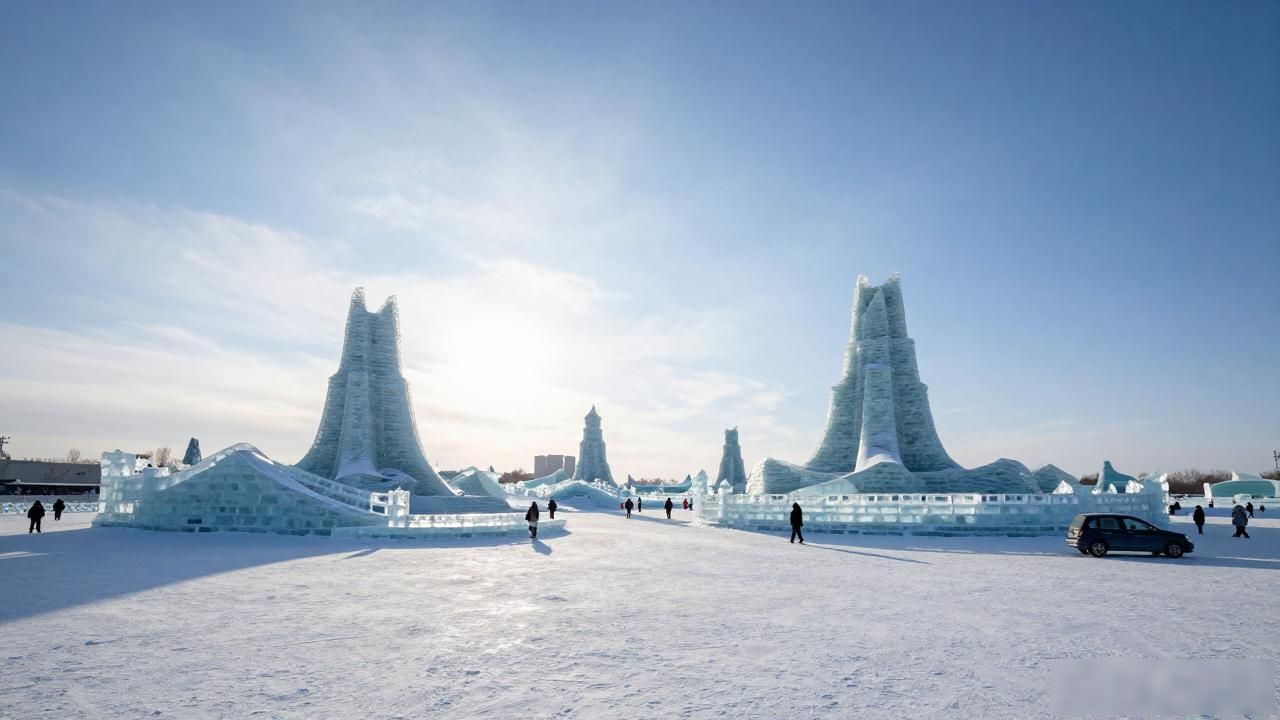
Harbin winter scenery is not just “cold and white.” It is the glow of ice lanterns reflected in dark streets, the sharp smell of charcoal-baked chestnuts curling up from a side market,and the flat crack of skates on a frozen lake. If you are planning a January trip to this far-northeastern Chinese city, the ground truth looks very different from the polished travel photos you saw online. What follows is what actually happens when you step outside into the cold.
When is Harbin winter scenery best

Late January into early February is the sweet spot. The Ice and Snow Festival has passed its New Year’s Eve peak, so the largest sculptures are still intact while the thinnest crowds of the whole season thin out. Daytime temperatures hold somewhere between -18 and -22°C. The air is bone-dry, which means less wind-chill misery than you would expect, and skies clear up most afternoons. That clarity makes outdoor photography dramatically better.
Sunset hits around 4:30 pm. Anything you want to see outside should happen before the blue-hour glow swallows the last light. The ice lanterns actually look far more striking in that half-dark, when the neon washes bleed slowly into the frost on the ground.
What makes Harbin winter scenery unique
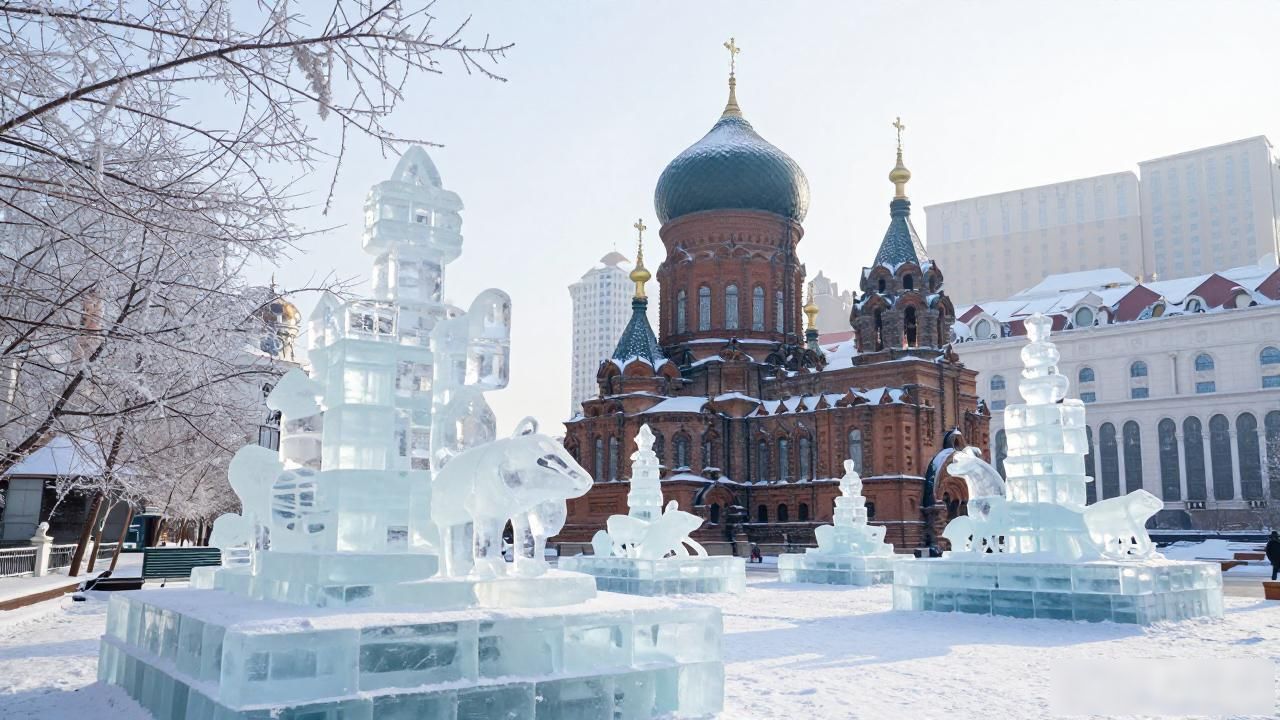
The city did not invent its winter identity from scratch. Russian-style facades along Central Road have stood since the 1920s, and older residents still call the stretch “Little Russia.” Walk that block at dusk and the old brickwork glows a warm orange against the pale winter sky. The ice sculptures themselves go far beyond postcard novelty. Several towers climb past forty meters, wired with color-shifting LEDs that turn the frozen Songhua River into a slowly pulsing light corridor after dark.
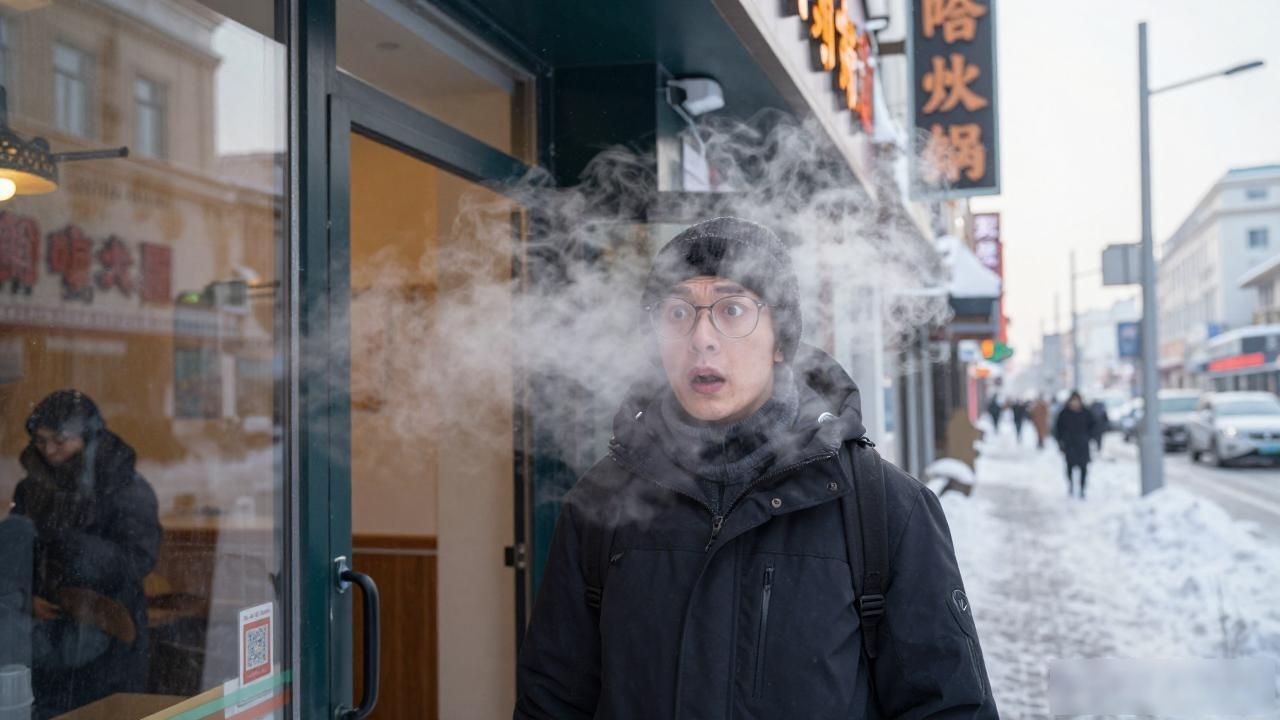
One thing almost no travel review mentions is the temperature whiplash. You step off a -25°C sidewalk into a steaming hotpot shop and your glasses fog up completely for ten full minutes. That jolt of humid warmth pressed against a freezing face is part of the scenery too, not just the ice.
Bring a proper thermal base layer, grab a street-side corn dog for three yuan, and stand still long enough to hear the ice groan under a distant boat. Harbin winter scenery rewards patience and stillness far more than it rewards a checklist.