
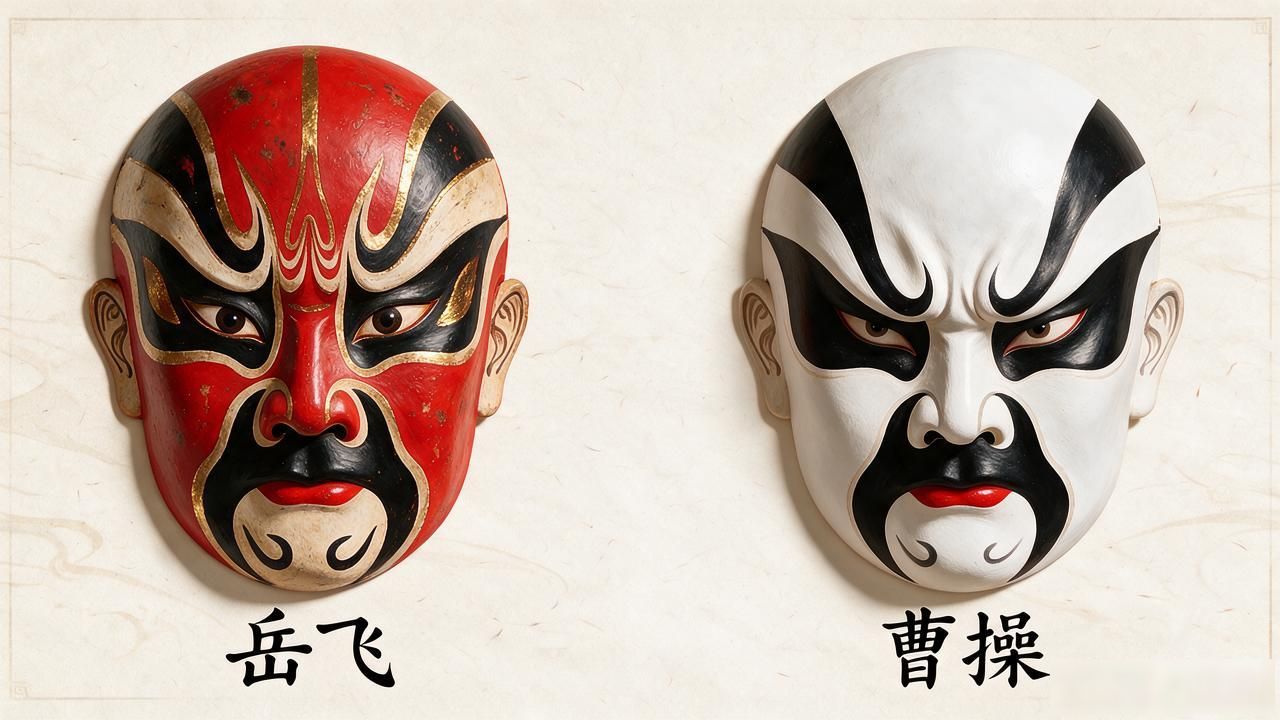
Beijing Opera masks, or lianpu, are not mere face paint. They are a coded visual language that tells audiences exactly who a character is, what their moral alignment is, and how they will behave on stage. A single stroke of red or black across an actor’s face can replace an entire character biography. For foreign audiences stepping into a Beijing theater for the first time, understanding these masks transforms a colorful spectacle into something far more readable.
What do Beijing Opera mask colors mean

Red on a mask signals loyalty and bravery. Think of Yue Fei, the Song-dynasty general, who always wears a crimson face. White, by contrast, marks cunning or treachery — Cao Cao, the scheming warlord, dominates white-faced roles. Black speaks of uprightness and roughness, most famously in the mask of Bao Zheng, the incorruptible judge. Gold and silver are reserved for supernatural beings: gods,demons, and spirits that walk between worlds.
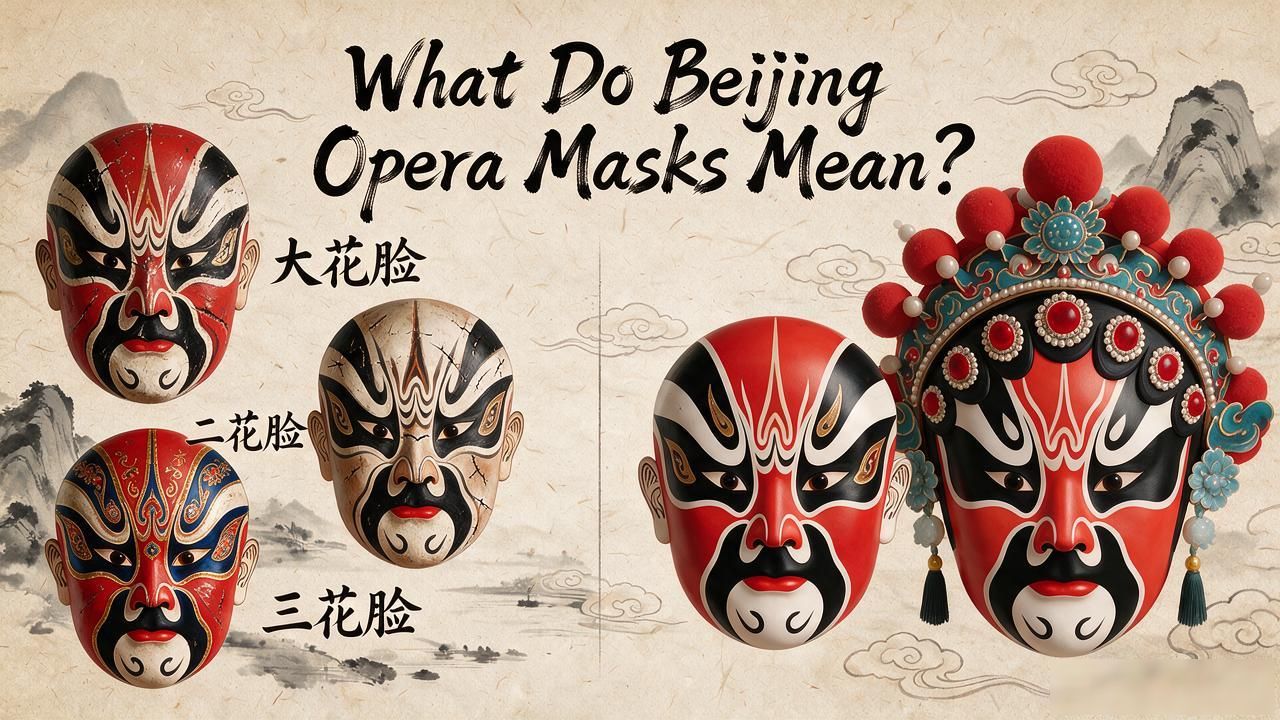
The patterns matter just as much as the base color. A butterfly motif around the eyes suggests a woman who has had a turbulent love life. A full-face pattern of radiating lines means the character is larger than life, often a demigod. These details are so standardized that veteran audiences can identify a role before the actor even speaks a word.
How did Beijing Opera masks originate
The tradition traces back to the diedao performances of the late 18th century, when troupes in Beijing blended regional operas and began standardizing face paint. Early masks were simpler — basic color blocks with minimal detail. By the mid-19th century, under emperors like Xianfeng and Tongzhi, the visual vocabulary exploded. New pattern types appeared: the full-face pattern, the divided pattern, and the pattern-free style used for sheng roles that still needed subtle color hints.
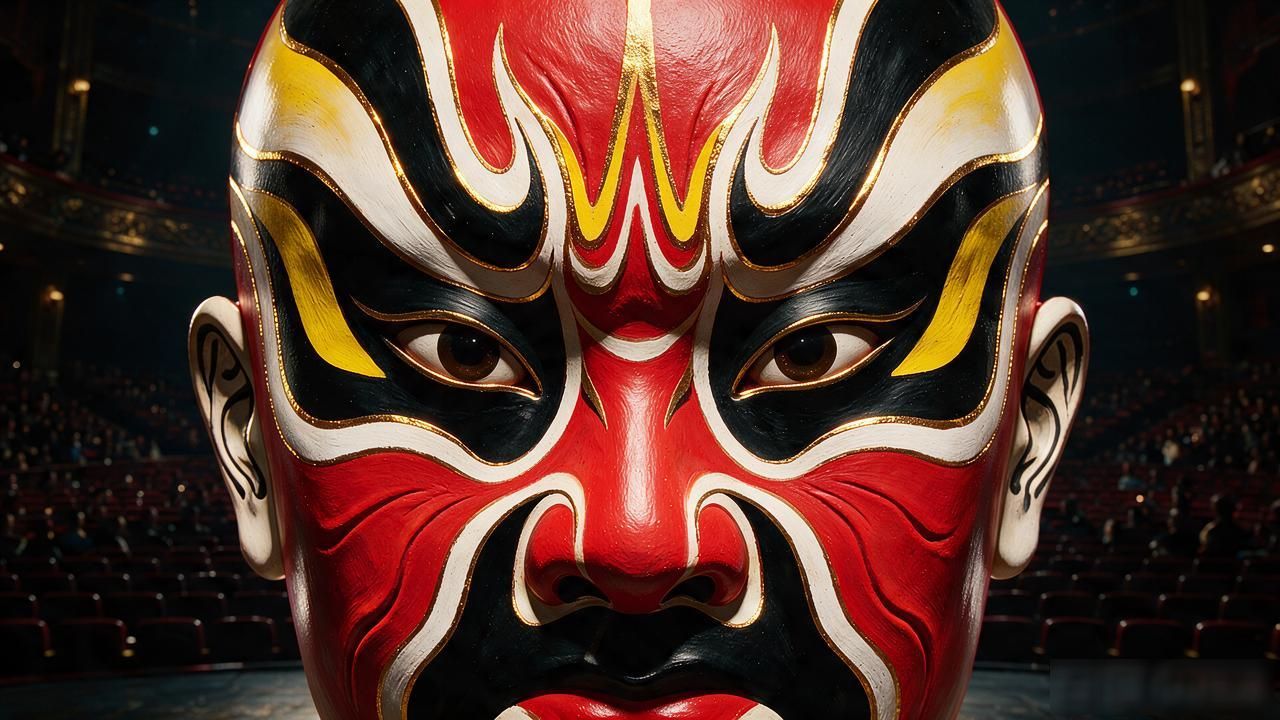
What makes the system stick is its practicality. In crowded theaters where seats sat ten meters from the stage, bold high-contrast colors let every audience member read a character’s nature instantly. No subtitles needed. The mask became a contract between performer and spectator: trust the color, trust the story.
Today you can find hand-painted Beijing Opera masks in tourist shops across the city, but the ones used on stage are applied fresh each night by dedicated makeup artists who spend forty minutes per face. The system still works the way it was designed — loud, unambiguous, and impossible to misread from the back row.